
Bavaria: €60M Plan to Ditch Diesel Trains by 2040
Bavaria invests €60M to eliminate diesel trains by 2040, electrifying lines and deploying battery-electric trains for a greener rail network.
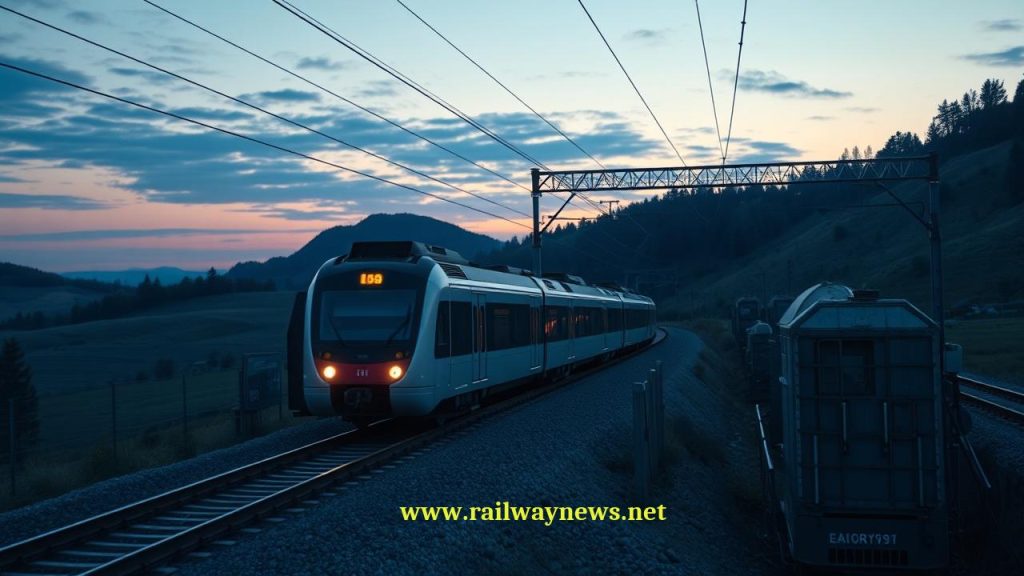
Northern Bavaria is accelerating its transition to a diesel-free regional rail network, with the state government signing a crucial planning contract with DB InfraGO for widespread electrification and the deployment of battery-electric multiple units (BEMUs). The ambitious project, backed by an initial EUR 60 million state investment for the planning phase, aims to convert 20 diesel lines and electrify 74 kilometers of track to eliminate diesel traction entirely by 2040.
| Category | Details |
|---|---|
| Project Goal | Complete elimination of diesel passenger rail in northern Bavaria by 2040. |
| Key Stakeholders | State of Bavaria, DB InfraGO |
| Initial Investment | Approx. EUR 60 million for the planning phase (funded by Bavaria). |
| Infrastructure Scope | 74 km of new overhead line electrification, 2 new BEMU charging stations. |
| Lines Affected | 20 regional lines currently operated with diesel traction. |
The state of Bavaria has formalized a significant step towards decarbonizing its regional rail network, signing a planning contract with DB InfraGO to lay the groundwork for a diesel-free future. The agreement kickstarts the detailed planning for a hybrid strategy combining targeted “island” electrification with the widespread use of battery-powered trains. Bavarian Transport Minister Christian Bernreiter underscored the project’s importance, stating, “The future of rail in Bavaria is electric. In northern Bavaria, we want to end diesel operation by 2040 and convert all lines to electric traction or battery trains.” The state is fronting the EUR 60 million planning costs and will subsequently apply for federal funding through Germany’s Municipal Transport Financing Act (GVFG) program to support the construction phase.
The technical strategy, based on a 2024 feasibility study, focuses on creating strategically located electrified sections that will serve as both operational corridors and charging infrastructure for the BEMU fleet. The battery trains will run under catenary on these sections, recharging on the move, and then operate on battery power on non-electrified routes. To facilitate this, 74 kilometers of new overhead lines will be installed. Brand-new charging stations will be constructed in Bad Steben and Neustadt an der Waldnaab, while charging capacity at the key junctions of Nürnberg, Forchheim, and Wicklesgreuth will be significantly enhanced. The long-term plan includes the introduction of new, fully accessible tilting-technology BEMUs from the second half of the 2030s for routes requiring such specialized rolling stock.
This initiative is part of a broader network enhancement strategy in the region, designed to eliminate isolated “diesel islands” and create a seamless, environmentally friendly transport system. It complements other major electrification projects already included in Germany’s Federal Transport Infrastructure Plan. Additionally, the electrification of the Hof-Oberkotzau-Marktredwitz section, a component of the vital Ostkorridor project, is set for a phased commissioning between 2033 and 2036. Heiko Büttner, DB’s representative for Bavaria, linked the project to national climate objectives: “We can only achieve our climate targets if we transport goods and passengers in an environmentally friendly way. This is exactly what the switch to electric or battery-powered trains offers.”
Key Takeaways
- Hybrid Decarbonization Model: The project pioneers a large-scale, pragmatic approach combining partial electrification with BEMU technology, creating a blueprint for decarbonizing complex regional networks where full electrification is not economically viable.
- Significant State-Led Investment: Bavaria’s commitment of EUR 60 million for planning alone signals strong political will and de-risks the project, paving the way for substantial federal co-financing for construction.
- Integrated Network Strategy: The plan is not a standalone initiative but connects with larger federal projects like the Ostkorridor, ensuring a cohesive and future-proof upgrade of northern Bavaria’s entire rail infrastructure.
Editor’s Analysis
Bavaria’s move is more than a regional infrastructure upgrade; it’s a powerful endorsement of battery-electric trains as a primary solution for rail decarbonization. While hydrogen often captures headlines, this project demonstrates a clear preference for the BEMU model, which leverages existing and planned electrification for greater efficiency. For the global rail market, this serves as a critical case study in phasing out diesel on non-core routes. It shows how targeted capital investment in “charging islands” can unlock emissions-free travel across a much wider network, offering a scalable and economically rational alternative to 100% catenary installation or a complete pivot to a different fuel technology. This strategy will likely be watched closely by transport authorities across Europe and North America facing similar decarbonization challenges.
Frequently Asked Questions
- What is the main goal of the northern Bavaria rail project?
- The primary goal is to completely eliminate diesel-powered passenger trains in northern Bavaria by the year 2040. This will be achieved by electrifying 74 kilometers of key track sections and introducing a fleet of battery-electric multiple units (BEMUs) across 20 regional lines.
- How much is being invested in the project?
- The state of Bavaria is initially investing approximately EUR 60 million to cover the entire planning phase. Following the completion of planning, the state will apply for co-financing from the German federal government’s GVFG program to fund the construction and implementation stages.
- How will the battery-powered trains work?
- The battery-electric trains (BEMUs) will operate using a hybrid model. They will run on newly electrified track sections, drawing power from overhead lines and simultaneously recharging their onboard batteries. On non-electrified parts of the network, they will switch to battery power. Dedicated charging stations will also be built at key terminals to supplement this system.

Railway infrastructure, rolling stock and transport technologies specialist focused on global rail industry developments, high-speed rail systems, signaling technologies and freight transportation. Covering railway investments, public transport modernization, rail operations and international mobility projects across Europe, Asia and North America.
RELATED POSTS

September 5, 2026 4:19 pm
CPK launched formal tender talks with four consortia to design...

September 5, 2026 7:14 pm
HS2 Ltd signed renegotiated civils contracts with EKFB and Align...
September 6, 2026 4:12 am
Alstom delivered the first of 100 new G Class trams...
September 6, 2026 8:17 am
DB InfraGO reopened the Nuremberg-Regensburg line in Bavaria on 31...
September 5, 2026 6:17 pm
Universal Signalling won a deal to install its U-Cross system...
September 6, 2026 12:20 pm
Indian Railways ordered a probe after a fire destroyed 2...