
Europe Mandates Safety: EN 16241 Ensures Braking Performance
Explore EN 16241: the standard ensuring railway braking safety. Learn how slack adjusters maintain consistent performance, reliability, and interoperability across Europe’s rail network.
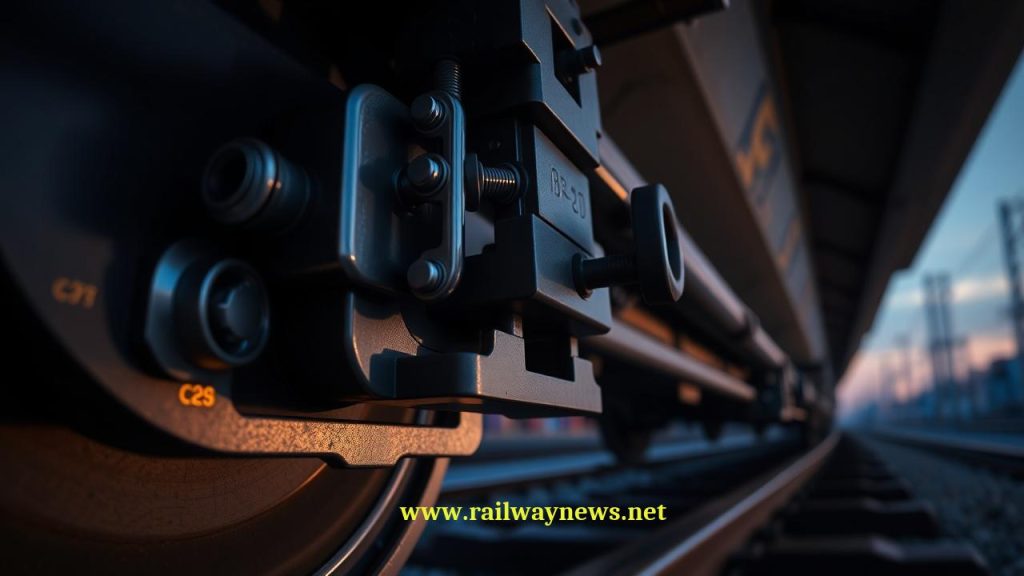
EN 16241: A Detailed Technical Guide to Railway Slack Adjusters
The EN 16241 standard is a critical European Norm that specifies the design, manufacturing, and testing requirements for slack adjusters used in the braking systems of railway vehicles. Its primary purpose is to ensure safety, reliability, and interoperability across the European railway network by standardizing a component essential for consistent braking performance.
A railway slack adjuster is a mechanical or pneumatic device integrated into a vehicle’s brake rigging. Its function is to automatically maintain a predetermined, constant clearance between the brake block and the wheel tread, or between the brake pad and the brake disc, as these friction components wear down over time. Without a slack adjuster, this clearance would increase, leading to longer brake application times and reduced, inconsistent braking force.
The Role and Importance of Slack Adjusters in Braking Systems
The efficiency of a train’s braking system is paramount for its safe operation. As brake blocks and pads wear, the travel distance of the brake cylinder piston increases to compensate. This increased travel results in a larger volume of air required to apply the brakes, which translates to a delay in brake application and a potential reduction in the applied force. Slack adjusters are engineered to counteract this effect by automatically shortening the brake rigging, thereby ensuring that the piston travel remains within its optimal, designed range. This leads to several key benefits:
- Consistent Braking Performance: By maintaining a constant clearance, slack adjusters ensure that the braking force is applied uniformly and predictably every time.
- Enhanced Safety: Predictable braking is fundamental to safety, reducing the risk of overshooting signals or platforms and ensuring calculated stopping distances are met.
- Reduced Maintenance: Automatic adjustment eliminates the need for frequent manual inspections and adjustments of the brake rigging, lowering operational costs and vehicle downtime.
- Optimized Air Consumption: Keeping piston travel to a minimum reduces the consumption of compressed air, improving the efficiency of the entire pneumatic braking system.
Key Technical Requirements of EN 16241
EN 16241 outlines a stringent set of technical specifications that a slack adjuster must meet to be certified for use. These requirements cover design, performance, and durability.
Design and Construction
The standard mandates that slack adjusters be designed for a long service life under the harsh operating conditions of a railway environment. Key considerations include:
- Materials: Materials used must possess high mechanical strength, fatigue resistance, and durability. They must be suitable for the specified range of operating temperatures and environmental exposures.
- Corrosion Resistance: Components must be protected against corrosion from water, salt, and other environmental contaminants. This is typically achieved through specialized coatings, plating, or the use of corrosion-resistant alloys.
- Mechanical Integrity: The device must be robust enough to withstand the high static and dynamic forces transmitted through the brake rigging during full-service and emergency brake applications.
- Manual Release Mechanism: Every slack adjuster must incorporate a feature for manual release or “de-adjustment.” This is essential for maintenance procedures, such as replacing worn brake blocks or pads.
Performance and Functional Characteristics
The core function of the slack adjuster is its ability to measure and correct clearance. EN 16241 specifies critical performance criteria:
- Adjustment Accuracy: The device must maintain the brake shoe clearance within a very tight, predefined tolerance. The mechanism must be sensitive enough to detect small amounts of wear but not so sensitive that it adjusts due to elastic deflections in the rigging.
- Adjustment Direction: The adjuster must only operate in one direction—to take up slack (shorten the rigging). It must be designed to prevent any “letting out” or lengthening of the rigging under any load condition.
- Force Transmission Efficiency: The adjuster must transmit the braking force from the cylinder to the brake blocks with minimal internal loss. It should act as a solid, rigid member of the brake rigging when under load.
- Endurance and Reliability: The standard requires rigorous endurance testing, where the slack adjuster must complete a specified high number of operational cycles without failure, degradation in performance, or excessive wear of its internal components.
Comparison of Key Slack Adjuster Parameters According to EN 16241
The following table outlines some of the critical parameters governed by the standard and their importance within the railway braking system.
| Parameter | EN 16241 Requirement / Specification | Importance in Braking System |
|---|---|---|
| Adjustment Sensitivity | The adjuster must activate only when piston travel exceeds a predetermined set point, indicating actual block/pad wear. | Prevents incorrect adjustments due to rigging elasticity or track irregularities, ensuring adjustment is only due to wear. |
| Mechanical Strength | The adjuster body and internal components must withstand maximum braking forces (including emergency applications) without permanent deformation or failure. | Guarantees structural integrity of the brake rigging, preventing catastrophic failure under high stress. |
| Environmental Sealing | The internal mechanism must be effectively sealed against the ingress of water, dust, brake dust, and other contaminants. | Ensures long-term reliability and prevents premature failure of the adjustment mechanism due to internal corrosion or seizure. |
| Endurance Life | Must successfully complete a high number of load and adjustment cycles in type testing, simulating a full service life. | Validates the long-term durability and reliability of the component, minimizing the risk of in-service failures. |
| Manual De-adjustment Function | Must include a reliable and easy-to-operate mechanism to manually lengthen the adjuster for maintenance purposes. | Crucial for efficient and safe replacement of brake friction materials by maintenance personnel. |
Conclusion: Ensuring Safety and Interoperability
The EN 16241 standard plays a vital role in the safety and efficiency of modern railway operations. By providing a common technical framework for the design and testing of slack adjusters, it ensures that these critical components perform reliably and consistently, regardless of the manufacturer or the specific railway vehicle. Compliance with EN 16241 is essential for component suppliers and vehicle manufacturers aiming to meet the stringent requirements of the Technical Specifications for Interoperability (TSI) and to guarantee the highest levels of safety across the European rail network.
Frequently Asked Questions (FAQ) about EN 16241

Railway infrastructure, rolling stock and transport technologies specialist focused on global rail industry developments, high-speed rail systems, signaling technologies and freight transportation. Covering railway investments, public transport modernization, rail operations and international mobility projects across Europe, Asia and North America.