
EN 15892: Europe’s Guide to Quieter Driver Cabs & Safety
EN 15892 precisely measures railway driver cab noise, safeguarding driver health and comfort. This vital standard ensures vehicle compliance and drives safer, quieter train operations.
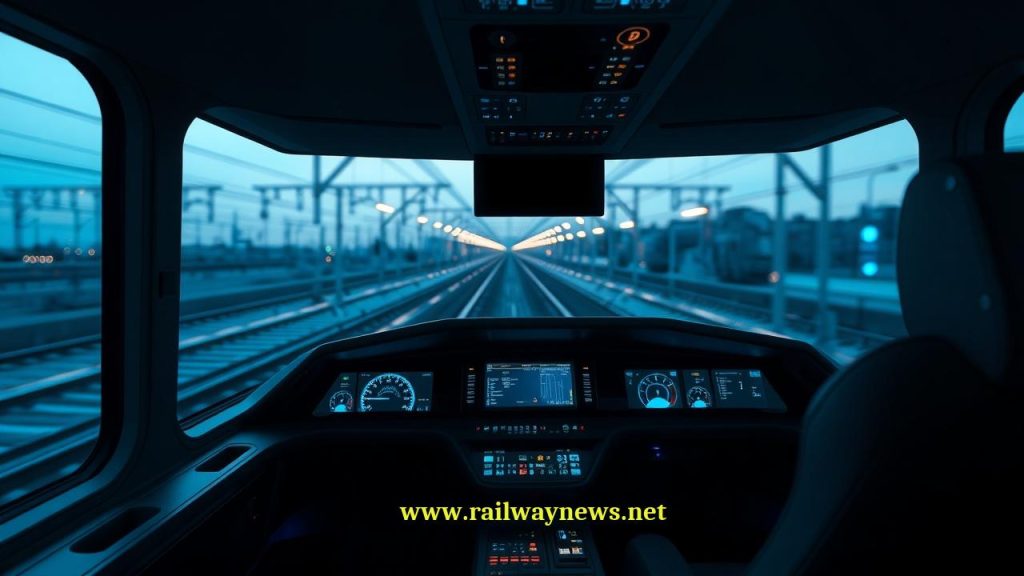
EN 15892: A Detailed Guide to Measuring Noise in Railway Driver’s Cabs
EN 15892 is a European Standard that specifies the methodology for measuring and reporting noise levels inside the driver’s cabs of railway vehicles. This standard is crucial for ensuring the occupational health, safety, and comfort of train drivers by providing a uniform and reproducible procedure for assessing their acoustic environment.
The primary goal of EN 15892 is to define the conditions and methods required to obtain comparable noise measurement results across different types of rolling stock. This data is essential for vehicle homologation, design verification, and monitoring compliance with noise exposure regulations.
Key Objectives and Scope of EN 15892
The standard sets out to achieve several key objectives, which are fundamental to its application in the railway industry:
- Standardization: To provide a single, harmonized method for noise measurement in driver’s cabs, eliminating discrepancies between different testing procedures.
- Comparability: To ensure that noise data from different vehicles, manufacturers, and operators can be accurately compared.
- Occupational Health: To provide the necessary data for assessing driver noise exposure in line with health and safety directives.
- Vehicle Acceptance: To define a clear procedure for verifying that a new or modified vehicle meets specified acoustic performance criteria.
The scope of EN 15892 covers all types of railway vehicles equipped with a driver’s cab, including locomotives, multiple units (EMU/DMU), high-speed trains, and on-track maintenance machines. It applies to measurements performed for type testing, routine inspections, and special investigations.
Measurement Conditions and Procedures
To ensure reproducibility, EN 15892 meticulously defines the conditions under which measurements must be performed. These conditions cover the vehicle’s operational state, the surrounding environment, and the specific locations for measurement.
Vehicle Conditions
Measurements are conducted under a range of defined operating conditions that represent typical scenarios for a driver. These include:
- Stationary: The vehicle is at a standstill with various auxiliary systems running (e.g., HVAC, compressors, converters). This helps isolate noise from non-traction sources.
- Constant Speed: The vehicle travels at specified, stable speeds. This is the primary condition for assessing rolling noise, aerodynamic noise, and traction system noise during cruise. Multiple speeds are often tested to build a complete noise profile.
- Acceleration: The vehicle accelerates at maximum power to evaluate the peak noise generated by the traction system and wheel-rail interaction under high torque.
- Braking: Noise is measured during deceleration using different braking systems (e.g., regenerative, rheostatic, pneumatic) to identify noise from these specific sources.
Microphone Positions
The placement of the measurement microphone is critical for capturing the noise level experienced by the driver. EN 15892 specifies precise locations:
- Driver’s Ear Position (Seated): The primary measurement point is at the location corresponding to the driver’s ear when seated in the normal driving position. Specific coordinates relative to the seat reference point are defined.
- Driver’s Ear Position (Standing): If a standing driving position is possible, an additional measurement is required at the corresponding ear height.
- Other Positions: Additional microphones may be placed in the cab to assess the overall sound field, but the driver’s ear position remains the reference point for compliance.
Acoustic Quantities to be Measured
The standard requires the measurement of specific acoustic parameters to characterize the noise environment fully:
- A-weighted equivalent continuous sound pressure level (L_pAeq,T): This is the primary metric. It represents the time-averaged sound level, weighted to reflect the sensitivity of the human ear. It is used to assess the overall noise exposure over a specific task or time period (T).
- C-weighted peak sound pressure level (L_pCpeak): This metric captures the highest instantaneous noise level, such as that from a horn, a coupling impact, or a brake squeal. It is important for assessing the risk of acute hearing damage from impulsive noises.
Instrumentation and Reporting
To guarantee accuracy and consistency, EN 15892 mandates the use of high-precision equipment. All instrumentation must comply with relevant IEC standards.
- Sound Level Meter: Must be a Class 1 instrument according to IEC 61672-1.
- Acoustic Calibrator: A Class 1 calibrator (IEC 60942) must be used to verify the measurement chain’s accuracy before and after each measurement series.
- Microphone: A suitable microphone, often fitted with a windscreen to reduce the effects of airflow (especially from HVAC systems), is required.
The final test report is a critical output. It must contain detailed details of the test, including vehicle identification, environmental conditions (temperature, weather), track characteristics, microphone positions, instrumentation used, and a clear presentation of all measured acoustic data.
Comparison of Measurement Conditions
The following table outlines the different vehicle operating conditions specified in EN 15892 and their respective objectives.
| Operating Condition | Primary Noise Sources | Measurement Objective |
|---|---|---|
| Stationary (Auxiliaries On) | HVAC system, air compressors, cooling fans, power converters | To quantify the baseline noise level in the cab without influence from traction or rolling noise. |
| Constant Speed | Rolling noise (wheel/rail interaction), traction motors, gearboxes, aerodynamic noise | To assess the driver’s noise exposure during typical cruising operation at different speeds. |
| Maximum Acceleration | Traction system at high load, wheel slip events, increased cooling fan activity | To measure the maximum noise level generated by the powertrain under full power. |
| Braking | Brake systems (squeal, air release), dynamic brake resistor fans, regenerative braking whine | To evaluate noise from deceleration systems, which can be a significant source of annoyance or impulsive sound. |
Significance in the Railway Industry
EN 15892 is more than just a technical document; it is a cornerstone for driver welfare and vehicle engineering.
- Occupational Health & Safety: It provides the framework for operators to comply with national and international regulations on workplace noise exposure, protecting drivers from long-term hearing damage and fatigue.
- Vehicle Design & Manufacturing: For manufacturers, the standard sets clear acoustic targets. It drives innovation in cab insulation, component design (e.g., quieter HVAC systems), and overall vehicle construction to create a better working environment.
- Regulatory Compliance: The standard is often referenced in the Technical Specifications for Interoperability (TSIs) in Europe, making compliance a prerequisite for authorising a new vehicle to be placed into service.
- Driver Performance: A quieter cab environment reduces stress and fatigue, leading to improved concentration and alertness, which is directly linked to operational safety.
Frequently Asked Questions (FAQ) about EN 15892

Railway infrastructure, rolling stock and transport technologies specialist focused on global rail industry developments, high-speed rail systems, signaling technologies and freight transportation. Covering railway investments, public transport modernization, rail operations and international mobility projects across Europe, Asia and North America.