
How EN 15806 Secures European Rail Safety
EN 15806 standardizes static brake testing for railway vehicles, verifying installation, functionality, and performance. Crucial for safety and compliance before service.
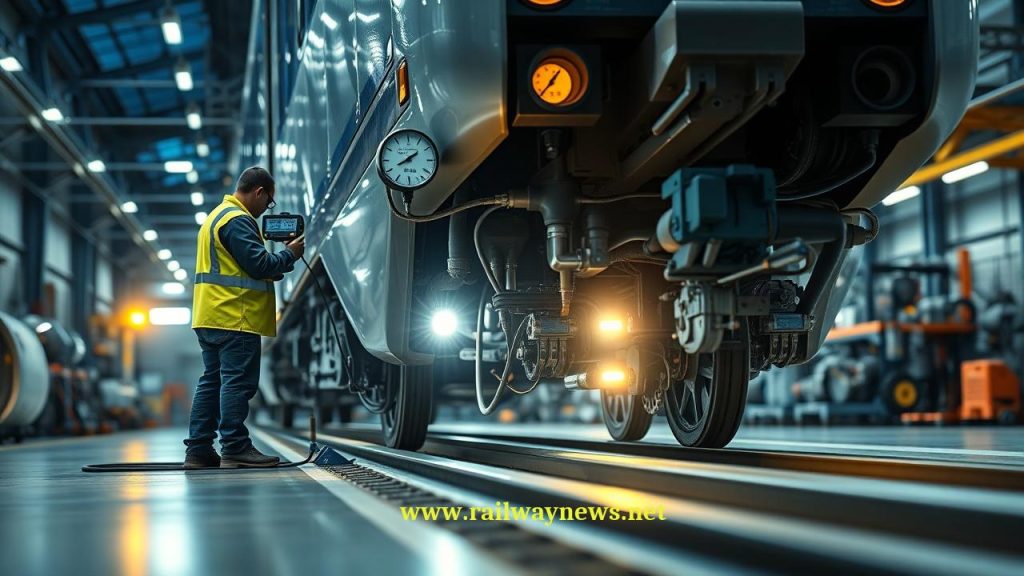
EN 15806: A Detailed Guide to Static Brake Testing in Railway Applications
EN 15806 is a European Standard that specifies the requirements and procedures for the static testing of braking systems on railway vehicles. This standard is a critical component of vehicle acceptance and maintenance, ensuring that the brake equipment is correctly installed, fully functional, and performs according to its design specifications before the vehicle enters service or after significant overhaul.
The primary focus of EN 15806 is to verify the integrity and performance of the brake system while the vehicle is stationary. These tests form the foundation of brake system validation, preceding any dynamic (on-track) testing.
The Core Objectives of Static Brake Testing
The procedures outlined in EN 15806 are designed to achieve several key objectives, each contributing to the overall safety and reliability of the railway vehicle:
- Verification of Installation: To confirm that all brake system components have been installed correctly according to the manufacturer’s drawings and specifications.
- Functional Checks: To ensure that all brake functions, including application, release, emergency braking, and parking brake, respond correctly to commands from the driver’s controls or safety systems.
- Performance Measurement: To measure key performance parameters, such as brake cylinder pressure, application/release times, and system integrity through leakage tests.
- Compliance and Certification: To provide documented evidence that the brake system complies with regulatory requirements and design specifications, which is essential for vehicle authorization.
Scope and Applicability of EN 15806
This standard is applicable to a wide range of mainline railway rolling stock, including:
- Locomotives
- Electric and Diesel Multiple Units (EMUs/DMUs)
- Passenger Coaches
- Freight Wagons
EN 15806 is typically invoked during the final stages of vehicle manufacturing, after a major refurbishment or overhaul, or following significant maintenance work on the brake system. It ensures a baseline of performance and safety is established before the vehicle is subjected to the more complex dynamic tests.
Key Technical Procedures and Tests
EN 15806 details a series of systematic tests. While the exact sequence and parameters may vary depending on the vehicle and brake system type (e.g., pneumatic, electro-pneumatic), the core principles remain consistent.
Test Preparations
Before any testing can commence, several preconditions must be met:
- The railway vehicle must be stationary, secured against movement, and on a level track.
- All necessary energy sources (e.g., main reservoir compressed air, electrical power) must be available and stable.
- The brake system must be fully charged to its nominal operating pressure.
- Calibrated and certified measurement equipment (pressure gauges, timers, force transducers) must be correctly installed at designated test points.
Principal Static Tests
The standard outlines several critical tests, each designed to evaluate a specific aspect of the brake system’s performance.
- Leakage Test: This is one of the most fundamental tests, especially for pneumatic systems. The brake system is isolated from its supply, and the rate of pressure drop over a specified period is measured. An excessive leakage rate could lead to an unintended brake release and is a critical failure point.
- Brake Application and Release Test: This test verifies that the brakes apply and release correctly upon command. Technicians measure the pressure achieved in the brake cylinders (or the force applied by brake actuators) for different levels of brake demand (e.g., service brake, full service, emergency).
- Response Time Measurement: The time taken for the brake to apply (from command to reaching a certain pressure/force) and to release (from command to dropping below a certain pressure/force) is measured. These times are critical for ensuring predictable and safe train handling.
- Emergency Brake Test: The functionality of the emergency brake application is tested. This includes verifying its operation from all activation points (e.g., driver’s handle, passenger alarm) and ensuring it achieves the required brake pressure/force within the specified time.
- Parking Brake Test: The static holding capability of the parking brake is verified. The test confirms that the parking brake can be applied and released correctly and that it generates the required holding force to prevent the vehicle from moving on a specified gradient.
Comparison of Major Static Brake Tests
The following table provides a simplified comparison of the primary tests conducted under EN 15806.
| Test Type | Objective | Key Parameter Measured | Typical Acceptance Criteria |
|---|---|---|---|
| Leakage Test | To verify the integrity and air-tightness of the pneumatic brake system. | Pressure drop (bar or kPa) over a specified time (minutes). | The pressure drop must be below a maximum allowable limit defined in the vehicle’s technical specification. |
| Brake Application Test | To confirm that the correct brake force is generated in response to a brake command. | Brake cylinder pressure (bar) or actuator force (kN). | The measured pressure/force must be within a defined tolerance band of the nominal design value for that brake step. |
| Response Time Test | To ensure the brake system reacts promptly to driver commands. | Time (seconds) from command to reaching a percentage (e.g., 95%) of final pressure. | Application and release times must be within the maximum limits specified by the design and relevant standards (e.g., UIC codes). |
| Parking Brake Test | To ensure the vehicle can be held stationary by the parking brake. | Application force/torque or verification of function. | The brake must fully apply and demonstrate the ability to generate the calculated holding force required for the vehicle. |
Documentation and Reporting
A crucial output of the EN 15806 testing process is a detailed test report. This document serves as the formal record of the brake system’s compliance. The report must include detailed information such as the vehicle identification, date of test, ambient conditions, a list of measuring equipment used, the specified acceptance criteria for each test, the measured results, and a clear pass/fail conclusion for each procedure. This documentation is vital for the vehicle’s safety case and operational approval.

Railway infrastructure, rolling stock and transport technologies specialist focused on global rail industry developments, high-speed rail systems, signaling technologies and freight transportation. Covering railway investments, public transport modernization, rail operations and international mobility projects across Europe, Asia and North America.