
Why EN 15746-2 Changes European Road-Rail Machine Safety
Master EN 15746-2, the critical standard for road-rail machine safety. It details essential design, braking, and stability requirements, protecting personnel and infrastructure on railways.
Understanding EN 15746-2: General Safety Requirements for Road-Rail Machines
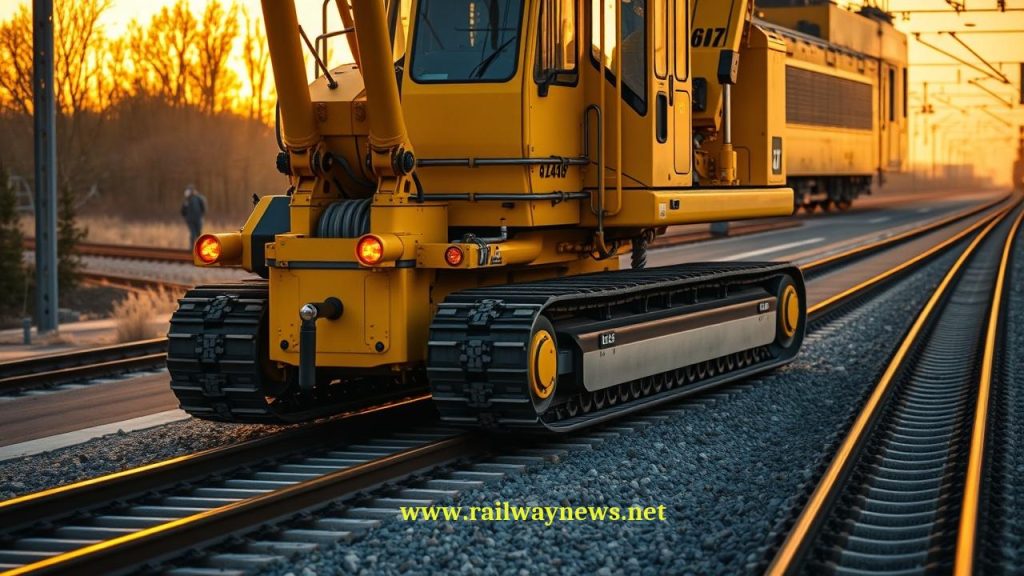
EN 15746-2 is a critical European Standard that specifies the general safety requirements for road-rail machines (RRMs) and their associated equipment. This standard is fundamental for ensuring the safety of personnel, infrastructure, and the machines themselves during operation on railway tracks. It addresses the significant risks inherent in using machinery in the unique and demanding railway environment.
The scope of this standard covers the design and construction of RRMs used for track construction, maintenance, and inspection. It forms Part 2 of a series, with EN 15746-1 focusing on the technical requirements for travelling and working. Together, they provide a detailed framework for manufacturers and operators to ensure these complex machines are safe for their intended purpose.
Core Safety Principles and Requirements of EN 15746-2
EN 15746-2 establishes a baseline for safety by addressing numerous technical aspects. The goal is to mitigate hazards through robust design, reliable systems, and clear operational protocols. The key requirements are detailed below.
- Stability and Structural Integrity: The standard mandates rigorous calculations and testing to ensure the machine is stable and will not overturn during all operational phases. This includes working on canted (superelevated) tracks, lifting loads, and travelling. The structural design of the chassis, booms, and other components must withstand the stresses of both road and rail use.
- Braking Systems: Adequate braking is paramount in the low-friction rail environment. EN 15746-2 specifies performance requirements for multiple braking systems: a service brake for normal operation, a parking brake to secure the machine when stationary, and an independent emergency brake for critical situations.
- Visibility, Lighting, and Audibility: The operator must have a clear field of view to ensure safe operation. The standard defines requirements for cabin design, mirrors, and cameras. It also specifies the type, color, and intensity of lighting (headlights, tail lights, work lights) and audible warning devices (horns, travel alarms) needed to make the machine conspicuous to other trains and trackside workers.
- Gauging and Clearance: Every RRM must conform to the specific kinematic loading gauge of the railway network it will operate on. This ensures the machine will not collide with infrastructure such as platforms, signals, bridges, or tunnel walls while travelling or working.
- Operator Cabin and Controls: The cabin must provide a safe and ergonomic environment for the operator. Controls must be logically arranged, clearly marked, and designed to prevent unintentional activation. A critical feature is the provision of easily accessible emergency stop devices that can halt all machine movements immediately.
- On-tracking and Off-tracking Systems: The procedure for transitioning a machine from road to rail (on-tracking) and vice versa is a high-risk activity. The standard requires that the systems used for this process are safe, reliable, and prevent accidental movement or instability.
- Hydraulic and Electrical Systems: Safety requirements for hydraulic and electrical systems are covered to prevent hazards like fluid leaks, pressure failures, or electrical shocks. This includes the protection of hoses and cables, proper insulation, and the inclusion of safety interlocks.
- Access and Egress: The standard specifies requirements for safe access and egress to the operator’s cabin and maintenance points, including the design of steps, handrails, and non-slip surfaces.
Operational Mode Comparison: Travelling vs. Working
The safety requirements for an RRM can differ significantly depending on whether it is travelling along the track or performing a static or mobile work task. The following table highlights some of these key differences as addressed by the standard.
| Safety Feature | Requirement in Travelling Mode | Requirement in Working Mode |
|---|---|---|
| Braking System | Primary focus on dynamic service and emergency braking to control speed and stop safely from travel velocity. | Emphasis on a robust parking brake to hold the machine stationary. The service brake must be effective for low-speed positioning. |
| Stability | Ensured through chassis design and suspension for travel on straight and canted tracks. | Often relies on stabilizers or outriggers. Stability is calculated against overturning moments from lifting or excavating. |
| Warning Systems | Headlights and tail lights corresponding to the direction of travel are active. Travel alarms (audible warnings) are often required. | Flashing amber beacons are typically activated to indicate a work site. Work-area specific alarms may be in use. |
| Speed Limitation | Governed by the machine’s maximum permitted travel speed on rail, as determined by its braking and dynamic performance. | Speed is often automatically limited to a very low “creep” speed (e.g., <5 km/h) or the machine is required to be stationary. |
| Equipment Controls | Controls for work equipment (e.g., crane, excavator arm) must be disabled or locked to prevent accidental deployment. | Work equipment controls are enabled. Safety interlocks may prevent travel while equipment is in a hazardous position. |
The Role of EN 15746-2 in the Railway Industry
Compliance with EN 15746-2 is not merely a procedural step; it is a cornerstone of modern railway safety culture. Its implementation provides several key benefits:
- Harmonized Safety Standard: It provides a unified set of safety rules across Europe, allowing machines to be certified for use on different national networks with greater ease and confidence.
- Benchmark for Manufacturers: The standard gives designers and manufacturers clear, testable criteria to meet, driving innovation in safety features and machine reliability.
- Risk Reduction: By systematically addressing the most common and severe hazards associated with RRMs, the standard directly contributes to a reduction in accidents and incidents on the track.
- Foundation for Approval: For a railway infrastructure manager, compliance with EN 15746-2 is a prerequisite for granting a machine “Engineering Acceptance” or approval to operate on their network.
Conclusion
EN 15746-2: General safety requirements is an indispensable standard in the railway sector. It provides a detailed and technically detailed framework that ensures road-rail machines are designed and built with safety as the highest priority. By defining stringent requirements for everything from structural stability and braking to operator controls and visibility, the standard plays a vital role in protecting personnel, safeguarding valuable railway infrastructure, and enabling the efficient maintenance and construction of modern railway networks.

Railway infrastructure, rolling stock and transport technologies specialist focused on global rail industry developments, high-speed rail systems, signaling technologies and freight transportation. Covering railway investments, public transport modernization, rail operations and international mobility projects across Europe, Asia and North America.