
Why EN 15566 Is Key To European Rail Interoperability
EN 15566 defines critical standards for railway draw gear and screw couplings, ensuring European train safety, interoperability, and reliability for seamless cross-border operations.
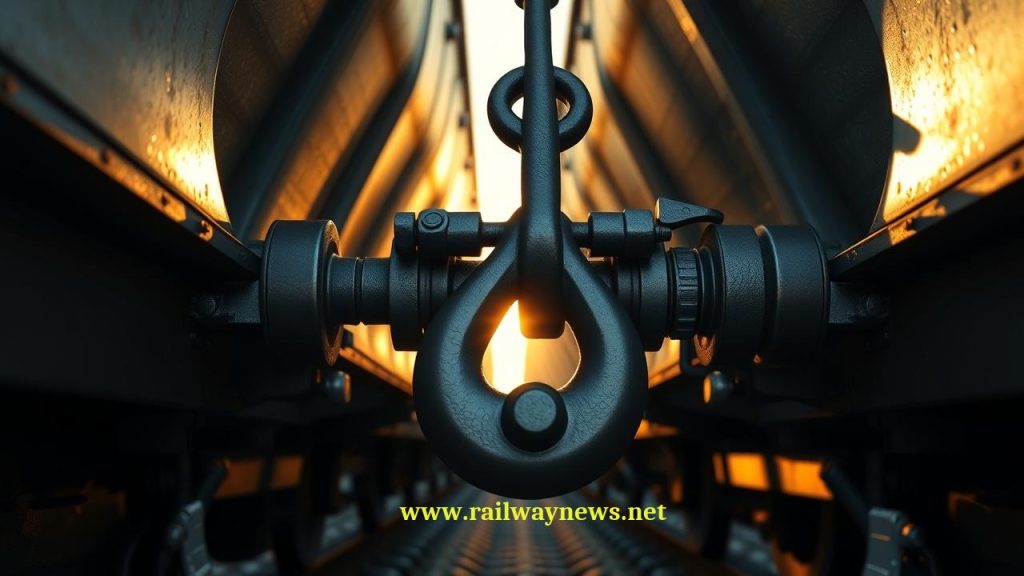
What is EN 15566: Railway Draw Gear and Screw Coupling?
EN 15566 is a crucial European Standard that specifies the technical requirements for the design, manufacturing, testing, and supply of draw gear and screw coupling systems for railway rolling stock. Its primary purpose is to ensure mechanical compatibility, safety, and interoperability between different types of wagons, coaches, and locomotives operating on the European railway network.
This standard defines the performance characteristics, dimensional tolerances, material properties, and testing procedures for the components that form the primary mechanical link between railway vehicles. By adhering to EN 15566, manufacturers and operators guarantee that their equipment can be safely and reliably coupled, forming trains capable of withstanding the immense tensile and compressive forces experienced during operation.
Core Components Defined by EN 15566
The standard covers the entire assembly responsible for transmitting traction and braking forces between vehicles. The key components include:
The Draw Hook
The draw hook is the primary load-bearing component. It is a large, forged or cast steel hook mounted at the end of the draw bar. Its specific profile and dimensions are strictly controlled by the standard to ensure it can securely engage with the link of a screw coupling from an adjacent vehicle. It must be able to withstand the full tractive effort of the locomotive without permanent deformation or failure.
The Screw Coupling
The screw coupling is the manually operated mechanism used to connect two vehicles and tension the connection. It consists of several parts:
- Coupling Link (or Bow): The U-shaped link that is placed over the draw hook of the adjacent vehicle.
- Coupling Screw: A threaded rod with left-hand and right-hand threads that, when turned, either shortens or lengthens the coupling.
- Trunnions and Nuts: These connect the coupling screw to the coupling link and the draw hook link, allowing for articulation.
- Handle (or Lever): A weighted lever used to rotate the coupling screw, allowing operators to tighten or loosen the connection efficiently. The weight helps keep the lever in a vertical, safe position when not in use.
The Draw Gear Assembly
The draw gear is the complete system that connects the draw hook to the vehicle’s underframe. It includes the draw bar, which transmits the forces, and an energy-absorbing element (such as springs or elastomeric pads). This system is designed not only to pull the train but also to dampen shocks and vibrations that occur during starting, braking, and running over uneven track.
Key Technical and Performance Requirements
EN 15566 is highly technical, focusing on ensuring the structural integrity and long-term reliability of these safety-critical components.
Material Specifications and Manufacturing
The standard mandates the use of specific grades of high-strength steel, typically forged or cast, for critical components like the draw hook and coupling link. These materials must exhibit excellent tensile strength, fatigue resistance, and toughness, especially at low ambient temperatures. Manufacturing processes, including heat treatment and surface finishing, are tightly controlled to prevent the introduction of defects that could lead to premature failure.
Strength and Durability Testing
To validate the design and manufacturing quality, EN 15566 requires a rigorous testing regime for all components. These tests are fundamental to proving compliance.
- Static Tensile Test: The complete coupling and draw gear assembly is subjected to a proof load and a minimum breaking load test. For standard freight applications, this breaking load is often specified at 1,000 kN or 1,500 kN to ensure a significant safety margin over the maximum operational forces.
- Fatigue Test: Components undergo cyclic loading to simulate millions of load applications that they will experience over their service life. This test is critical for identifying potential weaknesses that could lead to fatigue cracks.
- Impact Test (Charpy Test): Material samples are tested to ensure they retain their ductility and do not become brittle at low temperatures, which is a critical safety factor for railways operating in cold climates.
- Non-Destructive Testing (NDT): After manufacturing and before delivery, components like draw hooks are inspected using methods such as Magnetic Particle Inspection (MPI) or Ultrasonic Testing (UT) to detect any surface or sub-surface flaws.
Dimensional and Geometrical Tolerances
To guarantee interoperability, the standard provides precise dimensions for the draw hook profile, the size and shape of the coupling link, and the overall length of the screw coupling. These standardized dimensions ensure that any vehicle compliant with EN 15566 can be coupled to any other compliant vehicle, regardless of the manufacturer or country of origin.
Comparison Table: Key Parameters of EN 15566
The following table summarizes the core technical aspects and their importance as defined by the standard.
| Parameter | Typical Specification/Requirement | Rationale and Importance |
|---|---|---|
| Minimum Breaking Load | Typically 1,000 kN for standard freight applications. | Ensures the coupling can withstand the maximum possible pulling forces with a high safety factor, preventing train separation. |
| Material Grade | High-strength, forged or cast alloy steels (e.g., S355, 30Mn5). | Provides the necessary combination of tensile strength, fatigue resistance, and low-temperature toughness for a long and safe service life. |
| Draw Hook Profile | Strictly defined geometry and dimensions according to UIC standards. | Guarantees universal mechanical compatibility (interoperability) between all European rolling stock. |
| Fatigue Endurance | Must withstand a specified number of load cycles (e.g., 2 million cycles) without cracking. | Simulates the long-term operational stresses to prevent failure due to metal fatigue over the component’s lifespan. |
| Marking and Traceability | Each component must be permanently marked with manufacturer’s ID, serial number, and year. | Allows for full traceability throughout the supply chain for quality control, maintenance records, and incident investigation. |
Conclusion: The Foundation of Railway Interoperability
EN 15566 is more than just a technical document; it is a foundational pillar for the modern, integrated European railway system. By standardizing the physical connection between vehicles, it enables seamless cross-border freight and passenger traffic. The standard’s stringent requirements on materials, design, and testing directly contribute to the high levels of safety and reliability expected in the railway industry, ensuring that every link in the train is as strong as it needs to be.

Railway infrastructure, rolling stock and transport technologies specialist focused on global rail industry developments, high-speed rail systems, signaling technologies and freight transportation. Covering railway investments, public transport modernization, rail operations and international mobility projects across Europe, Asia and North America.