
Europe’s EN 12663-2: Cornerstone of Freight Wagon Safety
EN 12663-2, a European standard, specifies minimum structural requirements for railway freight wagon bodies to ensure they can withstand operational loads without permanent deformation or compromised safety, promoting interoperability and durability across the European rail network.
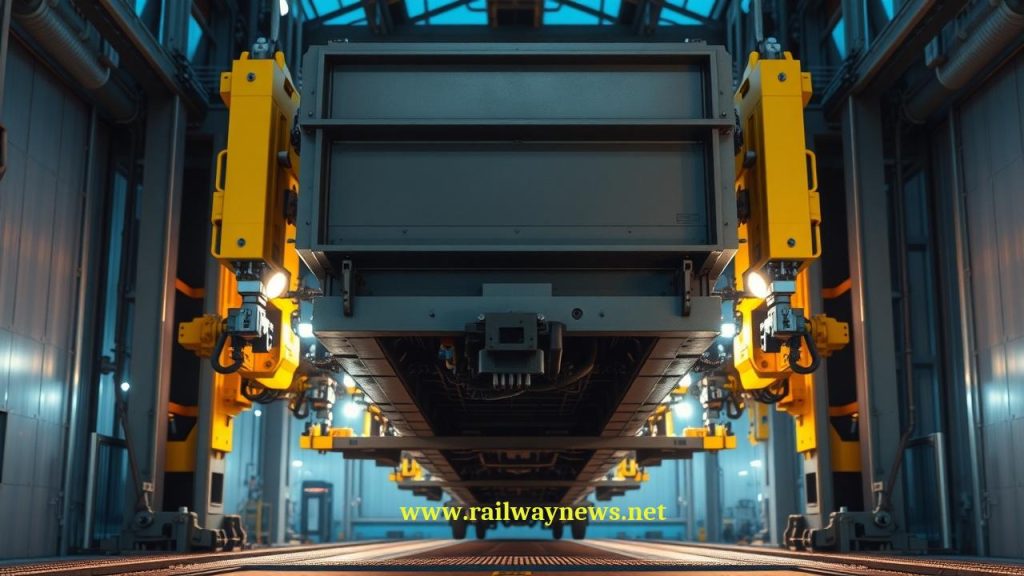
Understanding EN 12663-2: Structural Requirements for Freight Wagons
EN 12663-2 is a key European standard that specifies the minimum structural requirements for the bodies of railway freight wagons. Its primary objective is to ensure that wagon bodies possess sufficient strength to withstand the loads they will encounter during their entire operational life, without resulting in permanent deformation, fatigue failure, or compromised operational safety.
This standard serves as a fundamental technical document for designers, manufacturers, and approval bodies. It provides a harmonized methodology for demonstrating the structural integrity of a freight wagon, which is crucial for achieving interoperability across the European railway network. It is Part 2 of a series, with EN 12663-1 covering locomotives and passenger rolling stock, which have distinctly different operational and safety requirements.
Core Objectives of EN 12663-2
The standard is built around several core principles to guarantee the safe and reliable operation of freight wagons:
- Safety: To prevent catastrophic structural failures under exceptional but foreseeable operational loads, such as shunting impacts and emergency braking.
- Durability: To ensure the wagon body can resist fatigue damage from millions of load cycles experienced during normal service, achieving its intended design life.
- Functionality: To ensure the structure maintains its required stiffness, preventing excessive deflections that could impair the function of other systems or the wagon’s dynamic performance.
- Standardization: To provide a common and verifiable set of load cases and acceptance criteria, enabling a consistent approach to wagon design and validation across the industry.
Key Technical Requirements and Load Cases
EN 12663-2 defines a detailed set of design load cases that the wagon body structure must sustain. These are grouped into categories to reflect different operational scenarios.
Load Categories
The loads are classified based on their nature and frequency of occurrence:
- Exceptional Loads: These are high-magnitude, low-frequency loads that represent the most severe conditions a wagon is expected to encounter without catastrophic failure. The primary goal is to ensure the structure can withstand these events without yielding or permanent deformation that would render it unsafe.
- Normal (Service) Loads: These are the routine loads experienced during everyday operation. They include the maximum payload, dynamic forces from track irregularities, and forces from traction and braking.
- Fatigue Loads: These are the repetitive, variable loads that occur continuously during operation. While individual loads are well below the material’s yield strength, their cumulative effect can lead to fatigue cracking over time. The standard defines load spectra to assess the structure’s fatigue life.
Specific Load Cases in Detail
The standard meticulously details various load cases that must be analyzed. Key examples include:
- Longitudinal Static Loads: This is one of the most critical requirements for freight wagons. It simulates the forces experienced in a train, particularly “buffing” (compression) and “draw” (tension). The standard specifies forces, typically up to 2000 kN, to be applied at the buffer and/or draw gear locations to verify the integrity of the main underframe structure.
- Vertical Loads: The structure must be proven to safely support its own weight plus the maximum specified payload. This analysis must account for dynamic factors to simulate the bouncing and rocking motions experienced on track.
- Lifting and Jacking: The standard defines specific points and load scenarios for lifting the entire wagon body (e.g., for maintenance or recovery after derailment). The structure must support its own weight at these localized points without damage.
- Body End Wall Loads: For wagons where the end walls are designed to restrain the cargo (e.g., in some open wagons), specific loads are defined to ensure these walls can withstand the forces from a shifting payload.
- Combined Loads: The analysis must also consider realistic combinations of loads occurring simultaneously, such as vertical payload combined with braking forces and track twist.
Structural Design, Verification, and Validation
Compliance with EN 12663-2 must be demonstrated through a combination of calculation and, in some cases, physical testing.
Verification Methods
- Analytical Methods: Finite Element Analysis (FEA) is the most common method used today. A detailed digital model of the wagon body is created and subjected to the load cases defined in the standard. This allows engineers to visualize stress distributions, identify potential weak points, and assess deformations.
- Physical Testing: A static load test on a physical prototype is often required to validate the analytical models. The wagon body is placed in a test rig, and hydraulic actuators apply the specified loads. Strain gauges and displacement sensors are used to measure the structure’s response and confirm it meets the acceptance criteria. Fatigue testing of critical components may also be required.
Acceptance Criteria
For a design to be compliant, it must meet strict criteria:
- Strength: Under exceptional loads, the calculated stresses must not exceed the material’s yield strength. For some components, a specific safety factor is applied.
- Stiffness: The deflection of the structure under load must remain within specified limits to ensure proper vehicle dynamics and clearance envelopes.
- Fatigue Life: The fatigue analysis must demonstrate that the structure has an adequate service life and that the probability of fatigue failure is acceptably low. This is often demonstrated using methods like the Palmgren-Miner cumulative damage rule.
Comparison: EN 12663-1 vs. EN 12663-2
While both standards deal with the structural requirements of railway vehicle bodies, they are tailored to very different types of vehicles. The table below highlights the key differences.
| Feature | EN 12663-1 (Locomotives & Passenger Vehicles) | EN 12663-2 (Freight Wagons) |
|---|---|---|
| Primary Focus | Occupant and driver safety, crashworthiness, and structural integrity of complex superstructures. | Payload capacity, durability under heavy operational use, and resistance to shunting/coupling forces. |
| Collision Safety | High emphasis on crashworthiness. Often works in conjunction with EN 15227, which defines specific collision scenarios and energy absorption requirements. | Lower emphasis on controlled collision energy absorption. Focus is on maintaining structural integrity under high longitudinal compression (buffing loads). |
| Fatigue Load Emphasis | Considers fatigue from powertrain, bogie interaction, and aerodynamics. | Heavily focused on fatigue caused by high axle loads, track irregularities, and frequent coupling/uncoupling cycles. |
| Vertical Load | Dominated by the self-weight of the vehicle body and equipment. Passenger load is secondary. | Dominated by the payload, which can be several times the self-weight (tare weight) of the wagon. |
| Key Load Cases | Obstacle impact on front end, cab integrity, lifting scenarios for complex vehicle bodies. | High static longitudinal compression and tension, payload-induced stresses, and forces from lifting a fully laden wagon. |
Scope and Application in the Railway Industry
EN 12663-2 is a harmonized standard under the European Union’s Technical Specifications for Interoperability (TSI) for freight wagons. This means that compliance with this standard provides a “presumption of conformity” with the essential structural requirements of the TSI. Therefore, it is a critical document for any manufacturer wishing to get a new freight wagon design approved for operation on the trans-European rail network. It is used extensively by:
- Vehicle Designers and Engineers to establish design criteria and perform structural analysis.
- Manufacturers to define manufacturing and quality control processes that ensure the final product meets the design intent.
- Testing Laboratories to conduct physical validation tests according to a standardized procedure.
- Notified Bodies (NoBos) and National Safety Authorities (NSAs) as a basis for assessing and certifying the structural safety of a new freight wagon.
Conclusion
EN 12663-2 is more than just a technical document; it is a cornerstone of freight wagon safety and interoperability in Europe. By providing a robust and standardized framework for structural design and verification, it ensures that all new freight wagons are built to a consistently high standard of strength and durability. This contributes directly to the reliability of rail freight operations, reduces the risk of in-service failures, and facilitates the seamless movement of goods across national borders.

Railway infrastructure, rolling stock and transport technologies specialist focused on global rail industry developments, high-speed rail systems, signaling technologies and freight transportation. Covering railway investments, public transport modernization, rail operations and international mobility projects across Europe, Asia and North America.