
Poland Signs €618M Deal: Boosts Rail Line for Nuclear Plant
Poland invests EUR 618M to double the Gdynia Chylonia – Lębork line, boosting speeds to 160 km/h and supporting vital infrastructure for regional growth and future energy needs.
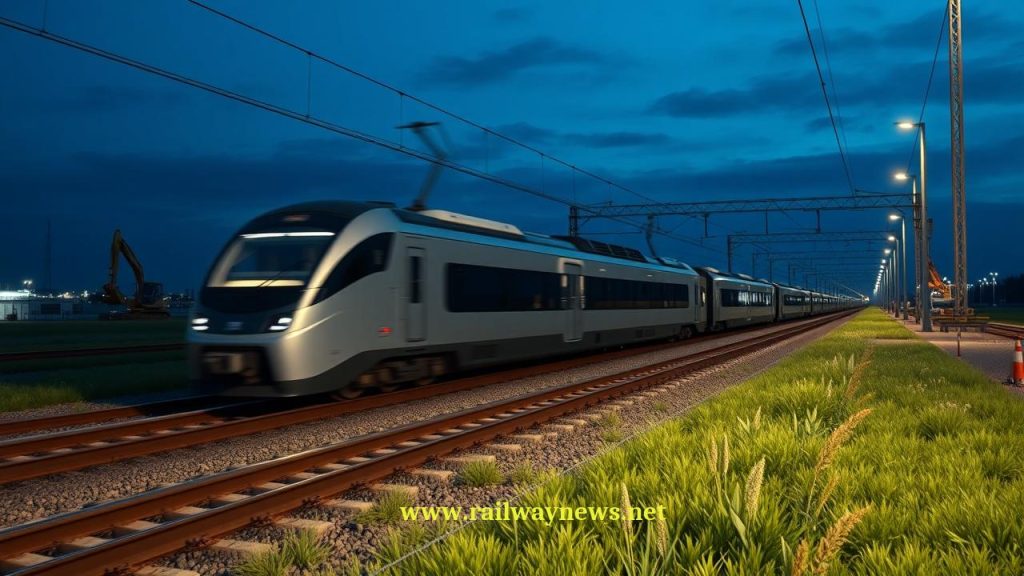
Poland’s PKP PLK has awarded a landmark EUR 618 million contract to ZUE S.A. for the detailed modernization and doubling of the Gdynia Chylonia – Lębork section of railway line No. 202. This strategic investment will significantly increase line capacity, boost passenger train speeds to 160 km/h, and create a vital transport link for a planned nuclear power plant in the Pomerania region.
| Category | Details |
|---|---|
| Project | Modernization & Doubling of Gdynia Chylonia – Lębork line (No. 202) |
| Contract Value | EUR 618 million (co-financed by EU FEnIKS program) |
| Contractor | ZUE S.A. (Krakow-based) |
| Completion Deadline | End of 2029 |
| Max Speed (Post-Upgrade) | 160 km/h (Passenger), 120 km/h (Freight) |
| Key Infrastructure | 55 km of new track, 73 modernized structures, 5 new stations |
Polish railway infrastructure manager PKP Polskie Linie Kolejowe (PKP PLK) has officially launched a major upgrade on a key northern corridor, signing a design-and-build contract with contractor ZUE S.A. The project focuses on the Gdynia Chylonia – Lębork section, a critical segment of the main line No. 202 connecting the Trójmiasto (Tri-City) metropolitan area with Słupsk. Financed through the European Funds for Infrastructure, Climate and Environment Program 2021–2027 (FEnIKS), the investment is set to transform regional and freight transport by 2029.
The technical scope of the project is extensive, aimed at increasing both speed and safety. The work involves modernizing 55 km of existing track and the overhead contact network to accommodate higher speeds. A significant safety enhancement will see 12 level crossings eliminated and replaced with new road or rail overpasses. The project also includes the modernization of 73 engineering structures such as bridges, viaducts, and underpasses. A new, centralized rail traffic control system will be implemented and managed from a new Local Control Center in Wejherowo, streamlining operations. The infrastructure is also being prepared for a future upgrade to 200 km/h, which will be enabled by a separate project to install the European Rail Traffic Management System (ERTMS).
This modernization is part of a larger strategic vision for Poland’s Pomerania region. The project will directly improve passenger access and comfort by rebuilding platforms at 14 existing stations and stops to meet modern accessibility standards, while also constructing five entirely new stations in the Wejherowo district. According to Marcin Mochocki, PKP PLK’s director for investment implementation, the upgrade will ensure “fast and comfortable travel between Słupsk and Trójmiasto.” Crucially, line No. 202 is also designated as the primary rail access route for the future Lubiatowo–Kopalino nuclear power plant, positioning this investment as a cornerstone of Poland’s future energy and transport infrastructure.
Key Takeaways
- Enhanced Capacity & Speed: Doubling the track on key sections will alleviate bottlenecks for passenger and freight services, with passenger train speeds increasing from 120 km/h to 160 km/h, reducing travel time between Gdynia and Słupsk by about 15 minutes.
- Strategic Economic Corridor: The upgrade bolsters a vital route connecting major Pomeranian cities and provides essential infrastructure for the planned Lubiatowo–Kopalino nuclear power plant, supporting national energy security.
- Improved Passenger Experience: The project focuses on accessibility and convenience, with 14 stations being fully rebuilt and 5 new stations added, significantly improving public transport access for residents in the Wejherowo district.
Editor’s Analysis
The modernization of the Gdynia Chylonia – Lębork line is more than a standard infrastructure upgrade; it represents a strategic, multi-layered investment in Poland’s economic future. By integrating passenger service improvements, freight capacity expansion, and foundational support for the nation’s energy sector, PKP PLK is demonstrating a sophisticated approach to infrastructure planning. This project aligns perfectly with the EU’s wider goals of shifting traffic from road to rail, reducing carbon emissions, and enhancing connectivity. For the global rail market, it serves as a case study in how to leverage railway investment to achieve concurrent goals in public mobility, industrial logistics, and strategic national projects, making it a critical development to watch in Central Europe.
Frequently Asked Questions
- What is the main goal of the Gdynia Chylonia – Lębork line modernization?
- The primary goal is to double the track on key sections to increase capacity for both passenger and freight trains, raise operational speeds, improve safety, and enhance passenger accessibility along the line No. 202 corridor.
- Who is responsible for the construction and when will it be finished?
- The design and construction work will be carried out by the Krakow-based company ZUE S.A. The project is scheduled for completion by the end of 2029.
- How will this project improve train speeds and travel times?
- The modernization will allow passenger trains to run at speeds of up to 160 km/h (up from 120 km/h) and freight trains at 120 km/h (up from 70 km/h). This will reduce the travel time for the fastest passenger trains along the entire Gdynia-Słupsk route by approximately 15 minutes.

Railway infrastructure, rolling stock and transport technologies specialist focused on global rail industry developments, high-speed rail systems, signaling technologies and freight transportation. Covering railway investments, public transport modernization, rail operations and international mobility projects across Europe, Asia and North America.
RELATED POSTS

October 1, 2026 10:14 am
HS2 installed a 55-metre steel span in Birmingham, completing phase...

October 1, 2026 11:14 pm
CATS confirmed a six-mile streetcar route in Charlotte to add...

October 1, 2026 11:13 am
Norfolk Southern expanded its 3B Corridor in Alabama in 2025,...

October 1, 2026 1:12 pm
CSX expanded Queensgate Yard in Cincinnati by installing 42 power...

October 4, 2026 11:08 pm
Sound Transit confirmed the September 30 opening of Seattle Pinehurst...

October 6, 2026 12:16 am
FTA awarded $233 million in grants to eight US rail...