
Norfolk Southern Completes 3B Corridor Upgrades in Alabama
Norfolk Southern expanded its 3B Corridor in Alabama in 2025, adding five rail sidings and remote train signaling to boost freight flows to Mobile docks.
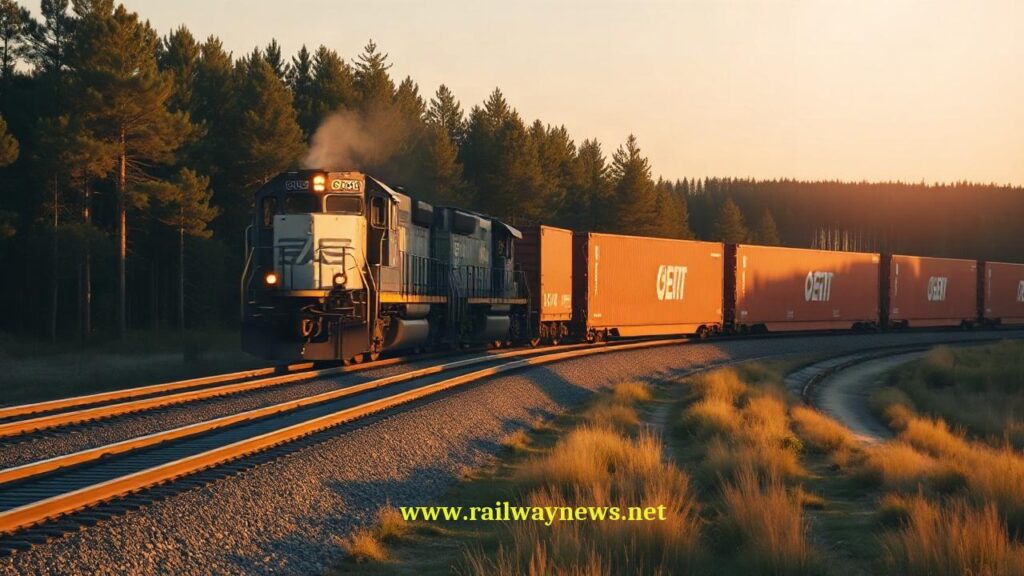
⚡ In Brief: Norfolk Southern has completed capacity expansions across its 3B Corridor in Alabama, executing more than six infrastructure projects—including centralized traffic control installations and five siding extensions—to accelerate rail freight flows to the Port of Mobile.
MOBILE, United States – Norfolk Southern Railway has completed infrastructure upgrades across six terminal and track locations along its 3B Corridor in Alabama, concluding construction initiated in 2024. The program deployed centralized traffic control signaling and extended five mainline sidings across Shelby, Wilcox, and Clarke counties to expand line capacity toward the Port of Mobile. Total capital expenditure for the individual siding packages was not publicly disclosed by the railroad.
What Is the Full Scope of This Project?
Norfolk Southern’s Alabama capital program encompasses track realignments, signaling modernizations, and five major siding extensions along the freight corridor linking industrial centers in northern and central Alabama to coastal docks in Mobile. Beyond the Wilton yard, crossing, and siding overhaul in Shelby County, work included the Lacey Siding Extension and Relocation, alongside new passing siding trackage at Fremont, Catherine, Sunny South, and Jackson (Source: Made in Alabama, 2024). Dispatchers can now remotely govern movements and clear bottlenecked meets using newly installed centralized traffic control (CTC), which replaces dark territory. Total added trackage mileage across the five siding extensions was not disclosed.
Key Project Data
| Parameter | Value |
|---|---|
| Project / Contract Name | Norfolk Southern 3B Corridor Upgrades |
| Total Value | Not disclosed (Component of wider $200M state investment program) |
| Parties Involved | Norfolk Southern Railway, Shelby County, City of Wilton, Alabama State Port Authority |
| Timeline / Completion | Started 2024; completed 2025 |
| Country / Corridor | United States / Alabama 3B Rail Corridor |
How Does This Compare to Similar Projects?
Norfolk Southern’s single-track optimization strategy reflects international efforts to eliminate choke points feeding marine ports without undertaking full double-tracking. In Eastern Europe, freight capacity projects along the Baltic corridor similarly targeted network velocity in 2024, combining catenary renewal on the Lagedi–Aegviidu line with LTG Cargo’s €115.7 million procurement of 17 Stadler EuroDual locomotives to increase haulage efficiency to the Port of Klaipėda (Source: Railway Gazette International, 2025). Class I railroads in North America are deploying siding extensions and electronic signaling to absorb growing trade volumes; the global rail freight market, valued at $370.0 billion in 2025, is projected to reach $602.7 billion by 2036 at a compound annual growth rate of 4.5% (Source: Future Market Insights, 2025).
Editor’s Analysis
Targeted siding extensions on the 3B Corridor allow Norfolk Southern to bypass single-track operating limits while matching intermodal growth generated by the Port of Mobile and inland facilities like the Montgomery Inland Port. By installing CTC across rural sections of Wilcox and Clarke counties, the operator gains network flexibility without the high capital burden of continuous second main track. This targeted capital approach supports a rail logistics sector projected to expand from $372.7 billion in 2024 to $531.4 billion by 2030 (Source: Grand View Research, 2024).
FAQ
Q: Which locations received track and siding extensions under this program?
A: Track crews lengthened sidings at Wilton, Lacey, Fremont, Catherine, Sunny South, and Jackson across Shelby, Wilcox, and Clarke counties. These extensions allow opposing freight trains to pass efficiently along Norfolk Southern’s single-track 3B Corridor.
Q: What was the total cost of Norfolk Southern’s 3B Corridor improvements?
A: The specific financial breakdown for the six corridor projects was not disclosed by Norfolk Southern. State economic reports indicate the works form part of an overarching $200 million rail investment program across Alabama (Source: Made in Alabama, 2024).
Q: What operational changes does centralized traffic control bring to the line?
A: Centralized traffic control replaces local manual authority with remote dispatch signaling to control train routing into sidings. The exact reduction in transit hours between central Alabama and Mobile has not been officially confirmed.

Railway infrastructure, rolling stock and transport technologies specialist focused on global rail industry developments, high-speed rail systems, signaling technologies and freight transportation. Covering railway investments, public transport modernization, rail operations and international mobility projects across Europe, Asia and North America.
RELATED POSTS

October 8, 2026 1:15 pm
Alstom secured a €1bn contract to build 13 automated trains,...

October 1, 2026 7:09 am
United States regulators confirmed a September 30 deadline for the...

October 8, 2026 12:18 pm
Siemens Mobility signed an agreement with VinSpeed to supply 350...

October 4, 2026 5:14 pm
Alstom secured a CA$4.7 billion order from VIA Rail Canada...

October 5, 2026 6:12 pm
AECOM and Jacobs secured a contract in September 2026 to...

October 1, 2026 12:13 am
Illinois approved $1.5 billion annually for the Northern Illinois Transit...