
Swietelsky Wins €200M Polish Rail Upgrade Contract
Swietelsky Rail Polska wins a landmark EUR 200 million contract to modernize a key Polish rail line, boosting regional connectivity and supporting Poland’s national rail upgrade.
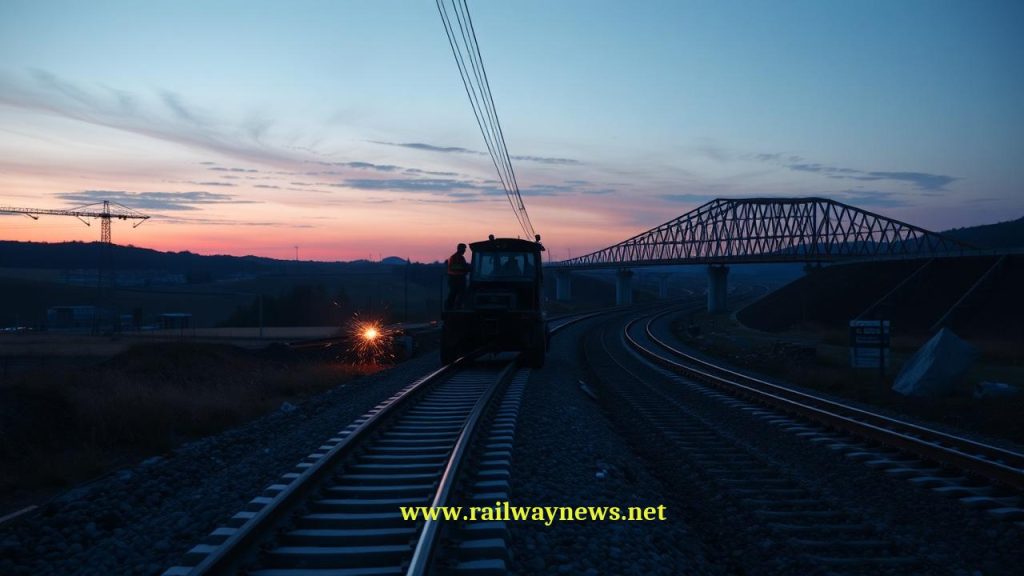
Swietelsky Rail Polska has secured a landmark EUR 200 million contract from PKP Polskie Linie Kolejowe (PKP PLK) to modernize a key 100 km rail corridor in southeastern Poland. This major infrastructure award, part of the country’s ambitious National Railway Program, underscores a nationwide strategy to overhaul both tracks and rolling stock in a detailed push to elevate its rail network to top European standards.
| Category | Details |
|---|---|
| Project Value | Approximately EUR 200 million |
| Winning Contractor | Swietelsky Rail Polska |
| Client | PKP Polskie Linie Kolejowe (PKP PLK) |
| Route Section | Stalowa Wola – Tarnobrzeg – Sandomierz – Ocice – Padew |
| Project Scope | Design, modernization, and extension of approx. 100 km of railway line |
| Scheduled Completion | Second Half of 2027 |
Main Body:
The contract, awarded following a competitive tender, tasks Swietelsky with the detailed design and execution of works along the approximately 100-kilometre line connecting Stalowa Wola, Tarnobrzeg, Sandomierz, and Padew. The project’s primary objectives are to enhance the safety and quality of rail operations, significantly reduce travel times for passengers, and increase the line’s capacity for freight traffic. The extensive construction and modernization activities are scheduled for completion by the second half of 2027, promising a substantial upgrade to regional connectivity. “This contract represents a historic moment for our company in Poland. We are proud to contribute directly to the development of Polish rail infrastructure,” stated Peter Krammer, CEO of parent company Swietelsky AG.
While specific technical details of the upgrade are pending the final design phase, projects of this scale under the National Railway Program typically involve a complete overhaul of the infrastructure. This includes the replacement of track, ballasts, and sleepers to allow for higher speeds and axle loads. Crucially, it often incorporates the modernization of signaling and control systems, potentially paving the way for European Rail Traffic Management System (ERTMS) compatibility. Further works are expected to cover the renovation of level crossings, bridges, and station platforms to improve safety and accessibility, creating an infrastructure capable of supporting modern, high-performance trains.
This major infrastructure investment does not exist in a vacuum. It is a critical component of Poland’s multi-billion-euro railway renaissance, which is simultaneously addressing track and fleet renewal. The Swietelsky contract complements massive rolling stock procurement programs by Polish operators. For instance, regional operator Koleje Mazowieckie is in the process of acquiring a total of 75 new FLIRT Electric Multiple Units (EMUs) from Stadler, creating one of the largest and most modern fleets of its kind in the country. Such parallel investments demonstrate a holistic national strategy: upgrading the physical lines is essential to unlock the full potential of the new, faster, and more efficient trains being brought into service across Poland.
Key Takeaways
- Major Contract Win: Swietelsky Rail Polska has affirmed its strong position in the Polish market with a historic EUR 200 million infrastructure contract.
- Regional Connectivity Boost: The 100 km modernization project will significantly enhance rail transport for passengers and freight in southeastern Poland, reducing journey times.
- Holistic National Strategy: The project is a key part of Poland’s National Railway Program, which synchronizes infrastructure upgrades with large-scale acquisitions of modern rolling stock.
Editor’s Analysis
The Swietelsky contract is more than just a regional upgrade; it’s a clear signal of Poland’s emergence as a premier battleground for Europe’s leading rail construction and technology firms. Fueled by national ambition and significant EU funding, the country is executing a textbook modernization strategy by tackling both infrastructure and fleet simultaneously. This creates a powerful, synergistic effect where new tracks and signaling systems enable the advanced capabilities of new trains, maximizing return on investment. For the global market, this positions Poland as a centre of excellence and a highly lucrative market for years to come, attracting international expertise and driving innovation in Central and Eastern Europe’s rail sector.
Frequently Asked Questions
Who won the contract for the Stalowa Wola – Padew railway line modernization?
Swietelsky Rail Polska, the Polish subsidiary of the Austrian construction group Swietelsky, was awarded the contract by Poland’s national railway infrastructure administrator, PKP Polskie Linie Kolejowe (PKP PLK).
What is the value and timeline of the project?
The project has a total value of approximately EUR 200 million. The design and construction works are scheduled to be completed by the second half of 2027.
How does this project fit into Poland’s broader railway strategy?
This infrastructure upgrade is a core component of Poland’s National Railway Program. It runs in parallel with major investments in modern rolling stock, such as new FLIRT trains, reflecting a detailed strategy to modernize the entire rail ecosystem for improved performance and efficiency.

Railway infrastructure, rolling stock and transport technologies specialist focused on global rail industry developments, high-speed rail systems, signaling technologies and freight transportation. Covering railway investments, public transport modernization, rail operations and international mobility projects across Europe, Asia and North America.
RELATED POSTS
September 6, 2026 5:19 am
Hitachi delivered Taiwan's first N700ST high-speed train from Japan in...

September 5, 2026 4:19 pm
CPK launched formal tender talks with four consortia to design...

September 6, 2026 4:12 am
Alstom delivered the first of 100 new G Class trams...
September 6, 2026 1:17 am
Hitachi Toshiba Supreme Consortium confirmed the first of 12 N700ST...
September 6, 2026 8:17 am
DB InfraGO reopened the Nuremberg-Regensburg line in Bavaria on 31...
September 5, 2026 6:17 pm
Universal Signalling won a deal to install its U-Cross system...