
UK Ely-Peterborough Rail Reopening: Revitalizing Infrastructure
Revitalizing the Ely-Peterborough train line? This case study explores the economic, social, and environmental factors driving the UK’s rail revitalization. Discover how!
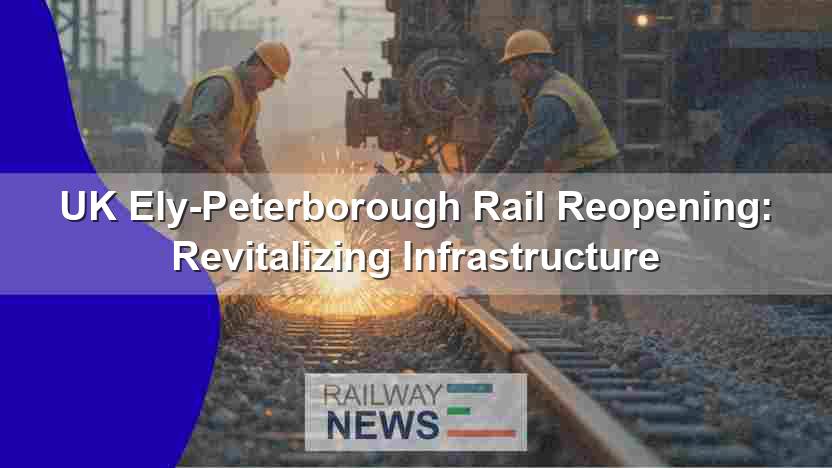
The recent announcement regarding the potential reopening of the Ely-Peterborough train line sparks a vital discussion about the resurgence of passenger rail networks in the UK. This article explores the intricacies of this project, examining the economic, social, and environmental factors driving its consideration. We will analyze the historical context of the line, evaluate the challenges associated with reviving a disused rail corridor, and assess the potential benefits and drawbacks of such a project. This examination will serve as a crucial case study to illuminate the complexities of revitalizing passenger rail infrastructure, considering its role in contemporary transportation and societal needs.
Historical Context and Infrastructure Assessment
The Ely-Peterborough line, once a vital artery in the regional rail network, faced closure due to factors including declining ridership and escalating maintenance costs. Analyzing the historical ridership patterns, the current state of the tracks, bridges, and stations is paramount. A thorough assessment of the infrastructure—including track condition, signaling systems, platform accessibility, and station facilities—is essential. This assessment needs to consider the compatibility of the existing infrastructure with modern train operating standards, safety regulations, and passenger expectations.
Economic Viability and Funding Mechanisms
The financial feasibility of the Ely-Peterborough train line reopening is a critical component of the project. A detailed cost-benefit analysis, encompassing both capital expenditure (infrastructure upgrades) and operational costs, needs to be conducted. Potential funding sources, including government grants, private sector investment, and public-private partnerships, should be explored. Examining potential revenue streams, such as fares, commercial partnerships, and tourism, is also critical for demonstrating long-term financial sustainability. Additionally, evaluating the potential impact on local businesses and the wider regional economy, including job creation and tourism boosts, is an integral part of this assessment.
Environmental Impact and Sustainability Considerations
The environmental effects of reopening the line should be carefully considered. This includes the carbon footprint reduction from encouraging the use of a low-emission form of transport. A thorough Environmental Impact Assessment (EIA) must be conducted, considering air quality, noise pollution, biodiversity, and other related factors. Integrating sustainable practices, such as using energy-efficient rolling stock, adopting eco-friendly station designs, and incorporating renewable energy sources, can be critical in mitigating environmental concerns. Sustainable practices and considerations of carbon emissions reductions are key to the success of the project and align with wider environmental goals.
Conclusions: A Path Forward for Revitalizing Rail Networks
The Ely-Peterborough train line reopening presents a significant opportunity to revitalize passenger rail networks in the UK and beyond. A successful implementation requires a detailed approach considering historical context, economic viability, and environmental responsibility. A thorough infrastructure assessment is paramount, encompassing the state of tracks, signals, and stations. Economic viability hinges on a robust cost-benefit analysis, exploring potential funding mechanisms and revenue streams. The project must carefully evaluate the environmental impact, including noise pollution and carbon emissions, and incorporate sustainable practices throughout. Moreover, understanding the potential social and economic impacts on local communities, including employment creation and tourism promotion, is crucial for long-term success.
The revival of the Ely-Peterborough train line provides a fascinating case study for other regions looking to reintroduce or enhance rail services. The success of this project will undoubtedly depend on careful planning, meticulous execution, and a commitment to long-term sustainability. This project is not just about moving people; it’s about fostering a more connected and sustainable future for the region, highlighting a critical need to increase sustainable transportation options.
By successfully re-establishing a passenger rail line, the Ely-Peterborough project promises to demonstrate to other areas the advantages of this form of transportation, including the significant role it plays in reducing carbon footprints.
The successful reopening of the Ely-Peterborough train line will be a testament to the long-term benefits of sustainable transportation solutions. It demonstrates a commitment to environmentally friendly practices that can be adopted by other regions aiming to achieve similar goals. The future success of the Ely-Peterborough train line reopening will showcase how such initiatives can be beneficial to not only the region but also the entire country.
This project serves as a beacon of hope, showcasing how efficient and sustainable transportation can play a major role in shaping the future of the United Kingdom’s rail networks.
You might be interested in:
Last December 2018, we published an article about New Zealand’s Hamilton-Auckland passenger rail trial. Click here to read – Hamilton-Auckland Rail Trial: NZ’s $78.2M Gamble

Railway infrastructure, rolling stock and transport technologies specialist focused on global rail industry developments, high-speed rail systems, signaling technologies and freight transportation. Covering railway investments, public transport modernization, rail operations and international mobility projects across Europe, Asia and North America.
RELATED POSTS

October 8, 2026 1:15 pm
Alstom secured a €1bn contract to build 13 automated trains,...

October 1, 2026 7:09 am
United States regulators confirmed a September 30 deadline for the...

October 8, 2026 12:18 pm
Siemens Mobility signed an agreement with VinSpeed to supply 350...

October 4, 2026 5:14 pm
Alstom secured a CA$4.7 billion order from VIA Rail Canada...

October 5, 2026 6:12 pm
AECOM and Jacobs secured a contract in September 2026 to...

October 1, 2026 12:13 am
Illinois approved $1.5 billion annually for the Northern Illinois Transit...