
Moscow’s Unmanned Tram: Rail Innovations & Future of Transport
Moscow debuts Russia’s first fully unmanned tram, part of a wider plan for autonomous public transport.
Introduction
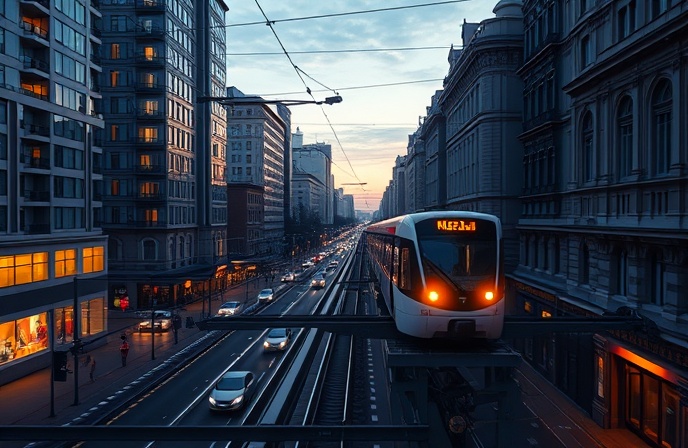
The City of Moscow has introduced Russia’s first fully unmanned tram, operating on line number 10 between Shchukinskaya and Kulakova Street metro stations in the city’s northwest.
Unmanned Tram Deployment
The unmanned tram has completed over 8,000 kilometers in test mode without any traffic violations. The software for the tram was developed by Moscow Metro employees. The tram incorporates a sensor system, route map, and integrated systems for localization, computer vision, movement planning, and wheel slip prevention. It can stop precisely, manage doors, respond to signals, yield to pedestrians, make decisions at intersections, switch tracks, and maintain its schedule. A tram management team member is present for observation as required by law.
The City of Moscow plans to expand the use of these trams. By the end of this year, three additional trams will be equipped with unmanned technologies. By 2030, over 300 trams, approximately two-thirds of the fleet, will feature these systems. The city projects that by 2035, around 90 percent of Moscow trams will use unmanned technologies.
Unmanned Technology Development
The Electric Transport and Unmanned Technology Centre in western Moscow, inaugurated in May 2024, supported the development of the unmanned tram project, which began in 2023. In August, Mayor Sergei Sobyanin announced the city’s first unmanned metro train would be introduced in 2026. He anticipates all public transport will eventually be unmanned, with rail transport as the initial focus.
Unmanned vehicle testing in Moscow occurs in three stages: operation without passengers, operation with passengers under driver supervision, and operation with passengers and no driver.
Moscow’s Public Transport Strategy
Public transport is essential in Moscow, serving approximately 70 percent of the population, with plans to increase this to 75 percent. The city aims to limit the number of cars entering daily to 3.5 million, a target maintained for seven years. This effort is supported by urban rail expansion and infrastructure modernization.
Moscow intends to build an average of six new metro stations per year, with approximately 30 stations expected by 2030 and another 30 by 2035. Construction is underway on the Bolshaya Koltsevaya, Rublevo-Arkhangelskaya, Biryulevskaya, and Troitskaya lines, with a new line planned toward the village of Skolkovo.
Infrastructure and Network Expansion
The Moscow Metro’s rolling stock will increase by 17 percent by 2030. Over the next two years, the metro will receive more than 700 carriages from the Moscow-2026 series. Metro trains facilitate over 8.2 million journeys on an average weekday. In August, the Mayor also announced plans to extend the Moscow Central Diameters network beyond the capital, with future links planned to regional centres such as Yaroslavl, Tula, Ivanovo, Tver, and Smolensk.
Last June 2025, we published an article about Renfe’s cutting-edge Aranjuez maintenance hub, boosting Cercanías efficiency. Click here to read – Future of Rail: Renfe’s Railway Technology Hub, Aranjuez: Essential Guide
Conclusion
Moscow has launched Russia’s first fully unmanned tram and plans to significantly expand its use of unmanned technologies in public transport, supported by infrastructure development and network expansion.
Company Summary
Moscow Metro: The operator of the Moscow Metro, responsible for developing the software for the unmanned trams.

Railway infrastructure, rolling stock and transport technologies specialist focused on global rail industry developments, high-speed rail systems, signaling technologies and freight transportation. Covering railway investments, public transport modernization, rail operations and international mobility projects across Europe, Asia and North America.
RELATED POSTS

October 8, 2026 1:15 pm
Alstom secured a €1bn contract to build 13 automated trains,...

October 1, 2026 7:09 am
United States regulators confirmed a September 30 deadline for the...

October 8, 2026 12:18 pm
Siemens Mobility signed an agreement with VinSpeed to supply 350...

October 4, 2026 5:14 pm
Alstom secured a CA$4.7 billion order from VIA Rail Canada...

October 5, 2026 6:12 pm
AECOM and Jacobs secured a contract in September 2026 to...

October 1, 2026 12:13 am
Illinois approved $1.5 billion annually for the Northern Illinois Transit...