
Future-Proof Rail: AI, Sustainability & Modernization
Revolutionize your railway network with innovative automation and sustainable practices. Discover how AI and eco-friendly technologies are shaping the future of rail.
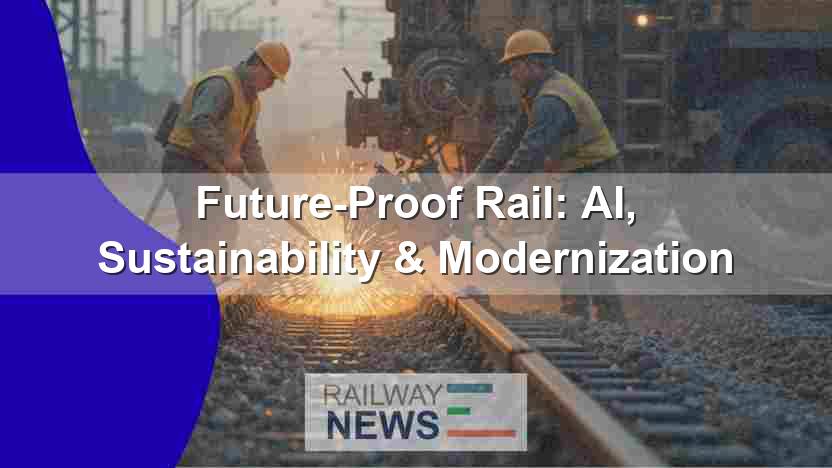
This article explores the critical role of innovation and sustainable practices in shaping the future of railway infrastructure. From the modernization of existing networks to the development of entirely new systems, technological advancements and environmental considerations are driving transformative changes in the rail industry. This evolution is crucial not only for enhancing passenger and freight transportation but also for supporting economic growth and mitigating climate change. The integration of advanced technologies, such as AI and automation, promises to optimize operations, increase efficiency, and enhance safety. Sustainability is paramount, with a focus on renewable energy sources, lightweight materials, and eco-friendly construction methods. This article will explore how these advancements and commitments can contribute to a more efficient, environmentally responsible, and future-proof railway system.
The Rise of Automation and AI in Railway Operations
Automation is rapidly transforming railway operations, leading to improved safety, efficiency, and reduced costs. Advanced signaling systems, incorporating AI-driven decision-making, are crucial for managing complex traffic patterns in high-density networks. Predictive maintenance, enabled by AI, allows railway operators to anticipate and address potential equipment failures proactively, minimizing downtime and maximizing operational reliability. Automated train control systems further enhance safety, precision, and efficiency by allowing for more precise adjustments to train speeds and schedules, potentially leading to improved passenger experiences. These systems also facilitate the implementation of innovative features such as dynamic scheduling that adjust to real-time conditions, ensuring optimal train utilization.
Sustainable Practices in Railway Construction and Operation
The railway industry is increasingly recognizing the urgent need to adopt sustainable practices in every stage of the journey. The use of lightweight materials in train construction reduces energy consumption and emissions during operation. The integration of renewable energy sources, such as solar and wind power, in railway infrastructure minimizes reliance on fossil fuels. Additionally, optimized train designs and aerodynamic improvements contribute to reduced energy consumption, enhancing fuel efficiency and lowering environmental impact. This move toward sustainability encompasses not just the operational aspect but also the construction phase, with eco-friendly materials and strategies employed throughout the lifecycle of the infrastructure.
The Impact of Modernization on Existing Networks
Modernizing existing railway networks involves a multifaceted approach, addressing both operational and infrastructural challenges. The upgrade of signaling systems, track maintenance, and train fleets can significantly improve safety, reliability, and passenger experience. High-speed rail lines and dedicated freight corridors can be implemented to facilitate high-speed passenger transport and efficient freight movement. Efficient use of technology can support improved maintenance schedules, thereby reducing disruptions and enhancing the overall quality of service. This detailed approach to modernization contributes to a more robust and resilient railway system, able to meet the evolving demands of a growing and changing society. The new Stadler Rail facility in [Location] exemplifies this approach by enabling the production of modern, sustainable, and high-performing railcars.
Conclusion: Towards a Future-Proof Rail System
The future of railway infrastructure hinges on a detailed strategy that integrates innovation, sustainability, and modernization. Automation and AI play a critical role in optimizing operations, enhancing safety, and improving efficiency. Sustainable practices are crucial for mitigating environmental impact throughout the entire lifecycle of the railway system, encompassing construction, operation, and maintenance. Modernization efforts are vital to strengthening existing infrastructure, improving passenger and freight capacity, and ensuring the robustness and resilience of the overall network. The new Stadler Rail facility serves as a testament to this commitment, showcasing advanced manufacturing and sustainable design principles. This holistic approach, emphasizing both technical advancements and ecological responsibility, is essential for creating a future-proof railway system that meets the needs of future generations. The railway sector is in a dynamic transition, and embracing these integrated strategies will propel the industry forward, resulting in safer, faster, and more sustainable transportation options for the world. By prioritizing these elements, the industry can not only meet current transportation demands but also anticipate and adapt to future challenges. Efficiently utilizing resources and adapting to the evolving technological landscape are pivotal for achieving greater operational efficiency and enhancing the overall passenger experience. Improved infrastructure supports economic growth, fostering local communities and national prosperity. By aligning infrastructure development with sustainability goals, the industry can support a greener and more prosperous future for all. The future of railway travel promises enhanced passenger comfort, efficient freight movements, and a reduced environmental footprint.
You might be interested in:
Last February 2019, we covered Japan’s Shinkansen getting nationwide Wi-Fi. Click here to read – Japan’s Shinkansen: Nationwide Wi-Fi Rollout

Railway infrastructure, rolling stock and transport technologies specialist focused on global rail industry developments, high-speed rail systems, signaling technologies and freight transportation. Covering railway investments, public transport modernization, rail operations and international mobility projects across Europe, Asia and North America.
RELATED POSTS

October 8, 2026 1:15 pm
Alstom secured a €1bn contract to build 13 automated trains,...

October 1, 2026 7:09 am
United States regulators confirmed a September 30 deadline for the...

October 8, 2026 12:18 pm
Siemens Mobility signed an agreement with VinSpeed to supply 350...

October 4, 2026 5:14 pm
Alstom secured a CA$4.7 billion order from VIA Rail Canada...

October 5, 2026 6:12 pm
AECOM and Jacobs secured a contract in September 2026 to...

October 1, 2026 12:13 am
Illinois approved $1.5 billion annually for the Northern Illinois Transit...