
Frankfurt Airport: Siemens Airval APM Revolution
Frankfurt Airport’s new €300 million automated people mover system, featuring Siemens’ GoA4 technology, is revolutionizing airport transit. Discover how this cutting-edge system enhances passenger flow and efficiency!
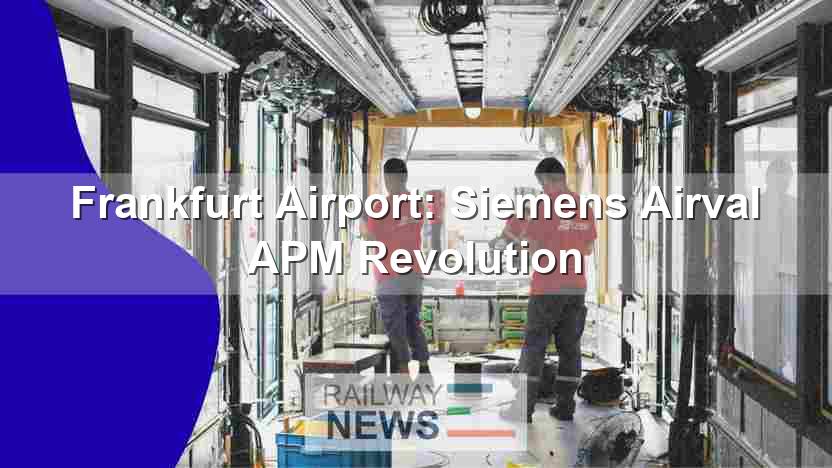
This article examines the significant investment made by Fraport AG, the operator of Frankfurt Airport (FRA), in a state-of-the-art automated people mover (APM) system. The €300 million contract awarded to a consortium of Siemens, Max Bögl Group, and Keolis Deutschland represents a substantial commitment to enhancing passenger experience and optimizing airport infrastructure. This project highlights the increasing trend towards automated transportation solutions within large-scale transportation hubs, focusing on efficiency, capacity, and passenger comfort. We will delve into the technical specifications of the Airval system, the roles of the consortium members, and the broader implications of this investment for the future of airport transit. The analysis will also consider the long-term operational and maintenance aspects, the projected impact on passenger flow, and the potential for similar projects in other major airports globally.
The Airval System: Specifications and Technology
The core of the project is the Siemens Airval system, a fully automated APM designed to seamlessly connect Terminal 2, the new Terminal 3, and the station at Terminal 1 of Frankfurt Airport. This 5.6km double-track line will incorporate three stations and utilize twelve two-car trains. Each train boasts a capacity to transport over 4,000 passengers per hour in each direction, travelling at speeds up to 80km/h. The system’s automation relies heavily on Siemens’ GoA4 (Grade of Automation 4) Communication Based Train Control (CBTC) Trainguard MT technology, ensuring safe and efficient operation without human intervention. Central rail guidance systems guarantee precise train movement, minimizing the risk of derailment or collision. Passenger comfort is prioritized with onboard internet connectivity and informative displays.
Consortium Roles and Responsibilities
The project’s success hinges on the collaborative expertise of the Siemens-led consortium. Siemens’ contribution extends beyond the provision of trains and automation systems; it encompasses trackwork, platform screen doors (PSD), communication networks, depot infrastructure, and power supply. Additionally, Siemens will be responsible for operational management and maintenance for at least five years, ensuring the system’s long-term reliability. Max Bögl Group, a renowned construction and engineering firm, likely plays a vital role in the civil works aspects, including the construction of the track infrastructure, stations, and supporting facilities. Keolis Deutschland, a leading public transport operator, contributes its expertise in operational planning and scheduling, potentially assisting in system integration and passenger management.
Operational Impact and Passenger Experience
The Airval system is poised to significantly improve passenger flow and experience at Frankfurt Airport. The increased capacity will alleviate congestion, especially during peak hours, shortening transfer times between terminals and improving overall efficiency. The two-minute frequency, the comfortable trains, and the provision of onboard amenities like Wi-Fi and information displays demonstrate a commitment to passenger comfort and satisfaction. The anticipated reduction in transfer times will enhance the competitiveness of Frankfurt Airport as a major European hub, benefitting both airlines and passengers.
Long-Term Implications and Future of Airport Transit
Fraport’s investment in the Airval system sets a precedent for future airport developments. The successful implementation of this fully automated system will likely inspire similar projects in other major international airports. The increased efficiency and reduced operational costs associated with automated systems, combined with the enhanced passenger experience, make this technology increasingly attractive. Additionally, the project highlights the growing importance of seamless intermodal transport solutions within large-scale transportation hubs. The integration of efficient and automated transit systems is becoming a critical component for achieving effective and sustainable passenger movement.
Conclusions
Fraport’s €300 million investment in the Siemens Airval automated people mover system at Frankfurt Airport marks a significant step forward in airport infrastructure development. The project showcases the increasing adoption of advanced automated transit solutions to optimize passenger flow and enhance travel experience. The collaborative effort of Siemens, Max Bögl Group, and Keolis Deutschland ensures a robust and reliable system, with Siemens’ GoA4 CBTC technology guaranteeing safe and efficient operation. The system’s high capacity, two-minute train frequency, and passenger amenities will significantly improve the efficiency of passenger movement within the airport, reducing congestion and transfer times. The successful implementation of this project is expected to serve as a model for other large airports globally, promoting the widespread adoption of automated people mover systems. The long-term benefits extend beyond improved passenger experience, encompassing enhanced operational efficiency, reduced costs, and a strengthened position for Frankfurt Airport as a leading European aviation hub. The focus on passenger comfort, coupled with technologically advanced systems, will undoubtedly contribute to a more positive and efficient airport experience for travellers in the years to come. This innovative approach to airport transportation signals a positive trend toward modernization and optimization in the aviation sector.

Railway infrastructure, rolling stock and transport technologies specialist focused on global rail industry developments, high-speed rail systems, signaling technologies and freight transportation. Covering railway investments, public transport modernization, rail operations and international mobility projects across Europe, Asia and North America.
RELATED POSTS
September 6, 2026 5:19 am
Hitachi delivered Taiwan's first N700ST high-speed train from Japan in...

September 6, 2026 4:12 am
Alstom delivered the first of 100 new G Class trams...
September 6, 2026 1:17 am
Hitachi Toshiba Supreme Consortium confirmed the first of 12 N700ST...

September 6, 2026 8:17 am
DB InfraGO reopened the Nuremberg-Regensburg line in Bavaria on 31...
September 6, 2026 12:20 pm
Indian Railways ordered a probe after a fire destroyed 2...
September 7, 2026 4:15 pm
Zimbabwe approved the EUR 3 billion Harare Light Rail project,...