
Netherlands Rail Concession: EU Court Case Impact, Analysis
EU takes Netherlands to court over flawed rail concession award, violating competition rules.
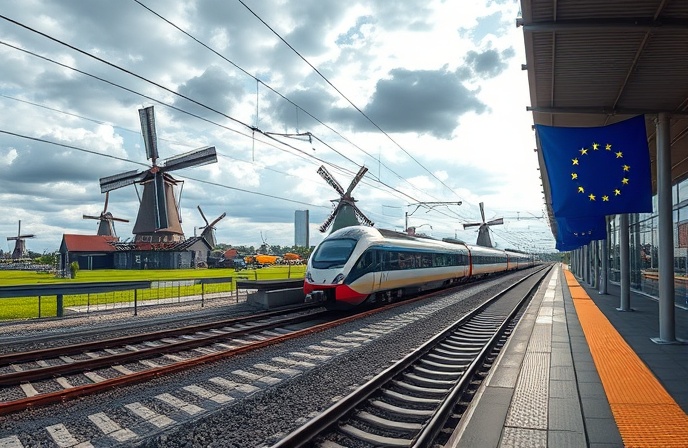
European Commission Takes Netherlands to Court over Rail Concession Award
In a move that underscores the European Union’s (EU) commitment to fostering competition in the railway sector, the European Commission (EC) has referred the Netherlands to the Court of Justice of the European Union (CJEU). This action follows a dispute over the Dutch government’s direct award of a rail passenger transport concession to incumbent operator Nederlandse Spoorwegen (NS) for the period of 2025-2033. The core issue revolves around the EC’s assertion that the Netherlands violated EU regulations by bypassing competitive tendering, a practice now largely mandated by the Fourth Railway Package. This article will delve into the specifics of the legal dispute, the implications for the Dutch rail market, and the broader ramifications for railway competition across the EU.
The Contested Concession: A Breach of Regulation?
The heart of the matter lies in the awarding of the rail passenger transport concession. The EC contends that the Dutch government contravened Regulation (EC) No 1370/2007, which provides the legal framework for public passenger transport by rail within the EU. Crucially, this regulation requires member states to conduct a market analysis to determine if the services covered by a new contract could be provided commercially, without public service obligations or financial compensation. The EC argues that the Netherlands failed to perform this crucial assessment before directly awarding the contract to NS. The direct award to NS commenced on January 1, 2025, however, under the updated version of the regulation, direct awards are no longer permissible from December 2023. The failure to comply with this requirement is at the centre of the EC’s legal challenge. Infringement proceedings were launched in July 2023, followed by further engagement, and eventually the referral to the CJEU.
Market Analysis: A Missed Opportunity for Competition
Under EU rules, public authorities can impose service obligations on transport operators, accompanied by corresponding compensation or exclusive rights. However, this is only permissible if the services are deemed non-viable under standard market conditions. The EC’s argument focuses on the absence of the required market analysis, which should have assessed whether commercial operators could have provided the same services without public support. The Commission is concerned that the Dutch government did not carry out such an analysis, and is also questioning the way in which the public service obligations were determined. This omission, according to the EC, stifles competition and could potentially lead to less efficient service provision and higher costs for both taxpayers and rail passengers. The EC believes that competitive tendering promotes innovation, higher service quality, and efficiency gains within the rail sector.
The Road to the CJEU: A Timeline of Disputes
The EC’s concerns regarding the Dutch rail concession were first raised in 2020, prompting a series of discussions with Dutch authorities. These discussions were aimed at aligning the contract with EU law, but without success. Formal infringement proceedings commenced in July 2023, leading to an additional letter in March 2024 and a reasoned opinion issued in February 2025. The inability to reach an agreement resulted in the escalation of the case to the CJEU. The CJEU will now assess whether the Netherlands has indeed breached EU law. If the Court rules in favor of the EC, the Dutch government may be obligated to amend the current concession framework and could face financial penalties for non-compliance. This case sets a precedent for how other member states interpret and apply EU regulations related to rail public service contracts.
Conclusion
The European Commission’s decision to take the Netherlands to the CJEU highlights the EU’s continued commitment to fostering competition in the rail sector. The case revolves around the Dutch government’s awarding of a rail passenger transport concession without the required competitive tendering process. The EC argues that the Dutch government failed to properly assess whether the awarded services could be provided commercially. This case has significant implications for the Dutch rail market, potentially necessitating adjustments to the current concession framework if the CJEU rules in favor of the Commission. Additionally, this case sends a strong signal to other EU member states, reinforcing the importance of adhering to EU regulations and embracing competitive tendering to drive innovation, improve service quality, and reduce costs for rail passengers and public authorities. Looking ahead, the outcome of this case will serve as a crucial precedent, shaping the future of rail public service contracts within the EU and reinforcing the importance of upholding fair competition within the railway market.

Railway infrastructure, rolling stock and transport technologies specialist focused on global rail industry developments, high-speed rail systems, signaling technologies and freight transportation. Covering railway investments, public transport modernization, rail operations and international mobility projects across Europe, Asia and North America.
RELATED POSTS

October 1, 2026 7:09 am
United States regulators confirmed a September 30 deadline for the...

October 8, 2026 1:15 pm
Alstom secured a €1bn contract to build 13 automated trains,...

October 4, 2026 5:14 pm
Alstom secured a CA$4.7 billion order from VIA Rail Canada...

October 1, 2026 12:13 am
Illinois approved $1.5 billion annually for the Northern Illinois Transit...

October 6, 2026 2:14 am
Union Pacific launched export rail shipments with Ferromex to deliver...

October 1, 2026 6:10 am
Amtrak approved a System Expansion Committee on July 30 to...