
Metro Trains Melbourne: Clifton Hill Derailment Recovery & Rail Safety
Melbourne’s Mernda and Hurstbridge lines reopened after a Clifton Hill derailment. Extensive safety checks and repairs were completed. Investigations are ongoing.
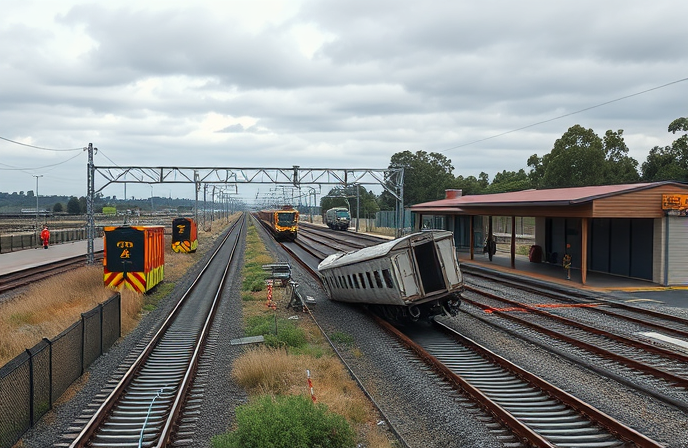
Mernda and Hurstbridge Lines Reopen Following Clifton Hill Derailment
Following a week of disruption, train services have resumed on Melbourne’s busy Mernda and Hurstbridge lines. The partial derailment, which occurred near Clifton Hill, impacted thousands of commuters and prompted a detailed response from Metro Trains Melbourne (MTM). The final carriage of the affected train was successfully removed on July 15th, but bus replacements remained in operation while extensive safety checks and repairs were completed. While the exact cause of the derailment remains under investigation, the priority has been the safe and efficient restoration of passenger services. This article will delve into the details of the recovery operation, the ongoing investigations, and the implications for passenger safety and service reliability.
Restoration of Services: A Complex Undertaking
The incident necessitated a multi-faceted approach to ensure the safe resumption of train operations. Following the removal of the derailed carriage, extensive track inspections were conducted. These inspections included Non-Destructive Testing (NDT) of the rail infrastructure, utilising ultrasonic and eddy current techniques to identify any subsurface defects that might have contributed to the derailment. Additionally, Signal and Communication (S&C) systems were rigorously checked to ensure their integrity. Power supply and overhead line equipment (OLE) were also examined for any damage. These checks are standard operating procedure (SOP) in the wake of derailments, overseen by qualified railway engineers and technicians. The removal of debris, replacement of damaged components, and the subsequent dynamic testing of the track network, combined with these detailed safety checks, added to the time required to return services to normal.
Investigation Underway: Determining the Cause
The investigation into the cause of the derailment is ongoing. Authorities, including the Australian Transport Safety Bureau (ATSB), are leading the investigation. The ATSB will likely examine several potential contributing factors. These include track geometry, wheel-rail interface dynamics, and any potential issues with rolling stock. The ATSB will analyze data from the train’s event recorders, which capture critical information such as speed, braking performance, and signaling data. Track geometry, including the condition of the rails, sleepers, and ballast, will also be scrutinized. Additionally, investigators will review maintenance records and operational procedures to determine if any systemic issues contributed to the incident. A detailed report will eventually be released to the public.
Passenger Communication and Operational Challenges
During the disruption, Metro Trains Melbourne focused on effective communication with passengers. Information displays at stations were updated, and announcements were made to provide real-time updates. The use of social media and the MTM website allowed for immediate dissemination of information and updates on alternative transport options. Bus replacement services were implemented to minimize disruption, though journey times were inevitably extended. Delays are a significant challenge for a rail operator. Passengers experienced longer commutes and increased congestion on alternative transport routes. Clear communication, timely service updates, and operational flexibility are vital to mitigating the impact of such incidents.
Planned Maintenance and Continued Disruption
While the Mernda and Hurstbridge lines have resumed regular service, previously scheduled maintenance works continue to affect a portion of the network. Buses will replace trains between Heidelberg and Eltham until Thursday, 24 July 2025. This ongoing work emphasizes the importance of network maintenance and upgrades to ensure long-term reliability. Passengers are advised to continue to check information displays, listen for announcements, and allow extra travel time as these works are completed. These ongoing maintenance activities, planned prior to the derailment, serve to highlight the constant need for maintenance and investment to maintain a reliable railway network.
Conclusion
The successful restoration of services on the Mernda and Hurstbridge lines is a testament to the operational readiness and dedication of Metro Trains Melbourne. The recovery operation, although impacting thousands of commuters, has been managed efficiently and with a strong focus on safety. The ongoing investigation into the cause of the derailment is crucial in identifying any contributing factors and preventing future incidents. The resumption of service also underscores the importance of clear communication, effective contingency planning, and efficient coordination during a crisis. As the rail network adapts to new safety standards and engineering innovations, passenger safety remains paramount. The ongoing maintenance will enhance infrastructure reliability and minimise future disruptions. The railway sector continues to adapt and improve. Continuous assessment of practices is essential to improve the passenger experience while maintaining safe operations. Additionally, with the increasing complexity of railway technology, robust training and development programs for railway personnel are becoming increasingly important.
Company Summary
Metro Trains Melbourne (MTM) is the primary operator of Melbourne’s metropolitan railway network, responsible for the operation of a vast network of train lines and the transportation of millions of passengers annually. MTM’s operations encompass rolling stock maintenance, infrastructure management, timetable planning, and station operations. The company is a joint venture between several firms, providing a strong base for large-scale service provision and supporting network improvement. Transdev Melbourne operates the Melbourne tram network, working alongside MTM to ensure an integrated and streamlined transport system across the city.

Railway infrastructure, rolling stock and transport technologies specialist focused on global rail industry developments, high-speed rail systems, signaling technologies and freight transportation. Covering railway investments, public transport modernization, rail operations and international mobility projects across Europe, Asia and North America.
RELATED POSTS

October 8, 2026 1:15 pm
Alstom secured a €1bn contract to build 13 automated trains,...

October 1, 2026 7:09 am
United States regulators confirmed a September 30 deadline for the...

October 4, 2026 5:14 pm
Alstom secured a CA$4.7 billion order from VIA Rail Canada...

October 1, 2026 12:13 am
Illinois approved $1.5 billion annually for the Northern Illinois Transit...
October 5, 2026 1:13 pm
New York MTA confirmed a late 2026 DEIS release for...
October 6, 2026 9:17 am
Illinois approved $1.1M in state funds to upgrade two McHenry...