
UK Rail Plan: £92B Investment Fuels Infrastructure & Job Growth
UK unveils £92B plan for road & rail upgrades, boosting railway sector. Over 50 projects approved, aiming for economic growth and improved connectivity.
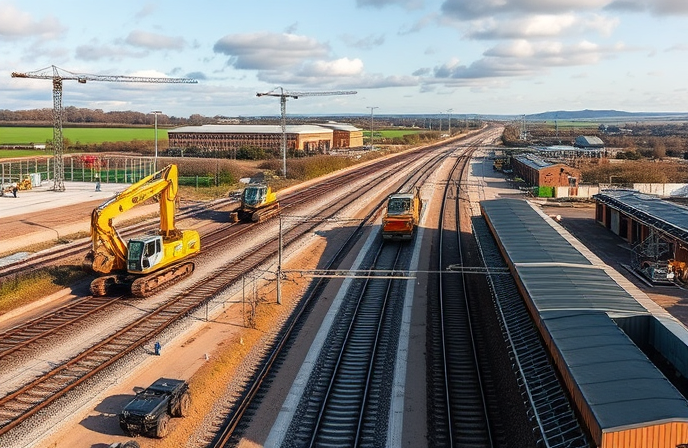
UK Government Unveils £92 Billion “Plan for Change” for Road and Rail Upgrades
In a significant boost to the UK’s transport infrastructure, the government announced on July 9, 2025, the approval of over 50 road and rail upgrade projects across the nation. This ambitious undertaking, backed by a substantial £92 billion investment as part of the “Plan for Change,” aims to stimulate economic growth, support the construction of new homes, and create vital employment opportunities. The initiative, targeting various regions throughout the UK, represents a bold strategy to modernize the country’s transportation network and improve connectivity for both passengers and freight. This article will delve into the specifics of the approved schemes, explore the anticipated impact on the railway sector, and examine the broader implications for the UK’s economic landscape.
Enhanced Connectivity Across the North: A Focus on Regional Projects
The “Plan for Change” places a strong emphasis on regional development, with several key projects earmarked for the North of England. Martin Tugwell, chief executive of Transport for the North (TfN), hailed the announcement as “great news” for northern communities, bringing forward much-needed infrastructure schemes. One of the most prominent projects is the upgrade of the A66, a critical road artery crossing the North, promising increased capacity, enhanced safety measures, and job creation. The plan also includes funding for improvements such as the Simister Island scheme in Greater Manchester and the Middlewich Eastern Bypass in Cheshire, easing congestion and supporting local economies. Moreover, the approval for the new Haxby Station highlights the commitment to enhancing rail connectivity at a local level, reducing journey times and improving access to public transportation in the area.
Key Railway Projects and Their Strategic Importance
While the announcement encompasses both road and rail improvements, the rail projects hold strategic significance for the overall transport strategy. Although the specific breakdown of the £92 billion investment across various projects is yet to be completely disclosed, we can assume significant funding will be directed towards the expansion and modernization of existing rail lines. This includes potentially upgrades to signalling systems (e.g., European Rail Traffic Management System, or ERTMS) to enhance capacity and safety. Another possibility is track renewals, and station upgrades, with a focus on accessibility and passenger experience. The approval of a new Haxby Station demonstrates the government’s commitment to increasing network capacity, and improving accessibility for passengers.
Job Creation and Economic Growth: The Ripple Effect
The “Plan for Change” is not only about improving transport infrastructure but also a catalyst for economic growth and job creation. The construction and implementation phases of these projects will generate thousands of jobs across various sectors, from engineering and construction to manufacturing and supply chain operations. By improving transport links, the initiative is also designed to facilitate business development, attract investment, and increase productivity. The enhanced connectivity brought about by these upgrades will make it easier for goods and services to move across the country, leading to improved supply chains and greater market access for businesses of all sizes.
Challenges and Opportunities in Project Delivery
The successful delivery of these ambitious projects will pose significant challenges. Project management, efficient use of funds, and careful environmental considerations are vital to delivering the projects on time and within budget. The railway sector will be particularly tested, with a need for skilled workers and efficient project management skills. Opportunities for innovation exist within the rail sector including adopting sustainable construction materials and practices, and integrated digital technologies to ensure more efficient, reliable rail networks. Collaboration between government agencies, local authorities, and private sector partners will be crucial to overcome challenges and maximize the benefits of this extensive infrastructure investment.
Conclusion
The “Plan for Change,” with its £92 billion investment in road and rail upgrades, represents a transformative undertaking for the UK’s transport infrastructure. The initiative promises to enhance connectivity, stimulate economic growth, and create thousands of jobs across the country. The specific projects earmarked, particularly the enhancements in the North, signify a strategic focus on regional development. The railway sector stands to gain significantly from the plan, requiring the industry to modernize its infrastructure and optimize for efficiency. While the successful implementation of these projects presents various challenges, it also holds enormous opportunities for innovation and progress. The future outlook for the UK’s transport network is bright, but the effective implementation will require close partnership between the government, industry and the public, to ensure that these vital improvements are delivered on time and within budget, ultimately transforming how the people and commerce of the UK are connected.

Railway infrastructure, rolling stock and transport technologies specialist focused on global rail industry developments, high-speed rail systems, signaling technologies and freight transportation. Covering railway investments, public transport modernization, rail operations and international mobility projects across Europe, Asia and North America.
RELATED POSTS

September 6, 2026 5:19 am
Hitachi delivered Taiwan's first N700ST high-speed train from Japan in...

September 5, 2026 4:19 pm
CPK launched formal tender talks with four consortia to design...

September 6, 2026 4:12 am
Alstom delivered the first of 100 new G Class trams...

September 5, 2026 7:14 pm
HS2 Ltd signed renegotiated civils contracts with EKFB and Align...

September 6, 2026 1:17 am
Hitachi Toshiba Supreme Consortium confirmed the first of 12 N700ST...

September 6, 2026 6:17 am
Hungary ordered a national ban on most freight trains from...