
New York Invests $101M in Rail: LIRR Bridges Get $20M Boost
New York invests $20M to modernize critical LIRR freight bridges, part of a $101M rail upgrade, ensuring vital supply chain links and future-proofing infrastructure.
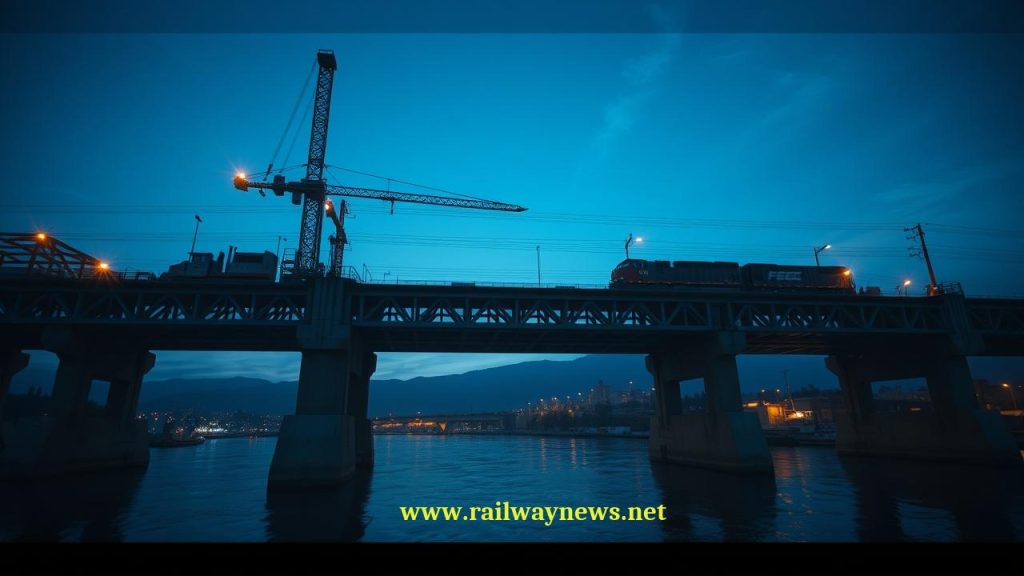
ALBANY, NY – New York State is injecting over $101 million into 25 freight-rail and port modernization projects, earmarking two significant $10 million grants for the MTA Long Island Rail Road (LIRR) to overhaul aging freight bridges. This targeted funding is a key component of a wider, multi-billion dollar regional strategy to upgrade critical infrastructure, which also includes major rolling stock procurements and a push towards data-driven asset management.
| Category | Details |
|---|---|
| Total Program Funding | $101 Million |
| Awarding Body | New York Department of Transportation (NYDOT) |
| LIRR Grant Allocation | $20 Million (for two bridge projects) |
| Key LIRR Projects | Fresh Pond Yard Bridge (Queens) & English Kills Bridge (Brooklyn) |
| Related Contextual Investment | MTA’s $386M Hybrid Locomotive Order |
The grants were awarded last week through the New York Department of Transportation’s (NYDOT) Passenger and Freight Rail Assistance Program (PFRAP). According to officials, the 25 projects were selected through a competitive process that prioritized safety improvements, climate change resiliency, and alignment with regional economic development plans. For the LIRR, the funding directly addresses two vital links in the Long Island freight network. One $10 million grant will facilitate the complete replacement of the Fresh Pond Yard Bridge in Queens, bringing the structure up to modern loading and clearance standards to ensure the uninterrupted flow of goods. A second $10 million grant will support the detailed rehabilitation of the English Kills Bridge, a key connector to a rail yard in Brooklyn.
These physical infrastructure upgrades align seamlessly with the region’s broader push towards technological modernization. While the grants focus on concrete and steel, New York City transit agencies are simultaneously pursuing advanced digital solutions through initiatives like the Transit Tech Lab competition. This program seeks innovative technologies for enhanced infrastructure management, data modernization, and predictive maintenance. The goal is to move beyond simple replacement and create a system that can “better monitor and manage infrastructure to improve asset performance, resilience, and life cycle cost,” according to program documents. The new bridges, therefore, represent not just renewed physical assets, but foundational elements of a more intelligent and resilient future network.
The $101 million PFRAP allocation is a significant but fractional part of the massive capital reinvestment underway in New York’s rail ecosystem. For perspective, the MTA recently approved a $386 million contract with MotivePower, a Wabtec subsidiary, for an order of diesel-battery hybrid locomotives. That deal itself was an expansion of an earlier agreement, illustrating the scale of spending dedicated to modernizing the region’s rolling stock and operational capabilities. By funding both fixed infrastructure like bridges and mobile assets like locomotives, New York is executing a detailed strategy to address decades of deferred maintenance and prepare its rail network for future demands in both passenger and freight transport.
Key Takeaways
- Strategic Funding: New York has allocated over $101 million to 25 freight-rail and port projects, with selection criteria focused on safety, resiliency, and economic impact.
- LIRR Freight Network Boost: Two critical LIRR freight bridges in Queens and Brooklyn will be replaced or rehabilitated with $20 million in grant funding, securing a vital supply chain link for Long Island.
- Part of a Larger Modernization Wave: These grants complement larger capital investments by the MTA, including a $386 million order for hybrid locomotives and a city-wide initiative to integrate advanced technology for infrastructure management.
Editor’s Analysis
New York’s multi-faceted investment strategy serves as a critical case study for major metropolitan regions globally that are grappling with aging rail infrastructure. The simultaneous focus on “hard” assets like bridges and “soft” assets like data analytics and modernized rolling stock demonstrates a mature, holistic approach. This isn’t just about replacing old components; it’s about building a cohesive, intelligent, and resilient system. For the global rail market, this signals a clear trend: transit authorities are no longer treating infrastructure, technology, and operations as separate silos. The future of urban rail lies in integrating these elements to maximize efficiency, reduce long-term costs, and improve service reliability, a model other cities will likely follow.
Frequently Asked Questions
- What is the total funding awarded by the NYDOT program?
- The New York Department of Transportation’s Passenger and Freight Rail Assistance Program awarded more than $101 million across 25 different projects.
- Which specific LIRR projects received funding?
- The LIRR received two separate $10 million grants: one to replace the Fresh Pond Yard Bridge in Queens and another to rehabilitate the English Kills Bridge in Brooklyn.
- How does this funding fit into New York’s larger transit strategy?
- This infrastructure funding is part of a broader, detailed strategy to modernize the region’s entire rail network, which also includes major investments in new technology (like the Transit Tech Lab) and modern rolling stock (such as the MTA’s $386 million hybrid locomotive purchase).

Railway infrastructure, rolling stock and transport technologies specialist focused on global rail industry developments, high-speed rail systems, signaling technologies and freight transportation. Covering railway investments, public transport modernization, rail operations and international mobility projects across Europe, Asia and North America.
RELATED POSTS

October 1, 2026 7:09 am
United States regulators confirmed a September 30 deadline for the...

October 1, 2026 12:13 am
Illinois approved $1.5 billion annually for the Northern Illinois Transit...

October 4, 2026 5:14 pm
Alstom secured a CA$4.7 billion order from VIA Rail Canada...

October 1, 2026 6:10 am
Amtrak approved a System Expansion Committee on July 30 to...

October 1, 2026 3:12 am
Greenbrier confirmed Brian Comstock as new president and CEO effective...

October 6, 2026 2:14 am
Union Pacific launched export rail shipments with Ferromex to deliver...