
Rolling Stock Market: Global Growth, Challenges & Key Players
Global railway rolling stock market hits record high in 2024, exceeding EUR 65 billion. Growth faces challenges like supply chain issues and labor shortages.
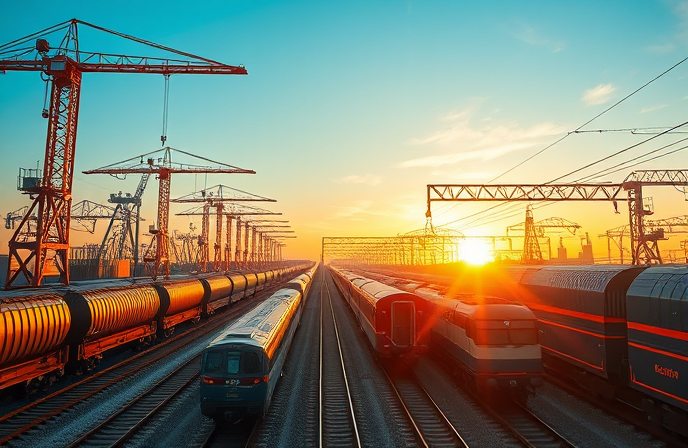
Rolling Stock Market Hits Record High, Faces Complex Challenges
The global rolling stock market witnessed a peak in 2024, achieving record revenues. According to the latest report from SCI Verkehr, total revenues for all active manufacturers reached approximately EUR 65 billion, an impressive 11% surge compared to 2022. This growth, observed globally, is fueled by rising demand in both passenger and freight transport, driven by a shift towards low-emission solutions and a post-COVID-19 recovery. The sector is navigating complex economic and political pressures, including supply chain disruptions, cost inflation, and labor shortages. This article explores the key drivers of this growth, analyzes the performance of major players, and highlights the challenges that lie ahead for the industry. It examines the dynamics of a market simultaneously experiencing unprecedented expansion and facing significant operational hurdles.
Market Leaders and Revenue Dynamics
The SCI Verkehr report highlights a significant milestone: 24 manufacturers surpassed the EUR 500 million revenue threshold in 2024, a notable increase from previous years. The market is dominated by several key players, each with unique strategies. CRRC, the world’s largest rolling stock manufacturer, retained its top position, although it experienced a revenue decline for the first time. Alstom and Siemens Mobility maintained their rankings, demonstrating positive growth through strategic initiatives like service business expansion and portfolio diversification. These leading manufacturers are adapting to complex industry challenges by deploying detailed strategies, including digital solutions. This demonstrates the necessity of robust business planning in securing the most lucrative market share.
Regional Influences and Growth Factors
Regional factors significantly influence the rolling stock market’s performance. For instance, Transmashholding (TMH) and United Wagon Company (UWC), both Russian manufacturers, achieved substantial revenue growth driven by strong domestic demand. This growth was also influenced by the exit of international competitors due to sanctions, alongside increased military transport requirements. UWC, in particular, saw a remarkable 184% revenue increase in 2024, reflecting the impact of specific geopolitical events on the industry landscape. These instances emphasize that the geopolitical landscape greatly influences the commercial aspect of the market and must be considered by all market players.
Operational Hurdles and Production Challenges
While order books are full, challenges persist for rolling stock manufacturers. Stadler, for instance, recorded a strong order intake but was forced to postpone production worth hundreds of millions of euros to subsequent years due to severe environmental events affecting its European manufacturing sites. The industry faces a complex environment including supply chain disruptions, rising material and energy costs, and a shortage of qualified personnel, which are reducing profit margins and causing delivery delays. These factors, coupled with increasingly challenging project financing, highlight the need for resilient operational strategies. The pressure is further augmented by the need for companies to adapt to digital transformation.
Navigating the Future: Resilience and Adaptation
The global rolling stock market currently faces a period of both unprecedented opportunities and significant operational pressures. Despite record-high order volumes, the ability to translate these into on-time deliveries and sustained profitable growth is becoming increasingly constrained. External shocks continuously test the industry’s resilience, resulting in a sustained risk of delivery disruptions and margin pressures. The industry must focus on supply chain diversification, strategic cost management, and investment in workforce development to navigate these hurdles. Adaptability to evolving regulatory landscapes, particularly regarding emission standards and financing mechanisms, will also be crucial for future success. Manufacturers that can effectively manage these risks and capitalize on the growing demand for sustainable transportation solutions are poised to thrive in the years to come. The long-term outlook necessitates strategic investments in operational resilience and technological innovation.
Company Summary: Key Players
CRRC (China Railway Rolling Stock Corporation): The world’s largest rolling stock manufacturer, CRRC holds a dominant market share. Its strategy focuses on global expansion and detailed product offerings, particularly in high-speed rail and urban transit systems.
Alstom: A major player with a diversified portfolio, Alstom emphasizes sustainable mobility solutions and digitalization. Key strategies include expanding its service business and developing innovative train control systems.
Siemens Mobility: Siemens focuses on providing integrated mobility solutions. This includes rail vehicles, infrastructure, and related services. Siemens is driving forward with digitalization to improve operational efficiency and enhance passenger experience.
Stadler: Stadler specializes in regional, commuter, and high-speed trains. It has a strong order intake but recently faced production disruptions due to environmental factors. They prioritize customized solutions and energy-efficient designs.
Transmashholding (TMH): A leading Russian rolling stock manufacturer, TMH has seen significant growth in the domestic market. They focus on a wide range of rolling stock, including passenger and freight cars, and are adapting to changing market dynamics.

Railway infrastructure, rolling stock and transport technologies specialist focused on global rail industry developments, high-speed rail systems, signaling technologies and freight transportation. Covering railway investments, public transport modernization, rail operations and international mobility projects across Europe, Asia and North America.
RELATED POSTS

October 1, 2026 7:09 am
United States regulators confirmed a September 30 deadline for the...

October 8, 2026 1:15 pm
Alstom secured a €1bn contract to build 13 automated trains,...

October 4, 2026 5:14 pm
Alstom secured a CA$4.7 billion order from VIA Rail Canada...

October 1, 2026 12:13 am
Illinois approved $1.5 billion annually for the Northern Illinois Transit...

October 6, 2026 2:14 am
Union Pacific launched export rail shipments with Ferromex to deliver...

October 1, 2026 6:10 am
Amtrak approved a System Expansion Committee on July 30 to...