
Canberra Light Rail Stage 2B: New Route & Infrastructure Plans
Canberra light rail Stage 2B designs unveiled, extending to Woden. Detailed plans for new route alignments and infrastructure upgrades released.
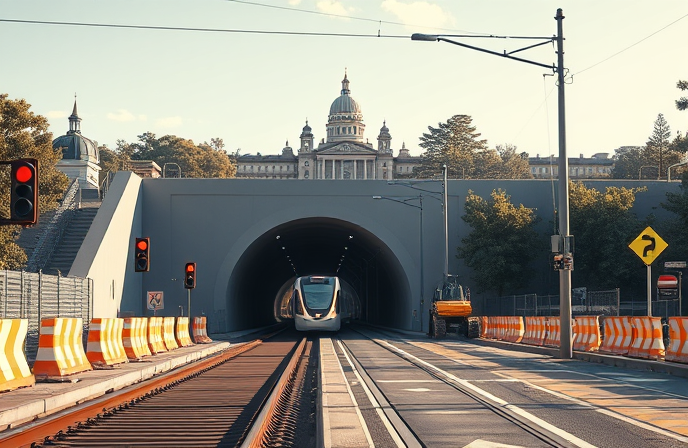
Key Takeaways: Canberra Stage 2B Project
- Route Extension: Extends the network from Commonwealth Park to Woden.
- Infrastructure: Includes new stops, bridges over Lake Burley Griffin, and wire-free running sections.
- Consultation: Focuses on environmental impacts under the EPBC Act and heritage preservation.
- Goal: To provide a sustainable north-south transport spine for the ACT region.
Canberra Light Rail Stage 2B: Detailed Designs Unveiled
The ACT Government has released detailed designs for Stage 2B of Canberra’s light rail network, a significant infrastructure project that promises to reshape the city’s public transport landscape. The project, extending the existing Gungahlin line through the city centre and onward to Woden, will be built by Infrastructure Canberra, who submitted a draft Environmental Impact Statement (EIS) for approval from both the Australian and ACT governments. This marks a crucial step in the realization of a project designed to improve connectivity and reduce reliance on private vehicles. The ‘what’ is the specific design plans, including the route, infrastructure modifications, and environmental considerations. The ‘when’ for public consultation is now, with feedback accepted until September 5, 2025. The ‘where’ involves the alignment from Gungahlin to Woden via the city centre. The ‘why’ is to boost public transport and modernize Canberra’s transport system. The ‘how’ is through detailed infrastructure upgrades like tunneling around Parliament House and replacing roundabouts with intersections. This article will detail the key elements of Stage 2B, including the proposed route alignments, infrastructural upgrades, and the anticipated impact on the local community and transport efficiency.
Route Alignment and Infrastructure Enhancements
The draft EIS outlines two primary route options: the “State Circle East” and the “National Triangle Barton” alignments. The State Circle East alignment, the ACT Government’s preferred option, will travel from Commonwealth Avenue along State Circle and continue to Adelaide Avenue. Alternatively, the National Triangle Barton route extends from Commonwealth Avenue along King George Terrace, Macquarie Street, Bligh Street, National Circuit, and Sydney Avenue. Significantly, both routes are designed to facilitate integration with existing city infrastructure while aiming to minimize disruption during the construction phase. A key element of the design is the planned tunnel around Parliament House, a strategic decision intended to preserve the area’s aesthetic and historical significance, while simultaneously ensuring the uninterrupted flow of light rail services. Additionally, the plans include significant modifications to major intersections such as the one connecting Woden to Yarra Glen. The current roundabout will be replaced by a traffic-light controlled intersection, which will allow for efficient traffic movement.
Woden Intersection Transformation
A significant aspect of the Stage 2B design involves the transformation of the roundabout at Woden, a crucial junction point. The current roundabout will be replaced with a signalized intersection to regulate traffic flow and accommodate the light rail line’s passage through the centre of the intersection. This change is designed to optimize traffic flow in the area, particularly for commuters traveling towards Woden and those accessing Yamba Drive. Southbound traffic will be directed onto Yamba Drive, with access to Melrose Drive via a signalized intersection. Northbound traffic from Yamba Drive will stop at traffic lights for vehicles continuing to Yarra Glen. The integration of the light rail with the existing road network demands intricate coordination and careful planning to ensure seamless transitions for all road users, including buses and private vehicles. The engineering challenges associated with this intersection transformation represent a key component of the project’s overall success.
Environmental Impact and Mitigation Strategies
The draft EIS undertakes a detailed evaluation of the project’s potential environmental, social, and economic effects. The study identifies potential risks and proposes mitigation measures to reduce the negative impacts of construction and operation. Environmental assessments consider factors such as noise pollution, air quality, and potential impacts on local flora and fauna. Proposed mitigation strategies include noise barriers, dust suppression during construction, and the careful management of waste disposal. The social impact assessment explores the potential displacement of residents and businesses and aims to provide solutions for these instances. Economic impact analyses investigate the expected job creation, and the effect of light rail implementation on property values, local businesses and overall economic activity. The ACT Government is committed to environmental best practices, aiming for a sustainable and community-conscious project implementation.
Public Consultation and Project Timeline
The ACT Government has initiated a public consultation period to gather feedback on the Stage 2B designs. The public is invited to review the draft EIS and submit comments and suggestions through Infrastructure Canberra or the TPA until September 5, 2025. This feedback will inform the final project design and help address community concerns. Following the consultation period, the final EIS will be prepared and submitted for approval. Construction is scheduled to commence in 2028, with the line projected to be operational by 2033. This ambitious timeline underscores the government’s commitment to delivering a modern and efficient public transport system for Canberra. Regular updates on the project’s progress, including design refinements and construction milestones, will be provided through the ACT Government website, ensuring transparency and engagement with the local community throughout the development process.
Project Phase Route Section Status / Focus Stage 2A City to Commonwealth Park Under construction / Early works Stage 2B Commonwealth Park to Woden Public Consultation & Environmental Approval
Conclusion
The detailed designs for Canberra’s Light Rail Stage 2B represent a major investment in the city’s infrastructure, aimed at enhancing connectivity and promoting sustainable transport solutions. The project’s emphasis on efficient route planning, particularly through the critical intersection changes in Woden, and strategic integration with existing transport networks demonstrates a forward-thinking approach to urban development. The inclusion of a tunnel around Parliament House, and the two distinct route alignments highlight the complex planning and architectural challenges and considerations undertaken. The detailed EIS provides a detailed framework for minimizing environmental impacts while maximizing economic benefits. The public consultation phase is pivotal, allowing community input to shape the final design and ensure the project aligns with local needs. The expected completion timeline, with construction commencing in 2028 and operation by 2033, reflects the ACT Government’s commitment to delivering an advanced public transport system, promising a more efficient, sustainable, and integrated transportation network for the Canberra community. The success of Stage 2B could influence other Australian cities considering light rail development.

Railway infrastructure, rolling stock and transport technologies specialist focused on global rail industry developments, high-speed rail systems, signaling technologies and freight transportation. Covering railway investments, public transport modernization, rail operations and international mobility projects across Europe, Asia and North America.
RELATED POSTS

September 5, 2026 4:19 pm
CPK launched formal tender talks with four consortia to design...

September 6, 2026 4:12 am
Alstom delivered the first of 100 new G Class trams...
September 5, 2026 6:17 pm
Universal Signalling won a deal to install its U-Cross system...
September 6, 2026 8:17 am
DB InfraGO reopened the Nuremberg-Regensburg line in Bavaria on 31...
September 7, 2026 11:16 pm
China Railway Tunnel Group completed the 11.3-km underwater Yangtze tunnel...
September 6, 2026 12:20 pm
Indian Railways ordered a probe after a fire destroyed 2...