
PANYNJ Rail Container Growth: Infrastructure & Efficiency in May
NY/NJ Port sees rail container surge, 22.3% jump in May. Strong rail growth fuels efficient intermodal transport.
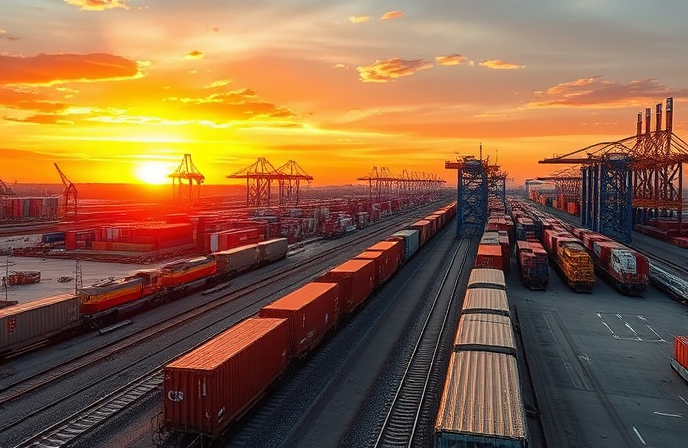
Port Authority of NY & NJ Sees Strong Rail Container Growth in May
The Port Authority of New York and New Jersey (PANYNJ) experienced a significant surge in rail container traffic during May, signaling robust activity and efficient intermodal connectivity. This report examines the key performance indicators for the port’s rail, auto, and overall container operations, offering a detailed analysis of the latest trends. We analyze the “who” (PANYNJ), “what” (rail container volume increase), “when” (May), “where” (the Port of NY & NJ), “why” (increased efficiency and demand), and “how” (Express Rail connecting to CSX and Norfolk Southern). This article will dissect the performance metrics, highlighting the strong performance in rail and auto sectors while exploring overall container movements. The focus is on illustrating the dynamic nature of the port’s operations and the factors driving these trends, particularly in relation to rail transport.
Rail Container Volume Soars
The PANYNJ reported a remarkable 22.3% increase in rail container volume in May, handling a total of 66,842 containers. This impressive figure highlights the critical role of rail in the efficient movement of goods through the port. Over the first five months of the year, the volume transported by rail was 10.2% higher compared to the same period in 2024. The consistent growth in rail volume is directly linked to the port’s on-dock Express Rail system, which provides seamless connections to both CSX and Norfolk Southern Railway. This integrated system streamlines operations, reduces truck traffic, and contributes significantly to the port’s overall efficiency.
Automobile Sector Shows Mixed Performance
While rail experienced substantial gains, the automobile sector presented a more nuanced picture. A total of 34,437 autos moved through the PANYNJ in May, representing a modest 1.3% increase compared to May 2024. However, the year-to-date figures indicate a downturn. Auto volume from January to May was 10.2% lower than in the corresponding period of 2024. This disparity underscores the volatility inherent in the automotive industry and the various factors that can influence its throughput, including global supply chain disruptions, consumer demand fluctuations, and seasonal variations. The PANYNJ continues to manage the import and export of vehicles.
Containerized Trade Shows Fluctuations
The overall container trade saw some fluctuations. Imports declined by 7.6% in May, reaching 382,217 Twenty-Foot Equivalent Units (TEUs). However, the year-to-date trend for imports tells a different story, with a 5.3% increase from January to May, resulting in a total of 1,886,285 TEUs. This indicates a recovery and sustained demand over the longer term, despite the monthly dip. Exports performed well, with 129,565 TEUs handled in May, a 3.8% increase compared to May 2024. For the January-May period, exports rose by 3.8%, reaching 592,342 TEUs, underlining the port’s vital role in facilitating international trade.
Conclusion
The PANYNJ’s May performance demonstrates a complex interplay of market forces and operational efficiencies. The substantial growth in rail container volume is a positive development, reflecting the strategic advantages of the Express Rail system. Despite the mixed results in the auto sector, the overall trend in imports, which is increasing year-over-year, and the steady growth in exports, show a resilient market. The efficient handling of both imports and exports through rail and other modes of transport is key. Looking ahead, the port’s success will hinge on its ability to further optimize its rail infrastructure, adapt to evolving market conditions, and effectively manage container and automotive traffic. The continued expansion of rail capacity, alongside strategic investments in infrastructure and technology, will play a vital role in solidifying the PANYNJ’s position as a leading North American gateway for global trade.

Railway infrastructure, rolling stock and transport technologies specialist focused on global rail industry developments, high-speed rail systems, signaling technologies and freight transportation. Covering railway investments, public transport modernization, rail operations and international mobility projects across Europe, Asia and North America.
RELATED POSTS

September 6, 2026 5:19 am
Hitachi delivered Taiwan's first N700ST high-speed train from Japan in...

September 5, 2026 4:19 pm
CPK launched formal tender talks with four consortia to design...

September 6, 2026 4:12 am
Alstom delivered the first of 100 new G Class trams...

September 5, 2026 7:14 pm
HS2 Ltd signed renegotiated civils contracts with EKFB and Align...

September 6, 2026 6:17 am
Hungary ordered a national ban on most freight trains from...

September 6, 2026 1:17 am
Hitachi Toshiba Supreme Consortium confirmed the first of 12 N700ST...