
ZF ProAI: Revolutionizing Tram Safety
Revolutionize tram safety with ZF ProAI’s AI-powered hazard detection. Discover how this groundbreaking system prevents accidents and enhances driver situational awareness!
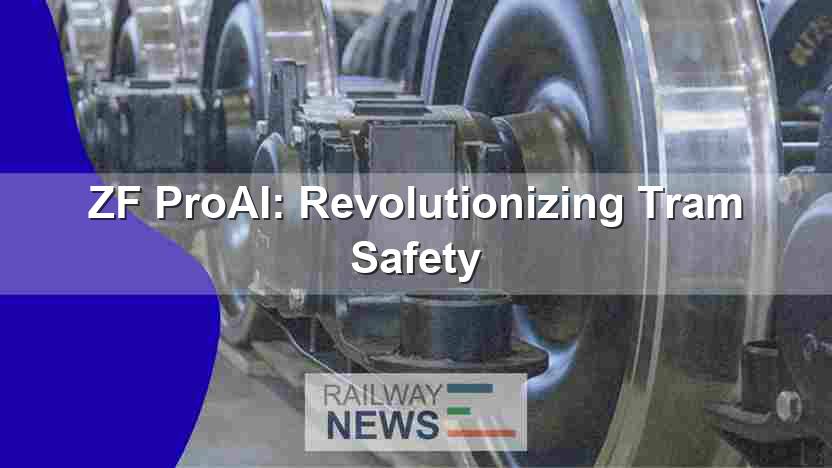
The integration of artificial intelligence (AI) into various sectors is rapidly transforming industries, and the railway sector is no exception. This article explores the innovative application of AI in enhancing tram safety, specifically focusing on ZF Friedrichshafen AG’s (ZF) groundbreaking system, ZF ProAI. ZF ProAI is not merely an add-on; it represents a paradigm shift in proactive safety measures for urban rail systems. The system, initially developed for autonomous driving applications, leverages advanced deep learning algorithms and sensor fusion to detect potential hazards, significantly reducing the risk of collisions involving trams, pedestrians, cyclists, and other vehicles. This exploration will examine the technical aspects of ZF ProAI, its operational capabilities, its potential impact on accident reduction, and the broader implications for the future of rail safety technologies. We will also consider the challenges and opportunities associated with widespread implementation of such systems.
ZF ProAI: A Deep Analysis to the Technology
The core of ZF ProAI’s effectiveness lies in its sophisticated deep learning capabilities. This AI-powered central computer processes data from a suite of sensors, including cameras, Light Detection and Ranging (LIDAR), and radar. This sensor fusion provides a detailed 360-degree view of the tram’s immediate surroundings, enabling the system to accurately identify potential hazards with remarkable precision. The system’s ability to learn and adapt to various environmental conditions and traffic patterns enhances its overall performance and reliability. This continuous learning aspect is crucial, allowing the system to improve its hazard detection over time and in different operational contexts.
Enhanced Situational Awareness and Driver Support
ZF ProAI provides tram drivers with significantly enhanced situational awareness. The system’s real-time hazard detection alerts drivers to potential dangers, giving them crucial reaction time to prevent accidents. By continuously monitoring the area within a 6-meter radius of the tram, the system significantly reduces blind spots and enhances the driver’s ability to react safely to unexpected events. The system’s proactive nature shifts the focus from reactive measures to preventative ones, potentially averting accidents before they occur. This enhancement in driver support contributes not only to enhanced safety but also to reduced driver stress and workload.
Addressing the Problem of Tram Accidents
Statistics reveal a concerning number of accidents involving trams, many stemming from interactions with pedestrians and motorists. These incidents often occur because individuals fail to notice approaching trams, leading to collisions. ZF ProAI directly addresses this critical issue by proactively identifying and alerting drivers to these potential hazards. By deploying this system, transit authorities can substantially reduce the occurrence of such accidents, minimizing injuries and enhancing the overall safety and reliability of tram networks. The cost-benefit analysis of implementing such a system, in terms of reduced accident liabilities and improved public confidence, warrants serious consideration.
Future Implications and Challenges
The successful implementation of AI-driven safety systems like ZF ProAI signifies a pivotal moment in the evolution of rail safety. This technology promises to significantly reduce accidents, improve operational efficiency, and enhance public trust in tram systems. However, widespread adoption faces certain challenges. These include the initial investment costs associated with installing the system, the need for detailed training programs for tram operators on the effective use of the system, and the ongoing maintenance and software updates required to ensure its continued optimal performance. Additionally, the integration of this technology into existing tram fleets requires careful planning and execution. Addressing these challenges is crucial for realizing the full potential of ZF ProAI and similar AI-powered safety enhancements within the rail sector.
Conclusion
ZF’s introduction of the AI-powered ZF ProAI system marks a significant advancement in tram safety technology. By leveraging the power of deep learning and sensor fusion, ZF ProAI provides tram drivers with an unparalleled level of situational awareness, drastically reducing the risk of collisions. This proactive safety system directly addresses the prevalent issue of tram accidents involving pedestrians and motorists, promising a considerable decrease in injuries and fatalities. The system’s effectiveness lies in its ability to accurately detect potential hazards and alert drivers in real-time, allowing them to take preventative measures. While challenges remain, particularly concerning implementation costs and operator training, the potential benefits of widespread ZF ProAI adoption are undeniable. The long-term cost savings from reduced accident liabilities, improved public trust, and enhanced operational efficiency make this technology a compelling investment for tram operators and city authorities alike. The future of rail safety is undoubtedly intertwined with the continued development and refinement of AI-powered systems such as ZF ProAI, paving the way for safer, more efficient, and reliable urban transit networks.

Transport and railway industry editor covering global rail infrastructure, sustainable mobility, urban transit systems and next-generation railway technologies with a focus on accessible and industry-focused reporting.
RELATED POSTS

September 5, 2026 4:19 pm
CPK launched formal tender talks with four consortia to design...

September 5, 2026 7:14 pm
HS2 Ltd signed renegotiated civils contracts with EKFB and Align...

September 6, 2026 4:12 am
Alstom delivered the first of 100 new G Class trams...
September 6, 2026 6:17 am
Hungary ordered a national ban on most freight trains from...
September 6, 2026 8:17 am
DB InfraGO reopened the Nuremberg-Regensburg line in Bavaria on 31...
September 7, 2026 8:16 am
Midea, Gree and TCL shipped air conditioners via China Railway...