
Siemens, Bozankaya Deliver 22 New Trains for Bangkok BTS Green Line
This article examines how a consortium led by Siemens Mobility and Bozankaya successfully deployed 22 new four-car metro trains on Bangkok’s BTS Green Line, showcasing the complexities involved in large-scale rail infrastructure development. The project highlights the importance of collaborative efforts between manufacturers and system integrators, technological advancements such as improved passenger comfort and accessibility features, and the significance of this expansion to Bangkok’s public transportation network, providing valuable insights into modern mass transit solutions.
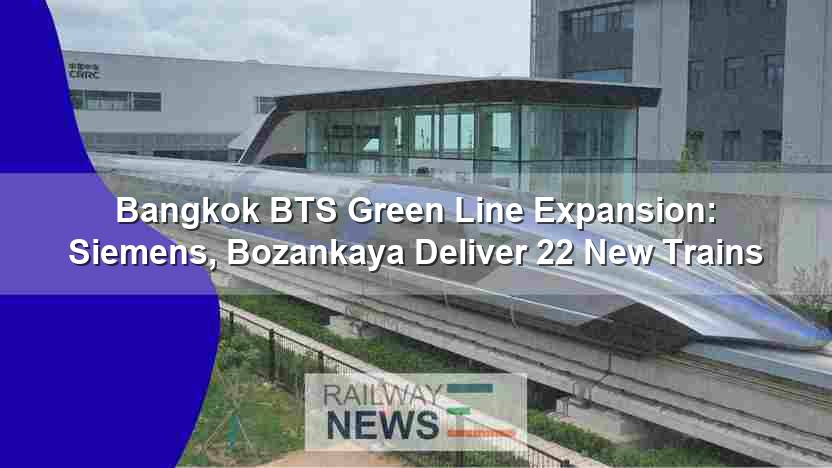
This article examines the successful deployment of 22 new four-car metro trains on Bangkok’s BTS Green Line (also known as the BTS Skytrain), a project undertaken by a consortium of Siemens Mobility and Bozankaya. The project highlights the complexities of large-scale rail infrastructure development, encompassing train manufacturing, system integration, and long-term maintenance. We will explore the collaborative efforts between Siemens Mobility and Bozankaya, the technological advancements incorporated into the new trains, the significance of this expansion to Bangkok’s public transportation network, and the broader implications for future rail projects in rapidly developing urban environments. This case study provides valuable insight into the multifaceted challenges and rewards inherent in delivering modern, efficient, and reliable mass transit solutions. The analysis will delve into the specific roles of each partner, the technological specifications of the trains, and the long-term maintenance agreement, ultimately demonstrating a successful model for public-private partnerships in the rail sector.
Train Manufacturing and System Integration
The 22 four-car metro trains, manufactured by Bozankaya in Ankara, Turkey, represent a significant expansion to the BTS Green Line’s capacity. Siemens Mobility’s role extended beyond simply supplying components. They were responsible for providing critical subsystems, including bogies (the chassis and wheel assemblies), traction and braking systems, and auxiliary systems crucial for the trains’ operation. Their responsibilities also encompassed project management, design and engineering, and the crucial process of commissioning the new trains to ensure seamless integration with the existing infrastructure. This integrated approach highlights the importance of holistic project management in large-scale rail projects.
Technological Advancements and Passenger Experience
The new trains are not merely an increase in rolling stock; they represent an upgrade in passenger experience and operational efficiency. While specific details on technological advancements aren’t provided in the original text, the mention of increased capacity to over one million passengers per day and the promise of an “optimal passenger experience” suggests improvements in areas like passenger comfort, accessibility features, and potentially the implementation of advanced passenger information systems (PIS).
Expanding Bangkok’s Public Transportation Network
The extension of the BTS Green Line, incorporating these new trains, is crucial for Bangkok’s growing population. The addition of the new trains significantly enhances the capacity of the Green Line, easing congestion and providing a more efficient and reliable mass transit option for commuters. This expansion addresses the challenges of urban growth by providing vital infrastructure to support the city’s continued development. The project demonstrates a successful strategy for addressing the increasing demand for public transportation in rapidly expanding urban areas.
Public-Private Partnerships and Long-Term Maintenance
The collaboration between Siemens Mobility and Bozankaya exemplifies a successful public-private partnership (PPP). BTSC (Bangkok Mass Transit System Public Company) contracted the consortium, leveraging the expertise of both companies to deliver a complete solution. Siemens Mobility’s 16-year maintenance contract underscores the importance of long-term service agreements in ensuring the sustained operational efficiency and reliability of rail systems. This approach minimizes disruptions and ensures continued passenger satisfaction. This long-term maintenance commitment reflects a responsible approach to infrastructure management and guarantees the ongoing success of the investment.
Conclusions
The successful integration of 22 new Siemens Mobility and Bozankaya-built metro trains onto Bangkok’s BTS Green Line represents a significant milestone in expanding the city’s public transportation infrastructure. This project showcases a robust public-private partnership model, where Siemens Mobility’s expertise in systems integration and long-term maintenance complements Bozankaya’s manufacturing capabilities. The expansion addresses the increasing demand for efficient and reliable mass transit, enhancing the passenger experience and alleviating congestion. The project’s success hinges on meticulous planning, seamless collaboration, and a focus on both immediate operational efficiency and long-term sustainability. The 16-year maintenance agreement ensures the ongoing reliability of the system, highlighting the crucial role of post-implementation support in large-scale infrastructure projects. The increased capacity to over one million passengers daily demonstrates the effectiveness of this approach in addressing the challenges of rapid urbanization and the growing need for efficient public transportation in major metropolitan areas. This case study serves as a compelling example for future rail projects globally, emphasizing the importance of strategic partnerships, technological innovation, and a commitment to long-term maintenance for sustained success.

Railway infrastructure, rolling stock and transport technologies specialist focused on global rail industry developments, high-speed rail systems, signaling technologies and freight transportation. Covering railway investments, public transport modernization, rail operations and international mobility projects across Europe, Asia and North America.
RELATED POSTS

October 8, 2026 1:15 pm
Alstom secured a €1bn contract to build 13 automated trains,...

October 1, 2026 7:09 am
United States regulators confirmed a September 30 deadline for the...

October 8, 2026 12:18 pm
Siemens Mobility signed an agreement with VinSpeed to supply 350...

October 4, 2026 5:14 pm
Alstom secured a CA$4.7 billion order from VIA Rail Canada...

October 5, 2026 6:12 pm
AECOM and Jacobs secured a contract in September 2026 to...

October 4, 2026 11:08 pm
Sound Transit confirmed the September 30 opening of Seattle Pinehurst...