
UK Rail Freight: EWR Boosts Logistics & Sustainable Transport
New rail freight route opens in central England, boosting east-west connectivity. DB Cargo UK, partnering with Maritime Transport, links Southampton to Northampton.
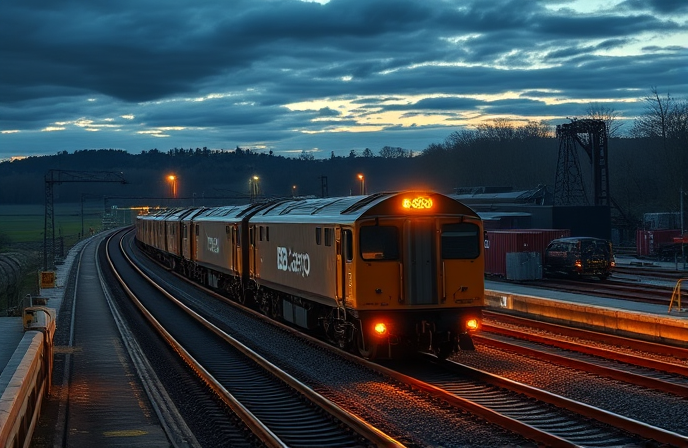
New Rail Freight Route Opens Door to Enhanced Logistics Across Central England
A significant advancement in the UK’s rail freight landscape was marked on June 16th with the launch of a new service connecting DP World Southampton to SEGRO Logistics Park Northampton. Operated by DB Cargo UK and in partnership with Maritime Transport, this service represents a major step forward for the East West Rail (EWR) project. This initiative, leveraging the newly reinstated Oxford to Bletchley section of the EWR line, re-establishes vital east-west rail connectivity across central England, boosting the nation’s freight transport infrastructure. The service aims to significantly increase capacity and reduce congestion on traditionally overloaded north-south routes. This article explores the operational details, infrastructural advancements, and wider implications of this strategic rail freight initiative, outlining how it reshapes logistics and contributes to sustainable transportation solutions.
The Resurgence of East West Rail: A Strategic Imperative
The core of this initiative lies in the re-opening of the Oxford to Bletchley section of the EWR line, a project central to the UK’s ambition to enhance east-west rail capacity. Having been disconnected for decades, this section is a pivotal part of a broader government-backed initiative, aimed at opening the Oxford–Cambridge corridor. This new route creates an alternative path for freight, improving the resilience and flexibility of the national logistics network. DB Cargo UK will operate the service five days a week, which can transport up to 68 twenty-foot equivalent units (TEU) per train. This capacity offers a substantial increase in freight movement and reduces dependence on road transport, leading to environmental benefits and efficiency gains within the national transportation framework.
Operational Efficiencies and Route Optimization
The service directly links the busy deep-sea port at Southampton with the new Strategic Rail Freight Interchange (SRFI) at SEGRO Logistics Park Northampton, creating a direct inland rail link. The SRFI at SEGRO Logistics Park Northampton is a key element of this operation. The new rail junction’s design allows freight trains to switch between the mainline and interchange at speeds of up to 40 mph—compared to the typical 5 mph—boosting overall efficiency and reducing delays. This technology enhances the capacity for volume, as trains are not restricted to the low-speed rail transitions commonly found in freight terminals. The integration of this advanced design at SEGRO’s 35-acre terminal near Junction 15 of the M1 is a crucial element of this logistics upgrade. The strategic location and enhanced infrastructure will facilitate faster turnaround times and improved service reliability for customers.
Incentives and Sustainability: A Modal Shift Strategy
The new freight service benefits from Network Rail’s Track Access Discount Scheme, which waives relevant charges for six months for newly established flows. This incentive aims to encourage a modal shift from road to rail, which contributes to a reduction of carbon emissions and supports the development of new rail freight services. Maritime Transport’s investment reflects a commitment to environmentally responsible logistics and a reduction in the reliance on highway transport. The utilization of this new infrastructure, combined with the financial incentives, aims to support the expansion of rail freight capacity, reduce road traffic, and reduce overall carbon footprints in the logistics sector. The benefits of this approach extend to supply chain partners who now have increased flexibility and an alternate, eco-friendly transport choice.
Industry Perspective and Future Outlook
“Having recently operated the first locomotive into SEGRO Northampton Gateway to ‘prove’ the infrastructure, DB Cargo UK is proud to once again be partnering with its long-standing and strategic customer on this significant inaugural flow into Northampton Gateway,” said Roger Neary, Chief Sales Officer, DB Cargo UK. This inaugural service is more than a single route; it reflects a broader strategy to improve supply chain performance and sustainability by utilizing existing and new rail networks. The project’s success hinges on the coordination between multiple stakeholders. The strategic location of the Northampton Gateway terminal, with its connection to the West Coast Main Line, underscores the long-term vision for a more efficient and sustainable national freight network. Additionally, as infrastructure development continues and as transport technology advances, rail freight will become more important, transforming logistics for the better.
Conclusion
The launch of this new rail freight service is a significant step in enhancing the UK’s logistics capabilities and realizing the potential of the EWR. The initiative brings together critical infrastructure enhancements, operational efficiencies, and sustainability initiatives to improve transportation. This project shows that the rail freight industry continues to evolve, with significant investment in new infrastructure and the strategic alignment of key players. The benefits span both logistics and environment. From improved connectivity, increased freight capacity, and reduced reliance on road transport, this new service is an excellent model for future rail freight developments, and it could serve as an ideal blueprint for other operators and projects throughout the country. The long-term success of the freight industry will be determined by the capacity of rail networks and the adoption of sustainable, environmentally responsible practices.
Company Summary
DB Cargo UK is a leading rail freight operator in the UK, delivering a wide range of freight transportation services to various industries. It has a long history and strong expertise in railway transportation, committed to improving supply chain efficiency and reducing its environmental footprint by shifting to rail. Their investments in rolling stock and logistics are essential to the industry. Maritime Transport is a significant logistics provider specializing in container transport and warehousing. The company has invested in its Northampton Gateway terminal and emphasizes its commitment to creating sustainable transport solutions. Their partnership with DB Cargo UK in this project exemplifies a strategic approach to improve overall supply chain efficiency.

Railway infrastructure, rolling stock and transport technologies specialist focused on global rail industry developments, high-speed rail systems, signaling technologies and freight transportation. Covering railway investments, public transport modernization, rail operations and international mobility projects across Europe, Asia and North America.
RELATED POSTS

October 1, 2026 7:09 am
United States regulators confirmed a September 30 deadline for the...

October 8, 2026 1:15 pm
Alstom secured a €1bn contract to build 13 automated trains,...

October 4, 2026 5:14 pm
Alstom secured a CA$4.7 billion order from VIA Rail Canada...

October 1, 2026 12:13 am
Illinois approved $1.5 billion annually for the Northern Illinois Transit...

October 6, 2026 2:14 am
Union Pacific launched export rail shipments with Ferromex to deliver...

October 1, 2026 6:10 am
Amtrak approved a System Expansion Committee on July 30 to...