
Myanmar Muse-Mandalay Rail: BRI’s High-Speed Future
The Muse-Mandalay Railway: A high-speed game-changer for regional connectivity, boosting trade and economic growth. Discover how!
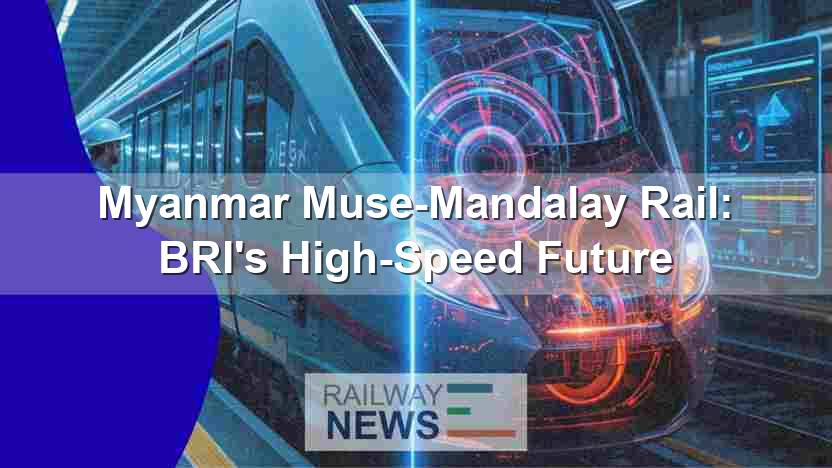
The development of efficient and reliable transportation networks is crucial for economic growth and regional integration. This article examines the planned Muse-Mandalay railway line in Myanmar, a project undertaken jointly by China Railway Eryuan Engineering Group and Myanma Railways. The project, initiated with a Memorandum of Understanding (MoU) in October 2018, involves a detailed feasibility study to assess the environmental, social, and economic impacts of constructing a 431km high-speed railway connecting Muse, a border town in Myanmar, to Mandalay, the country’s second-largest city. This study goes beyond a simple route analysis; it explores the complexities of financing, logistical challenges, and the potential for long-term sustainable development within the framework of the China-Myanmar Economic Corridor (CMEC) and China’s Belt and Road Initiative (BRI). The analysis will explore the technical aspects of railway construction, the potential socio-economic benefits, and the vital role of environmental impact assessments in ensuring the project’s responsible implementation. The implications of this project extend far beyond Myanmar’s borders, highlighting the intricate interplay between infrastructure development, international cooperation, and sustainable development goals.
The Muse-Mandalay Railway: A Key Component of Regional Connectivity
The proposed high-speed railway, designed for speeds up to 160 km/h, aims to significantly reduce transportation times and costs between Muse and Mandalay. This improved connectivity will have a transformative impact on trade and logistics, facilitating the movement of goods between China and Myanmar, and stimulating economic activity along the corridor. The current reliance on road transport is often characterized by delays, high costs, and limited capacity. The railway offers a more efficient and reliable alternative, potentially unlocking the economic potential of northern Myanmar. The project’s success hinges on careful planning and execution, encompassing considerations such as track gauge compatibility with existing networks, efficient freight handling capabilities, and effective integration with existing and planned transportation infrastructure in both China and Myanmar.
Socio-Economic Impacts and Environmental Considerations
The feasibility study will rigorously evaluate the socio-economic implications of the railway project. This involves analyzing its potential impact on employment, local communities, and regional development. Careful consideration will be given to minimizing displacement and ensuring that local populations benefit from the project. The study will also conduct a thorough environmental impact assessment, identifying potential risks and mitigation strategies related to land use, biodiversity, and water resources. A key aspect will be integrating environmentally friendly construction practices and minimizing the project’s carbon footprint. This involves exploring opportunities for renewable energy integration and sustainable land management.
The China-Myanmar Economic Corridor (CMEC) and Belt and Road Initiative (BRI)
The Muse-Mandalay railway is strategically positioned within the broader context of the CMEC, a key component of China’s ambitious BRI. The BRI aims to foster connectivity and economic cooperation across Eurasia, and the railway represents a significant contribution to this initiative. The project will enhance regional connectivity, facilitating trade and investment flows between China and Southeast Asia. Successful implementation of the railway requires strong collaboration between China and Myanmar, ensuring alignment with national development plans and policies. Transparency and effective communication are vital in building trust and fostering mutual understanding throughout the project’s lifecycle.
Challenges and Opportunities
While the Muse-Mandalay railway offers considerable potential, it faces several challenges. These include securing financing, managing potential environmental impacts, and navigating complex political and regulatory landscapes. Effective risk management and mitigation strategies are crucial for ensuring the project’s success. The project also presents significant opportunities for technological innovation and knowledge transfer, creating potential for capacity building within Myanmar’s railway sector. Collaboration with international partners and adherence to international best practices will be instrumental in addressing these challenges and maximizing the benefits of this significant infrastructure project.
Conclusions
The feasibility study for the Muse-Mandalay railway line represents a crucial step in realizing the potential of this important infrastructure project. The project, as part of the CMEC and BRI, promises to transform transportation networks, boost socio-economic development, and strengthen regional connectivity between China and Myanmar. The success of the railway depends heavily on a thorough and transparent feasibility study that detailedly addresses environmental, social, and economic concerns. This includes a detailed assessment of potential risks and mitigation strategies, a commitment to sustainable development practices, and ongoing engagement with stakeholders throughout the project lifecycle. The two-year study period should provide ample time for a meticulous assessment, paving the way for informed decision-making and successful implementation. The long-term impact will be far-reaching, not only transforming transportation in Myanmar but also contributing to broader regional economic integration and prosperity, ultimately demonstrating the transformative potential of strategic infrastructure investments in promoting sustainable development.

Railway infrastructure, rolling stock and transport technologies specialist focused on global rail industry developments, high-speed rail systems, signaling technologies and freight transportation. Covering railway investments, public transport modernization, rail operations and international mobility projects across Europe, Asia and North America.
RELATED POSTS

October 8, 2026 1:15 pm
Alstom secured a €1bn contract to build 13 automated trains,...

October 5, 2026 6:12 pm
AECOM and Jacobs secured a contract in September 2026 to...

October 1, 2026 12:13 am
Illinois approved $1.5 billion annually for the Northern Illinois Transit...

October 4, 2026 11:08 pm
Sound Transit confirmed the September 30 opening of Seattle Pinehurst...
October 5, 2026 1:13 pm
New York MTA confirmed a late 2026 DEIS release for...
October 6, 2026 9:17 am
Illinois approved $1.1M in state funds to upgrade two McHenry...