
Glattalbahn Light Rail Project: Zurich, Switzerland
Zurich’s Glattalbahn light rail system, a Railway Sector News success story, alleviates traffic congestion and integrates seamlessly with existing transport.
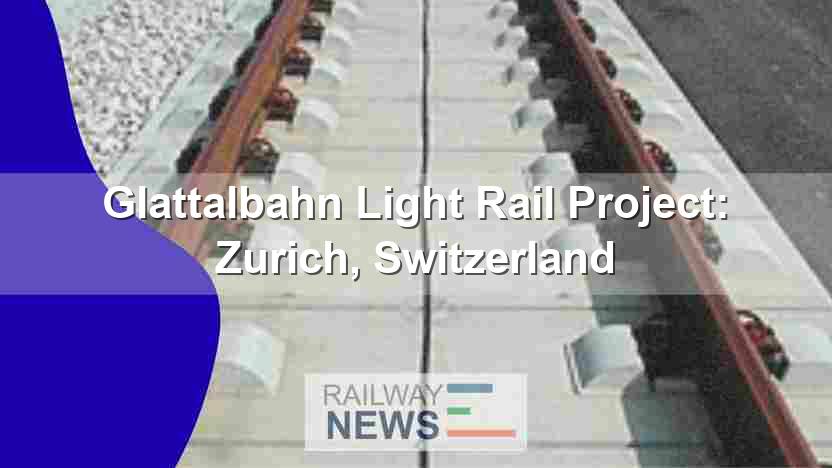
This article explores the planning, construction, and operation of the Glattalbahn, a light rail system in Zurich, Switzerland. The project, a collaborative effort between Verkehrsbetriebe Glattal (VBG), Verkehrsbetriebe Zürich (VBZ), and the Zurich Verkehrsverbund (ZVV), aimed to alleviate traffic congestion in the rapidly developing Glatt Valley region while providing efficient and integrated public transportation. The Glattalbahn’s design, implementation, and integration into the existing Zurich transport network present a compelling case study in modern light rail development. The analysis will focus on the project’s phased implementation, technological choices, integration with existing systems, and its impact on the region’s mobility. This examination will assess the project’s success in achieving its initial goals and consider potential future expansions.
Project Phases and Infrastructure
The Glattalbahn project was implemented in three distinct phases, each extending the light rail network and enhancing connectivity within the Glatt Valley. Phase one, opened in December 2006, connected the existing VBZ tram system at Oerlikon Bahnhof (station) to Auzelg, traversing the Thurgauerstrasse business district and Glattpark development. This phase, operating as an extension of VBZ route 11, utilized existing Tram 2000 and Cobra vehicles. Phase two, completed in December 2008, extended the line from Glattpark to Zurich Airport’s airfreight terminal (Fracht), functioning as an extension of Line 10. Finally, phase three, finished in December 2010, extended the line from Auzelg to Bahnhof Stettbach, an existing VBZ tram and S-Bahn terminus, operating as an extension of VBZ route 12. The entire 12.7km (7.9-mile) system comprises a mix of street-running and reserved right-of-way sections, incorporating tunnels, bridges, and viaducts to overcome geographical challenges. The infrastructure included the construction of 21 stations, many offering intermodal transfers with S-Bahn (commuter rail), bus, and tram services. Key infrastructure elements included the tunnel near Bahnhof Glattbrugg and the viaduct south of the airport. Turning circles were incorporated to accommodate the use of single-ended vehicles.
Rolling Stock and Signaling
While initial design studies considered bespoke vehicle designs, the Glattalbahn ultimately adopted the 100% low-floor Cobra tram, a joint product of Bombardier and Alstom, as its rolling stock. This choice leveraged existing technology and ensured compatibility with the existing VBZ fleet. The system employs a simple, reliable “line of sight” signaling system, allowing for short headways and efficient operation within mixed traffic environments. This system is typical for light rail operations and reduces the need for complex infrastructure. The stations themselves boast a consistent design, providing passenger amenities such as shelters, ticketing machines, and electronic real-time information displays. The Glattalbahn seamlessly integrates with the ZVV (Zurich Verkehrsverbund) common ticketing system, providing a unified fare structure for passengers across multiple modes of transport.
Integration and Urban Development
The Glattalbahn’s success lies significantly in its seamless integration with the existing Zurich public transport network. By connecting with the S-Bahn, VBZ tram lines, and bus routes, it facilitates efficient intermodal travel for commuters and residents. This interconnectivity was a key aim of the project, enhancing accessibility and reducing reliance on private vehicles. Additionally, the project incorporated landscaping elements, including grassed track sections and tree plantings, aiming to blend the infrastructure harmoniously with the urban environment and promote pedestrian and cyclist accessibility. This approach reflects a wider trend in modern light rail development, prioritizing the integration of transport with urban planning objectives.
Project Summary and Future Prospects
The Glattalbahn project has demonstrably improved the public transport infrastructure in Zurich’s Glatt Valley, providing efficient and accessible transit solutions. The phased implementation allowed for incremental improvements, managing costs and minimizing disruption. The integration with existing transport modes through intermodal connections at numerous stations has greatly enhanced regional connectivity. The choice of proven technology for rolling stock and signaling systems has contributed to a robust and reliable operational performance. While the initial passenger forecasts of 3,000-5,000 passengers per hour are not publicly verified data after implementation, the system’s success can be measured in its contribution to reduced traffic congestion and improved mobility within the Glatt Valley. Future expansion plans, such as the Ringbahn Hardwald, represent opportunities to further enhance the system’s network coverage and efficiency.
| Project Feature | Phase 1 | Phase 2 | Phase 3 | Total |
|---|---|---|---|---|
| Project Length (km) | 4.1 | 3.5 | 5.1 | 12.7 |
| Project Budget (CHF million) | 185 | 185 | 185 | 555 |
| Type of Project | Light Rail Extension | Light Rail System | ||
| Connection of Cities/Areas | Oerlikon Bahnhof – Auzelg | Glattpark – Zurich Airport | Auzelg – Bahnhof Stettbach | Oerlikon Bahnhof – Zurich Airport – Bahnhof Stettbach |
| Number of Stations | 5 | 8 | 8 | 21 |
Company Information:
Verkehrsbetriebe Glattal (VBG): Local transport authority responsible for the Glattalbahn operation.
Verkehrsbetriebe Zürich (VBZ): Zurich’s main public transport operator, collaborating with VBG on the Glattalbahn.
Zurich Verkehrsverbund (ZVV): The tariff union for the Canton of Zurich, integrating the Glattalbahn into its ticketing system.
Bombardier Transportation: A leading rolling stock manufacturer, co-developer of the Cobra tram.
Alstom: A major player in the rail industry, co-developer of the Cobra tram.

Railway infrastructure, rolling stock and transport technologies specialist focused on global rail industry developments, high-speed rail systems, signaling technologies and freight transportation. Covering railway investments, public transport modernization, rail operations and international mobility projects across Europe, Asia and North America.