
Thameslink Programme: London Railway Project, SE England
£6bn Thameslink Programme: 115 new trains, 24 trains/hour in central core, 150 stations upgraded. London–Bedford–Brighton–Cambridge main corridor. £3.55bn infrastructure + £1.14bn rolling stock.
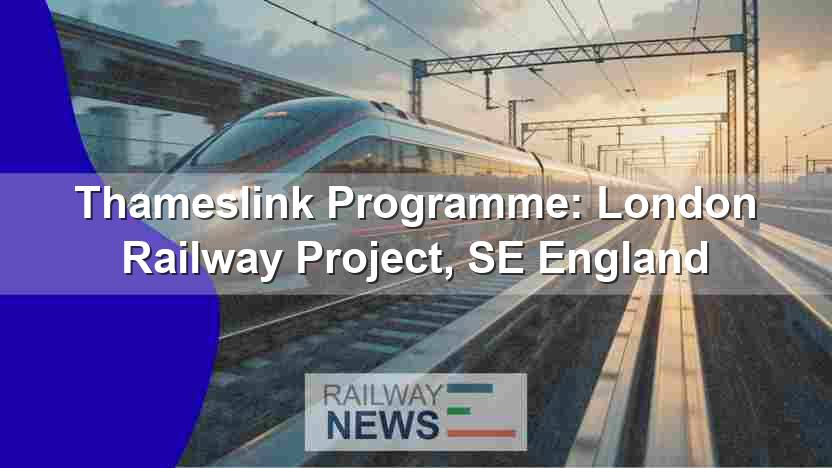
The Thameslink Programme represents a significant undertaking in the modernization and expansion of London’s rail infrastructure. South-east England’s economic dominance, coupled with the fact that London stations serve as the origin or destination for approximately 70% of all UK rail journeys, necessitates a robust and high-capacity rail network. The initial Thameslink 2000 project, while successful, quickly proved insufficient to meet the burgeoning demand. This article explores the Thameslink Programme’s ambitious goals, its multi-faceted implementation, and the lasting impact it has had on London’s commuter and inter-city rail services. The project aimed to significantly increase capacity, improve connectivity, and enhance the overall passenger experience through strategic infrastructure upgrades, rolling stock modernization, and advanced signaling systems. This analysis will delve into the key elements of the project, evaluating its successes and challenges in achieving these objectives.
Infrastructure Enhancements
The Thameslink Programme’s core involved substantial infrastructure improvements. Central to the project was the upgrade and expansion of existing tunnels and lines, particularly the section from St Pancras International (replacing the older Kings Cross Thameslink station) through Farringdon to Blackfriars. This core section underwent extensive modernization, including platform extensions to accommodate longer, 12-carriage trains. The redevelopment of key stations, such as London Bridge, Blackfriars, and Farringdon, was also crucial. Blackfriars station, for instance, underwent a £350 million renovation, adding a south bank entrance and enabling it to handle 12-car trains. The reconstruction of junctions, significantly at Borough Market, addressed bottlenecks and improved train throughput. The integration of the new High Speed 1 (HS1) line at St Pancras further enhanced connectivity. The project also involved significant track lengthening – approximately 4 kilometers of platforms were extended across the network to accommodate the longer trains.
Rolling Stock Modernization
The increased capacity demanded by the Thameslink Programme required a significant investment in new rolling stock. The existing four-car Class 319 units, while capable of operating on both 25kV AC and 750V DC systems, were insufficient. As an interim measure, dual-voltage Bombardier Class 377 units were redeployed, pending the arrival of new trains. A major procurement effort resulted in a contract for approximately 1,200 next-generation eight- and 12-carriage trains, providing 14,500 additional passenger seats. This involved significant collaboration with manufacturers such as Bombardier, Hitachi, Alstom, and Siemens. The new trains incorporated features focused on passenger comfort and convenience, including increased space and enhanced information displays. The introduction of these new trains significantly improved passenger experience and capacity along the Thameslink network.
Signaling and Communications Upgrades
To maximize the benefits of the infrastructure and rolling stock improvements, the Thameslink Programme included a detailed resignaling project. Invensys Rail was awarded the contract to implement advanced signaling systems, enabling a substantial increase in train frequency on the central section of the line. The increased train throughput from eight to 24 trains per hour in each direction addressed past bottlenecks and created capacity for the expanded network. This was crucial for integrating the increased number of trains and destinations into the Thameslink network efficiently. The modern signaling system also improved safety and operational efficiency across the whole network.
Project Summary and Conclusion
The Thameslink Programme was a hugely complex and ambitious project that fundamentally reshaped London’s commuter and inter-city rail network. The project’s success hinged on the integrated approach taken to infrastructure, rolling stock, and signaling upgrades. While initial delays and cost overruns occurred, the completed project delivered substantial improvements in capacity, connectivity, and passenger experience. The expansion of the network to include new destinations, the improved frequency of services, and the introduction of modern, comfortable trains represent a significant leap forward for London’s rail infrastructure.
| Project Parameter | Value |
|---|---|
| Project Name | Thameslink Programme |
| Project Budget | £6 billion |
| Project Length | Multiple lines, various lengths |
| Type of Project | Railway infrastructure upgrade and expansion |
| Connection of Cities | London, Bedford, Brighton, Peterborough, Cambridge, and many others |
| Number of Stations | Approximately 150 |
| Infrastructure Investment | £3.55 billion |
| Rolling Stock Investment | £1.14 billion |
The increased capacity and improved service frequency, now reaching two to three-minute intervals during peak times on many sections, have significantly benefited commuters and improved the overall efficiency of London’s transport system. The integration of the Thameslink network with other rail lines and the London Underground has enhanced connectivity and provided more options for passengers. The project’s legacy extends beyond its immediate impact, setting a benchmark for future large-scale railway improvements in terms of planning, execution, and technological advancements. However, ongoing monitoring and potential future upgrades will be required to ensure the continued effectiveness of the system in accommodating future increases in passenger demand.
Company Information:
- Network Rail: British infrastructure operator responsible for managing and maintaining the railway infrastructure.
- First Capital Connect (now part of Govia Thameslink Railway): A former train operating company that managed services on parts of the Thameslink network.
- Bombardier Transportation: A rolling stock manufacturer that supplied trains for the Thameslink Programme.
- Invensys Rail (now part of Schneider Electric): A company that provided signaling and control systems for the railway.
- Hitachi Rail Europe, Alstom, Siemens Mobility: Manufacturers who competed for and/or were involved in the Thameslink rolling stock contracts.

Transport and railway industry editor covering global rail infrastructure, sustainable mobility, urban transit systems and next-generation railway technologies with a focus on accessible and industry-focused reporting.
RELATED POSTS

August 5, 2026 7:11 pm
JR Central secured Shizuoka governor approval July 7, 2026 for...
August 1, 2026 3:17 pm
A UK firm since 2008 launched QR Shinkansen tickets for...
August 1, 2026 9:10 pm
Leicester station secured £27.5 million in Levelling Up funding in...

August 8, 2026 5:11 pm
Ukrzaliznytsia confirmed a drone strike on a passenger train in...
August 7, 2026 5:11 am
Northern Railway confirmed a Rs 3,08,580 private saloon car charter...
August 15, 2026 5:14 pm
Turntide expands LFP battery output at its Sunderland plant to...