
$2B Minnesota Light Rail: FTA Approves SWLRT Project
The $2 billion Southwest Light Rail Transit project in Minnesota is underway! Learn how this massive undertaking is transforming public transit and creating thousands of jobs.
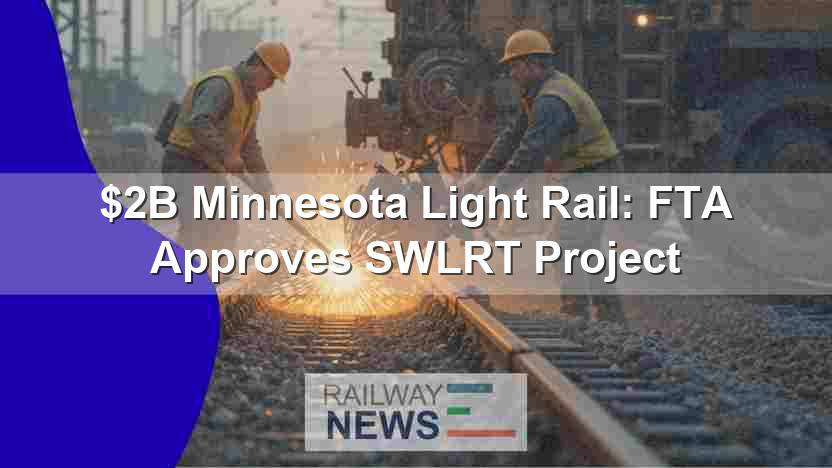
This article explores the approval and implications of the $2 billion Southwest Light Rail Transit (SWLRT) project in Minnesota, a significant undertaking in US public transportation infrastructure development. The Federal Transit Administration (FTA)’s issuance of a Letter of No Prejudice (LONP) marks a crucial step, enabling the Metropolitan Council to award construction contracts and paving the way for federal funding. We will examine the project’s scope, its economic impact, the timeline of implementation, and the long-term benefits it promises for the region. The analysis will explore the complexities involved in such large-scale transit projects, from securing funding and navigating regulatory processes to managing construction and ensuring timely completion. Additionally, we will consider the broader context of this project within the framework of national transportation policy and its potential to serve as a model for future light rail initiatives across the United States. The discussion will also touch upon the project’s potential to alleviate traffic congestion, promote sustainable transportation, and enhance regional connectivity.
Project Overview and Funding
The Southwest Light Rail Transit (SWLRT) project, a 14.5-mile light rail line extension in Minnesota, received a crucial boost with the Federal Transit Administration’s (FTA) issuance of a Letter of No Prejudice (LONP). This letter, essentially a preliminary approval, allows the Metropolitan Council, the regional government agency overseeing the project, to proceed with awarding construction contracts. The project’s total cost is estimated at $2 billion, with the FTA committing $929 million through a Full Funding Grant Agreement (FFGA) expected to be finalized in the following year. This significant federal investment underscores the project’s importance to national transportation goals and its potential economic impact. The LONP also allows for early construction work, such as site preparation and utility relocation, to begin immediately, making these costs eligible for federal reimbursement upon signing of the FFGA.
Economic and Social Impacts
The SWLRT project is expected to generate substantial economic activity. The estimated creation of 7,500 construction jobs represents a significant boost to the local economy, with further employment opportunities arising from operation and maintenance of the line once operational. Beyond the immediate economic benefits, the project promises to significantly improve regional connectivity, linking communities such as Minneapolis, St. Louis Park, Edina, Hopkins, Minnetonka, and Eden Prairie. This enhanced connectivity will improve commutes, boost accessibility to employment and educational opportunities, and stimulate economic growth along the corridor. Reduced reliance on personal vehicles should also lead to a decrease in traffic congestion and associated environmental impacts, furthering the project’s positive social and environmental contributions. Improved public transit accessibility can also improve equity in transportation access for residents across the region.
Construction and Timeline
Early construction activities, including site preparation, utility relocation, and demolition, commenced soon after the LONP approval. Major construction is slated for 2019-2022, with commercial operations expected to begin in 2023. The project’s ambitious timeline requires meticulous planning and execution, particularly given its scale and complexity. Managing the intricate logistical challenges inherent in such a large-scale undertaking is paramount to ensuring timely completion and minimizing disruption to surrounding communities. Effective coordination among contractors, regulatory agencies, and local authorities will be crucial for success. Careful attention to potential environmental impacts and community engagement will also be essential to maintain public support throughout the construction phase.
Project Significance and Future Implications
The SWLRT project exemplifies the growing national commitment to investing in modern, efficient public transportation systems. The significant federal funding demonstrates a recognition of the need to address traffic congestion and enhance regional connectivity. This project serves not only as a crucial piece of infrastructure for Minnesota but also as a potential model for similar initiatives across the country. Successful implementation of the SWLRT project, including timely completion within budget and exceeding expectations in terms of ridership and economic benefits, will likely influence future investment decisions in light rail and other public transit projects nationwide. The lessons learned from this project’s planning, execution, and operation will be invaluable for future large-scale infrastructure endeavors.
Conclusions
The $2 billion Southwest Light Rail Transit (SWLRT) project in Minnesota marks a substantial investment in public transportation infrastructure, receiving critical support from the Federal Transit Administration (FTA). The FTA’s issuance of a Letter of No Prejudice (LONP), followed by the anticipated Full Funding Grant Agreement (FFGA), secured crucial funding for the project, enabling the Metropolitan Council to award construction contracts and commence work. The project, which includes a 14.5-mile light rail line with 16 stations, is expected to generate 7,500 construction jobs and significantly improve regional connectivity, reducing traffic congestion and boosting accessibility to employment and education across several communities. The project’s timeline spans from initial site preparation to the anticipated commencement of commercial services in 2023. The successful completion of the SWLRT project holds significant implications for future light rail projects nationwide. It represents a commitment to investing in sustainable, efficient public transportation systems and offers valuable lessons for project management and execution on a large scale. The project’s long-term impact on the regional economy and the environment underscores the importance of continuing to invest in robust public transit systems. The project’s success will be measured not only by its adherence to budget and schedule but also by its ability to enhance the quality of life for thousands of Minnesotans and serve as a blueprint for future transit developments.

Railway infrastructure, rolling stock and transport technologies specialist focused on global rail industry developments, high-speed rail systems, signaling technologies and freight transportation. Covering railway investments, public transport modernization, rail operations and international mobility projects across Europe, Asia and North America.
RELATED POSTS

October 1, 2026 7:09 am
United States regulators confirmed a September 30 deadline for the...

October 8, 2026 1:15 pm
Alstom secured a €1bn contract to build 13 automated trains,...

October 4, 2026 5:14 pm
Alstom secured a CA$4.7 billion order from VIA Rail Canada...

October 1, 2026 12:13 am
Illinois approved $1.5 billion annually for the Northern Illinois Transit...

October 6, 2026 2:14 am
Union Pacific launched export rail shipments with Ferromex to deliver...

October 1, 2026 6:10 am
Amtrak approved a System Expansion Committee on July 30 to...