
Indian Railways Introduces AI, Multilingual Services with Partnership
Indian Railways adopts AI, offering multilingual passenger services via a new partnership. The initiative aims to improve accessibility and efficiency.
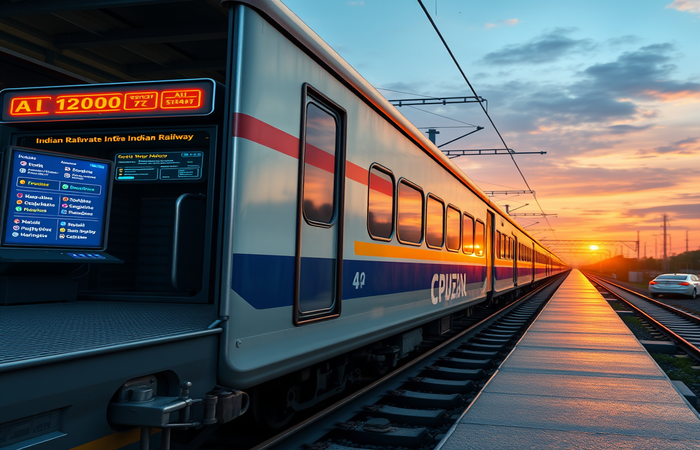
Indian Railways Embraces AI: A Multilingual Revolution for Passenger Services
Indian Railways is embarking on a significant digital transformation, poised to enhance passenger experience through cutting-edge artificial intelligence (AI) solutions. On June 11, 2025, the Digital India Bhashini Division (DIBD) and the Centre for Railway Information Systems (CRIS) formalized a Memorandum of Understanding (MoU) to develop multilingual AI tools, marking a crucial step towards inclusivity and modernization. This collaboration aims to provide support in 22 Indian languages, significantly broadening accessibility for millions of travelers. The primary goal is to revolutionize how passengers interact with railway services, making information and assistance readily available in their preferred language. This article explores the key aspects of this partnership, its technological underpinnings, and its potential impact on the Indian railway network.
Multilingual AI: The Heart of the Transformation
The core of this initiative lies in integrating advanced language technologies into CRIS’s existing infrastructure. This involves leveraging the detailed language technology stack of BHASHINI, including Automatic Speech Recognition (ASR), Text-to-Text Translation, Text-to-Speech (TTS), and Optical Character Recognition (OCR). These technologies will be integrated into systems like the National Train Enquiry System (NTES) and RailMadad, which are pivotal for providing information and addressing passenger concerns. By utilizing AI, the goal is to create a seamless, intuitive experience for users, eliminating language barriers and improving the overall efficiency of passenger service. The deployment of these tools is planned across a variety of platforms, including websites, mobile applications, kiosks, and call centers, ultimately enabling real-time, speech-based interactions in a multitude of languages. The planned rollout, starting with joint technical workshops and pilot deployments, underscores a commitment to a phased and controlled implementation process.
Enhancing Passenger Support with Intelligent Systems
The partnership between DIBD and CRIS extends beyond basic translation services. A key objective is the co-development of AI-powered chatbots and voice assistants. These tools will be designed to provide instant support and guidance to passengers, addressing queries, offering real-time updates, and resolving issues. The AI-driven system will also facilitate multilingual interfaces for railway enquiry setups, allowing passengers to access information in their chosen language. The scalability of these services, through both cloud-based and on-premises infrastructure, is another important aspect, enabling a flexible and adaptable deployment strategy across the expansive Indian Railways network. This focus on proactive and responsive passenger support represents a significant leap towards a more customer-centric approach to railway operations.
Technical Deep Dive: The Technology Stack
The success of this project hinges on the underlying technology and its effective integration. BHASHINI’s advanced language technology stack will play a crucial role. ASR will convert spoken language into text, enabling voice-based queries and interactions. Text-to-Text Translation will facilitate seamless information exchange between languages. TTS will enable systems to “speak” in various Indian languages. OCR will assist in converting printed or handwritten text into digital form, enabling access to information from a variety of sources. These capabilities are designed to work in concert, providing a detailed and user-friendly experience. CRIS, with its expertise in railway information systems, will ensure that these technologies are seamlessly integrated into existing infrastructure, thereby minimizing disruption and maximizing the benefits for users.
Conclusion
The collaboration between the Digital India Bhashini Division and CRIS represents a pivotal moment in the digital evolution of Indian Railways. By embracing multilingual AI solutions, the initiative aims to improve accessibility, transparency, and efficiency within passenger-facing services. The integration of advanced language technologies, including ASR, TTS, and real-time translation, paves the way for a more inclusive and user-friendly railway experience. The development of AI-powered chatbots, voice assistants, and multilingual interfaces will enhance passenger support, making travel more convenient and accessible. The scheduled joint technical workshops and pilot deployments highlight a strategic, phased approach to implementation. The ongoing development of the Indian railway network, through projects like the addition of high-powered electric locomotives, indicates a commitment to continued innovation and passenger satisfaction. This endeavor promises to transform the interaction between millions of passengers and railway services daily, making language a facilitator, not a barrier, to accessing vital public services. Looking ahead, these AI-driven innovations are expected to set a benchmark for other railway systems around the globe, demonstrating the transformative power of language technology in the transportation sector.

Railway infrastructure, rolling stock and transport technologies specialist focused on global rail industry developments, high-speed rail systems, signaling technologies and freight transportation. Covering railway investments, public transport modernization, rail operations and international mobility projects across Europe, Asia and North America.
RELATED POSTS
September 6, 2026 5:19 am
Hitachi delivered Taiwan's first N700ST high-speed train from Japan in...

September 5, 2026 4:19 pm
CPK launched formal tender talks with four consortia to design...

September 5, 2026 7:14 pm
HS2 Ltd signed renegotiated civils contracts with EKFB and Align...

September 6, 2026 4:12 am
Alstom delivered the first of 100 new G Class trams...
September 6, 2026 1:17 am
Hitachi Toshiba Supreme Consortium confirmed the first of 12 N700ST...
September 6, 2026 6:17 am
Hungary ordered a national ban on most freight trains from...