
Delhi Metro Line 7: Automated Transit Success
Delhi Metro Line 7: A fully automated marvel using Bombardier’s CITYFLO 650, boosting efficiency and passenger experience. Discover how this CBTC system revolutionizes urban rail!
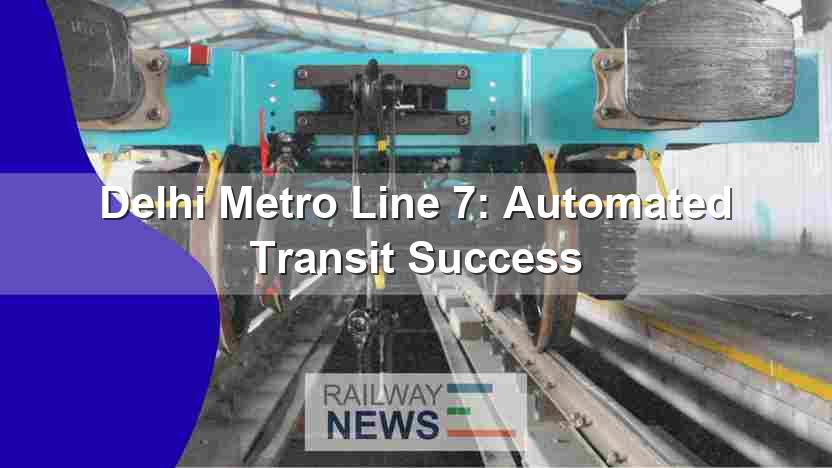
This article examines the recent completion and opening of the final section of Delhi Metro Line 7 (DMRC Line 7), highlighting its significance within the broader context of Delhi’s expanding public transportation network. The focus will be on the technological advancements incorporated into this line, its impact on the city’s traffic flow and commuter experience, and the broader implications for future urban rail development in India and beyond. The completion of this fully automated line represents a significant leap forward in technological adoption within the Indian railway system and provides valuable lessons for other cities facing similar challenges in managing urban mobility. The integration of advanced communication-based train control (CBTC) systems and the resulting operational efficiency will be analyzed, along with the line’s contribution to reducing congestion and enhancing overall transit accessibility for millions of commuters. Finally, the article will consider the long-term sustainability and scalability of this model for future expansion and replication within Delhi and other rapidly growing urban centers across India.
Line 7: Technological Advancement and Operational Efficiency
The inauguration of the Lajpat Nagar–Mayur Vihar Pocket 1 section marks the completion of Delhi Metro Line 7, also known as the Pink Line. This 9.7km section, comprising three underground and two elevated stations, significantly enhances connectivity between the southern and eastern parts of Delhi. Crucially, Line 7 is Delhi’s first fully automated metro line, utilizing Bombardier’s CITYFLO 650 driverless rail control technology. This CBTC (Communications-Based Train Control) system employs modern radio networks and moving block operations, enabling centralized train supervision and highly reliable automatic operations. The system allows for trains to run at a frequency of one every 90 seconds and reach speeds up to 85 km/h, substantially improving operational efficiency and passenger throughput compared to manually operated lines.
Impact on Delhi’s Transportation Network
The addition of Line 7 has significantly eased pressure on Delhi’s existing metro network. The 58.5km circular route, running adjacent to the Ring Road, from Majlis Park to Shiv Vihar Station, provides a crucial alternative route, alleviating congestion on other lines and improving travel times for millions of commuters. The DMRC’s impressive achievement of opening 96km of new metro sections in the last year, including this extension, underscores its commitment to expanding public transportation infrastructure to meet the city’s growing demands. The integrated nature of Line 7 with the existing 327km network, featuring 236 stations, further enhances its effectiveness as part of a detailed public transport solution.
Economic and Social Implications
The successful implementation of Line 7 demonstrates the economic benefits of investing in modern, automated rail systems. The increased capacity and operational efficiency lead to reduced operational costs and improved service reliability. Additionally, the enhanced connectivity fostered by Line 7 contributes to improved social equity, providing affordable and efficient transportation access to a wider segment of Delhi’s population. This accessibility benefits not only commuters but also contributes to the overall economic growth of the city by improving access to employment opportunities and social services.
Lessons Learned and Future Outlook
The completion of Line 7 serves as a compelling case study for urban rail development in India and globally. The successful integration of advanced CBTC technology has demonstrably enhanced efficiency, reliability, and capacity. The project’s success highlights the importance of strategic planning, technological innovation, and effective collaboration between government agencies and private sector partners. The lessons learned from Line 7’s development can inform future expansion projects within Delhi and provide a blueprint for other rapidly growing cities facing similar challenges in managing urban mobility and improving public transportation. The scalability of this model, both in terms of technology and infrastructure, offers a potential solution for sustainable and efficient urban transit in the years to come.
Conclusion
The opening of the final section of Delhi Metro Line 7 marks a significant milestone in Delhi’s ongoing efforts to modernize and expand its public transportation system. The implementation of Bombardier’s CITYFLO 650 driverless rail control system has resulted in a highly efficient and reliable automated line, significantly easing pressure on the existing network and improving the commute for millions of residents. The line’s 58.5km circular route, integrated with the broader Delhi Metro network, enhances connectivity between previously underserved areas, promoting social equity and economic growth. The project’s success showcases the potential of advanced technology to address the challenges of rapid urbanization and demonstrates the economic and social benefits of investing in modern, high-capacity rail transit systems. This successful implementation of a fully automated line not only improves Delhi’s transportation infrastructure but also serves as a valuable model for other cities in India and around the world, showcasing the potential for sustainable and efficient urban mobility solutions through the strategic adoption of cutting-edge technologies. The long-term success of Line 7 will depend on ongoing maintenance, operational optimization, and continued investment in technological advancements to ensure the system remains efficient, reliable, and responsive to the evolving needs of Delhi’s ever-growing population. The future of urban transport in rapidly expanding cities hinges on such innovative approaches, and Line 7 provides a strong example of a successful and scalable model.

Railway infrastructure, rolling stock and transport technologies specialist focused on global rail industry developments, high-speed rail systems, signaling technologies and freight transportation. Covering railway investments, public transport modernization, rail operations and international mobility projects across Europe, Asia and North America.
RELATED POSTS

October 8, 2026 1:15 pm
Alstom secured a €1bn contract to build 13 automated trains,...

October 1, 2026 7:09 am
United States regulators confirmed a September 30 deadline for the...

October 8, 2026 12:18 pm
Siemens Mobility signed an agreement with VinSpeed to supply 350...

October 4, 2026 5:14 pm
Alstom secured a CA$4.7 billion order from VIA Rail Canada...

October 5, 2026 6:12 pm
AECOM and Jacobs secured a contract in September 2026 to...

October 1, 2026 12:13 am
Illinois approved $1.5 billion annually for the Northern Illinois Transit...