
Etihad Rail Expands: Ruwais-Ghuweifat Rail Link
Etihad Rail’s Stage Two expansion, a massive AED 1.5 billion project, is revolutionizing UAE freight transport. Discover how this Ruwais-Ghuweifat rail link is shaping the future of regional logistics!
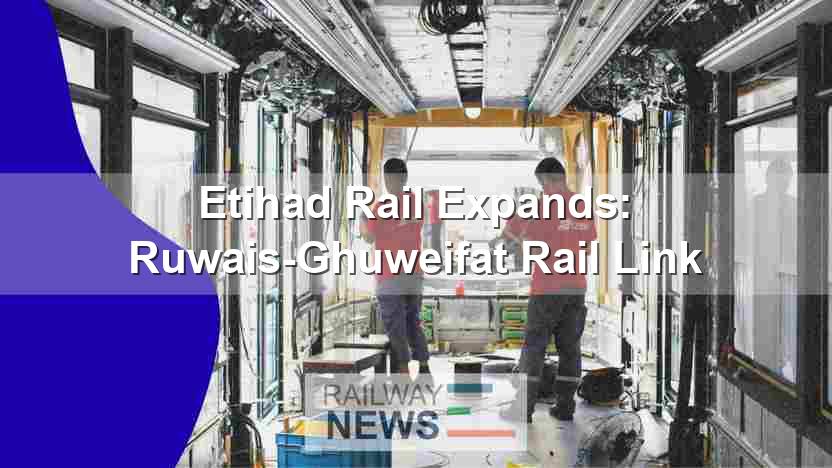
This article explores the significant development of the UAE National Rail Network, specifically focusing on the awarding of a substantial contract for Package A of Stage Two to a joint venture between China State Construction Engineering Corporation and SK Engineering & Construction. The AED 1.5 billion ($408 million) project marks a crucial step in expanding the Etihad Rail network, transforming the UAE’s freight transportation landscape and solidifying its position as a regional logistics hub. This expansion will not only enhance domestic connectivity but also integrate seamlessly with neighboring countries’ rail networks, fostering regional trade and economic growth. We will examine the scope of this project, the technological advancements involved, the economic implications for the UAE and the wider region, and the long-term vision behind this strategic infrastructure investment. The analysis will consider the challenges involved in such large-scale construction projects and how they are being addressed by Etihad Rail and its chosen contractors.
The Ruwais-Ghuweifat Rail Link: A Foundation for Regional Connectivity
Package A of Stage Two focuses on the construction of a 139km rail line connecting Ruwais to Ghuweifat, a border town with Saudi Arabia. This section is vital, representing the initial phase of expanding Etihad Rail’s network beyond its existing Stage One infrastructure. The project scope encompasses detailed design and construction, including substantial earthworks, bridge and tunnel construction, wildlife crossing mitigation, track laying, and integration with the existing Stage One network. The use of 1.3 million tonnes of ballast, over 400,000 concrete sleepers, and 33,000 tonnes of iron rail highlights the scale of the undertaking. The adoption of standard-gauge double track underscores Etihad Rail’s commitment to future scalability and operational efficiency.
Technological Advancements and Construction Methodology
The project’s success hinges on employing cutting-edge technologies and efficient construction methodologies. The involvement of China State Construction Engineering Corporation and SK Engineering & Construction, two globally renowned companies, guarantees access to the latest advancements in railway construction. This likely includes sophisticated surveying techniques (GPS/GNSS), advanced earthmoving equipment, and innovative track-laying processes. The project also necessitates careful consideration of environmental factors, including implementing effective mitigation strategies to minimize the impact on local ecosystems, particularly via the inclusion of wildlife crossings. The meticulous planning and execution are crucial for completing the project on time and within budget, whilst upholding high safety standards.
Economic Impact and Strategic Positioning
The economic benefits of this expansion extend beyond the immediate construction phase. The enhanced freight transport capabilities will significantly reduce transportation costs and times for businesses operating within the UAE and those engaging in regional trade. This will improve the competitiveness of UAE industries, attract foreign investment, and stimulate economic growth across various sectors. The completion of Stage Two, linking Ghuweifat to the Port of Fujairah, will further bolster the UAE’s strategic position as a significant logistics hub in the region, facilitating seamless movement of goods between Asia, Africa, and Europe. The integration with regional rail networks promises a significant boost to cross-border trade and economic cooperation.
Conclusion: A Vision for the Future of Rail in the UAE
The awarding of the AED 1.5 billion tender to the China-South Korea joint venture marks a pivotal moment for Etihad Rail and the UAE’s transportation infrastructure. The construction of Package A of Stage Two, connecting Ruwais to Ghuweifat, represents more than just a railway expansion; it signifies a strategic investment in the nation’s economic future. The project’s scale, employing advanced technologies and demanding high-quality materials (such as the specified quantities of ballast, sleepers and rail), demonstrates a commitment to building a modern, efficient, and resilient rail network. The collaboration with internationally renowned construction firms leverages their expertise and experience in large-scale infrastructure projects, ensuring that the project is executed efficiently and to the highest standards. The long-term vision behind this initiative extends beyond simply improving domestic freight transport. It aims to position the UAE as a leading regional logistics hub, fostering economic growth, trade facilitation, and strategic partnerships within the Gulf Cooperation Council (GCC) and beyond. The success of this project will serve as a model for future railway developments in the region, showcasing the potential of rail infrastructure to drive economic prosperity and regional integration.

Railway infrastructure, rolling stock and transport technologies specialist focused on global rail industry developments, high-speed rail systems, signaling technologies and freight transportation. Covering railway investments, public transport modernization, rail operations and international mobility projects across Europe, Asia and North America.
RELATED POSTS

October 8, 2026 1:15 pm
Alstom secured a €1bn contract to build 13 automated trains,...

October 1, 2026 7:09 am
United States regulators confirmed a September 30 deadline for the...

October 8, 2026 12:18 pm
Siemens Mobility signed an agreement with VinSpeed to supply 350...

October 4, 2026 5:14 pm
Alstom secured a CA$4.7 billion order from VIA Rail Canada...

October 5, 2026 6:12 pm
AECOM and Jacobs secured a contract in September 2026 to...

October 1, 2026 12:13 am
Illinois approved $1.5 billion annually for the Northern Illinois Transit...