
Chennai Metro: Alstom to Supply Driverless Trains for Phase II
Alstom is delivering 96 driverless Metropolis metro cars to Chennai, India, boosting urban mobility. This project transforms the city’s infrastructure.
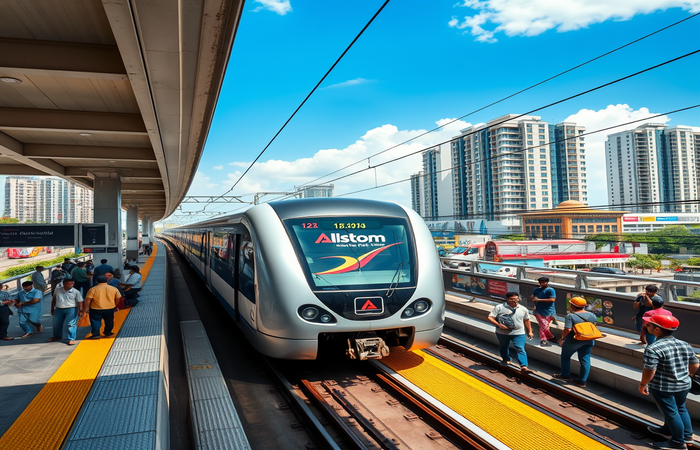
Chennai, India – October 26, 2023
The bustling metropolis of Chennai, India, is poised to significantly upgrade its public transportation infrastructure. Alstom, a global leader in smart and sustainable mobility, has secured a substantial contract from Chennai Metro Rail Limited (CMRL) to provide 96 driverless metro cars for Phase II of the Chennai Metro. This agreement, valued at EUR 135 million, encompasses the design, manufacturing, supply, testing, and commissioning of 32 three-car trainsets, along with a detailed 15-year maintenance package. This initiative underscores the Indian government’s “Make in India” and “Atmanirbhar Bharat” (Self-Reliant India) initiatives and represents a considerable step towards enhancing urban mobility for the city’s growing population. The project’s implications extend beyond mere transportation, potentially reshaping the urban landscape and offering valuable insights into the evolution of modern metro systems. This article will delve into the specifics of the contract, the technical aspects of the new trains, and the broader impact on Chennai’s infrastructure and Alstom’s role in the Indian market.
Contract Details and Scope of Work
The contract awarded to Alstom encompasses the complete lifecycle of the new metro cars, from initial design to final commissioning and ongoing maintenance. The 96 Metropolis driverless metro cars will be organized into 32 trainsets, each consisting of three cars. This configuration is optimized for operational efficiency and passenger capacity, allowing for the efficient movement of large volumes of commuters. The scope of work includes detailed maintenance for a duration of 15 years, ensuring the long-term reliability and operational readiness of the fleet. This is a critical element, as it minimizes downtime and maximizes the availability of the trains for public use. The project highlights Alstom’s commitment to providing integrated solutions, combining rolling stock with long-term service support, thereby ensuring sustained performance and contributing to the overall efficiency of the metro system.
Technological Advancements and Design Features
The new Metropolis metro cars are designed with state-of-the-art technology to provide a safe, comfortable, and efficient passenger experience. Each trainset has a capacity to carry up to 900 passengers, addressing the high ridership demands of the Chennai Metro. The trains are equipped with advanced safety features, including sophisticated evacuation systems, such as train-to-train and train-to-track evacuation capabilities, ensuring passenger safety during emergencies. Additionally, the trains are designed with a focus on energy efficiency and passenger comfort, incorporating features such as improved climate control, ergonomic seating, and enhanced accessibility. These design considerations are crucial in attracting commuters and making public transport a more attractive and sustainable mode of travel. The driverless technology employed in these trains also contributes to operational efficiency, allowing for optimized train schedules and reduced operational costs. The trains will be manufactured entirely in India, in line with the ‘Make in India’ and ‘Atmanirbhar Bharat’ initiatives. The design will take place at Alstom’s engineering centre in Bengaluru, while production will be carried out at its Sri City facility in Andhra Pradesh.
Impact on Chennai’s Infrastructure and Urban Mobility
Phase II of the Chennai Metro network, spanning 119 kilometers, is a crucial infrastructure project aimed at improving the city’s transportation network. This phase includes over 76 kilometers of elevated track and 43 kilometers of underground lines, covering three key corridors. The integration of the new driverless metro cars will significantly increase the capacity and efficiency of the metro system, offering a faster and more reliable alternative to private vehicles. This, in turn, is expected to alleviate traffic congestion and reduce pollution levels in the city. The enhanced connectivity provided by the metro will also stimulate economic activity, providing better access to employment opportunities, educational institutions, and other essential services for the residents of Chennai. The project is expected to positively impact the lives of over 11 million people in Chennai, contributing to a more sustainable and livable urban environment.
Alstom’s Strategic Presence in the Indian Market
Alstom has a well-established presence in the Indian market, with a proven track record of delivering high-quality rolling stock and providing detailed transportation solutions. The company’s involvement in Phase II of the Chennai Metro is an example of its sustained commitment to modernizing urban transit in India. Alstom is already supplying 108 Metropolis driverless cars for another section of Chennai Metro Phase II. Moreover, Alstom has delivered 208 metro cars for Phase I. The company has also been actively involved in building track work across Corridors I and II. Alstom’s rolling stock is deployed in several other major Indian cities, including Delhi, Lucknow, Kochi, Mumbai, and upcoming projects in Agra-Kanpur and Indore-Bhopal. These projects reflect Alstom’s expertise in the metro rail sector and its capacity to address the diverse requirements of different urban environments. Alstom’s ability to manufacture trains locally, in line with the “Make in India” initiative, underscores its commitment to supporting the country’s economic growth and technological advancement in the railway sector. Currently, Alstom makes one in every three metro cars operating in India.
Conclusion
To summarize, the EUR 135 million contract awarded to Alstom for the supply of 96 driverless metro cars for Phase II of the Chennai Metro represents a significant milestone in the city’s infrastructure development. The project not only signifies a substantial investment in public transport but also underscores the commitment to technological advancement, sustainability, and local manufacturing. The new Metropolis metro cars, with their advanced safety features, high passenger capacity, and energy-efficient design, are poised to revolutionize urban mobility in Chennai. The benefits extend beyond mere transportation, with the potential to alleviate traffic congestion, reduce pollution, and stimulate economic activity. Alstom’s long-standing partnership with CMRL, coupled with its strong presence in the Indian market, positions it as a key player in modernizing India’s urban transit systems. This project exemplifies the “Make in India” initiative, promoting self-reliance and technological expertise within the country. The successful implementation of this project will not only benefit the residents of Chennai but also serve as a model for other cities seeking to improve their public transportation infrastructure, contributing to a more sustainable and efficient urban future.
Companies mentioned:
- Alstom: A global leader in smart and sustainable mobility, providing rolling stock, signaling systems, and infrastructure solutions.
- Chennai Metro Rail Limited (CMRL): The organization responsible for the planning, construction, and operation of the Chennai Metro system.

Railway infrastructure, rolling stock and transport technologies specialist focused on global rail industry developments, high-speed rail systems, signaling technologies and freight transportation. Covering railway investments, public transport modernization, rail operations and international mobility projects across Europe, Asia and North America.
RELATED POSTS

October 8, 2026 1:15 pm
Alstom secured a €1bn contract to build 13 automated trains,...

October 1, 2026 7:09 am
United States regulators confirmed a September 30 deadline for the...

October 8, 2026 12:18 pm
Siemens Mobility signed an agreement with VinSpeed to supply 350...

October 4, 2026 5:14 pm
Alstom secured a CA$4.7 billion order from VIA Rail Canada...

October 5, 2026 6:12 pm
AECOM and Jacobs secured a contract in September 2026 to...

October 1, 2026 12:13 am
Illinois approved $1.5 billion annually for the Northern Illinois Transit...