
Bangkok’s MRT Expansion: ADB’s $311M PPP Investment
Bangkok’s MRT expansion: ADB’s $311M (THB9.9B) PPP financing for Pink (34.5km) & Yellow (30.4km) monorails. BTS-led model reduces congestion for 3M+ daily commuters.
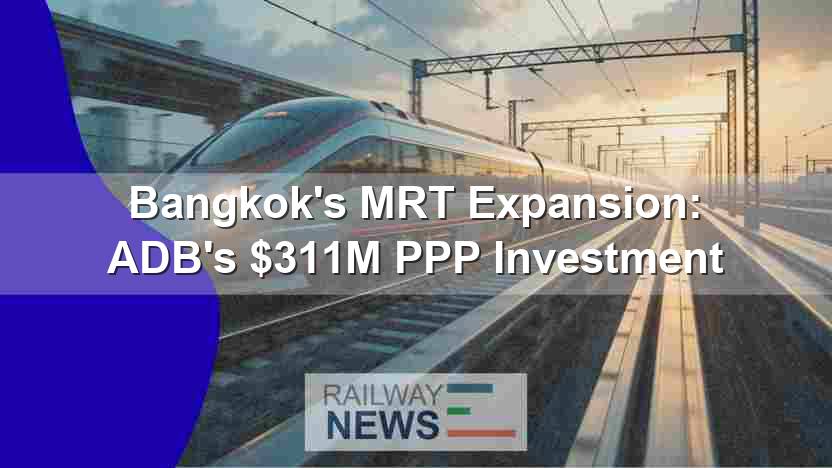
This article examines the Asian Development Bank’s (ADB) significant investment in Bangkok’s mass rapid transit (MRT) system, specifically focusing on the financing and implementation of the Pink and Yellow lines. The project highlights the crucial role of public-private partnerships (PPPs) in addressing urban transportation challenges in rapidly growing megacities. The THB9.9 billion ($311 million) funding commitment represents a substantial injection of capital into Bangkok’s infrastructure development, aiming to alleviate chronic traffic congestion, improve air quality, and enhance the overall efficiency and affordability of public transport. This analysis will explore the financial structure of the project, the operational considerations involved, and the broader implications for sustainable urban development in Southeast Asia. We will delve into the specific challenges and opportunities presented by this large-scale infrastructure project, offering insights into the complexities of managing PPPs in the context of a developing city.
The ADB’s Investment and the Public-Private Partnership Model
The ADB’s $311 million contribution is a pivotal component of the funding strategy for the Pink and Yellow lines. This funding is not a direct grant, but rather a loan channeled through a public-private partnership (PPP) with BTS Group Holdings Public Company, the operator of the existing Bangkok MRT system. This PPP model distributes risk and responsibility between the public sector (represented by the ADB) and the private sector (BTS Group). The ADB’s role is to provide crucial initial capital to incentivize private sector investment and to ensure the project aligns with sustainable development goals. The division of the financial package equally between the Northern Bangkok Monorail Company (NBM) and the Eastern Bangkok Monorail Company (EBM), which are special purpose vehicles (SPVs) established to operate the lines, demonstrates a strategic effort to manage the project’s scope and financial risk effectively.
Operational Considerations and Infrastructure Development
The Pink Line (34.5km) connecting Min Buri district and Khae Rai, and the Yellow Line (30km) running between Lat Phrao and Samrong, represent a significant expansion of Bangkok’s MRT network. Successful implementation requires careful consideration of various operational aspects, including route planning, station design, rolling stock procurement, and integration with existing transit systems. These lines are designed not just as isolated infrastructure projects, but as integral components of a broader, integrated public transportation system. Successful integration requires meticulous planning and coordination to ensure seamless transfers and optimal passenger flow. This includes considerations of signaling systems, train scheduling, and fare management to create a user-friendly and efficient experience for commuters.
Addressing Urban Challenges: Congestion, Pollution, and Sustainability
Bangkok, like many rapidly growing Asian cities, faces significant challenges related to traffic congestion, air pollution, and greenhouse gas emissions. The expansion of the MRT system directly addresses these issues. By providing a viable alternative to private vehicles, the Pink and Yellow lines aim to reduce reliance on cars, thereby easing congestion and improving air quality. The reduction in vehicular traffic translates directly into lower levels of harmful pollutants and greenhouse gases, contributing to a more sustainable and environmentally friendly urban environment. The long-term success of this initiative hinges on its ability to shift commuter preferences toward public transport, requiring ongoing efforts in public awareness campaigns and service improvements.
Conclusion: A Model for Sustainable Urban Development
The ADB’s investment in Bangkok’s Pink and Yellow MRT lines exemplifies a strategic approach to addressing the urban challenges of a rapidly developing megacity. The project’s success hinges on the effective collaboration between the public and private sectors, as demonstrated by the PPP model employed. The financial structuring, which involves a substantial ADB loan channeled through BTS Group and the creation of SPVs for operational management, highlights a commitment to risk mitigation and efficient resource allocation. The project’s focus on improving public transport infrastructure directly contributes to reducing traffic congestion, mitigating air pollution, and promoting sustainable urban development. Beyond the immediate benefits for Bangkok, this project serves as a valuable case study for other cities facing similar transportation challenges. The successful implementation of this PPP model, including the meticulous planning and execution of infrastructure development and operational strategies, could serve as a blueprint for replicating similar initiatives in other urban centers across Southeast Asia and beyond. The long-term success, however, necessitates continuous monitoring, adaptive management, and ongoing investment in maintaining and expanding the system to meet the evolving needs of Bangkok’s growing population. The commitment to sustainability, both environmentally and economically, is key to realizing the full potential of this substantial infrastructure investment.

Transport and railway industry editor covering global rail infrastructure, sustainable mobility, urban transit systems and next-generation railway technologies with a focus on accessible and industry-focused reporting.
RELATED POSTS

September 5, 2026 4:19 pm
CPK launched formal tender talks with four consortia to design...

September 6, 2026 4:12 am
Alstom delivered the first of 100 new G Class trams...

September 5, 2026 7:14 pm
HS2 Ltd signed renegotiated civils contracts with EKFB and Align...
September 19, 2026 11:19 am
China launched an experimental 1.11-tonne maglev test sled to 800...
September 7, 2026 4:15 pm
Zimbabwe approved the EUR 3 billion Harare Light Rail project,...
September 5, 2026 6:17 pm
Universal Signalling won a deal to install its U-Cross system...