
Global Rail Industry: Trends, Investments, & Innovations
This article examines significant developments in the global railway industry during a specified period, focusing on key projects and technological advancements that include light rail expansions, major infrastructure investment proposals, signaling system upgrades, the adoption of sustainable materials, new rolling stock procurement, and operational improvements. These examples illustrate the diverse aspects of railway infrastructure development, rolling stock procurement, and operational improvements, highlighting their contribution to enhanced passenger experience, improved network capacity, and pursuit of environmentally friendly practices within the rail sector.
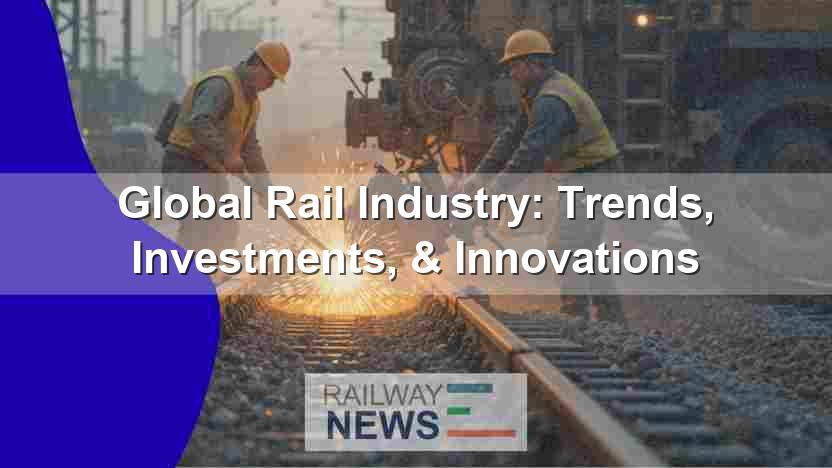
This article explores significant developments in the global railway industry during a specified period, focusing on key projects and technological advancements. We will delve into several case studies illustrating the diverse aspects of railway infrastructure development, rolling stock procurement, and operational improvements. These examples encompass light rail expansions, major infrastructure investment proposals, signaling system upgrades, the adoption of sustainable materials, and the delivery of new rolling stock. The analysis will examine the strategic implications of these projects, highlighting their contribution to enhanced passenger experience, improved network capacity, and the pursuit of environmentally friendly practices within the rail sector. We will also consider the financial aspects of these projects, the involvement of various stakeholders, and the overall impact on the efficiency and sustainability of railway operations worldwide. Finally, we will discuss the broader trends emerging from these individual projects, focusing on the direction of future railway development.
Light Rail Expansion and Modernization
The expansion and modernization of light rail systems are crucial for improving urban mobility. Bogestra, a German public transport operator, ordered eight additional Variobahn trams from Stadler, increasing its fleet to 107 Stadler vehicles. This exemplifies the ongoing investment in light rail infrastructure to meet growing passenger demand. Simultaneously, the initial operational phase of the ION Light Rail Transit (LRT) system in Ontario, Canada, commenced, showcasing a significant investment in light rail infrastructure. This project, implemented by the GrandLinq Consortium, underlines the global trend towards adopting sustainable and efficient public transport solutions.
Significant Infrastructure Investments: The Midlands Rail Hub
Large-scale infrastructure projects are essential for enhancing national connectivity and economic growth. The Midlands Connect body in the UK submitted a £2 billion proposal for railway improvements between the East and West Midlands. This “Midlands Rail Hub” plan, encompassing 15 infrastructure projects, aims to significantly increase capacity and connectivity, thereby boosting the regional economy. The phased implementation, planned between 2024 and 2033, highlights the long-term vision and strategic planning involved in such major undertakings. The collaboration with Network Rail underscores the importance of public-private partnerships in delivering complex infrastructure projects.
Technological Advancements and Sustainable Practices
The railway industry is embracing technological advancements and sustainable practices. Network Rail’s £215 million investment in 17 framework contracts for minor signalling works demonstrates the ongoing commitment to upgrading and maintaining signaling infrastructure across the UK network. This ensures the safe and efficient operation of the railway. Additionally, the installation of recycled plastic railway sleepers at Richmond station in Melbourne, Australia, showcases the industry’s growing focus on environmental sustainability and the adoption of circular economy principles. This initiative, part of a larger trial program, highlights a proactive approach towards reducing the environmental footprint of railway infrastructure.
Rolling Stock Delivery and Fleet Modernization
The delivery of new rolling stock is a key aspect of railway modernization. The completion of the delivery of 30 B-series electric multiple unit (EMU) trains to Western Australia’s Public Transport Authority (PTA) by a Bombardier Transportation and Downer EDI joint venture (JV) highlights a successful large-scale rolling stock procurement and delivery project. This significantly enhances passenger capacity and service reliability. Similarly, Alstom’s contract to supply eight Coradia Lint regional trains to ODEG in Germany underscores the continuous demand for modern, environmentally friendly rolling stock that meets stringent emission standards (Stage 5 European emission standards).
Conclusions
The examples presented in this article highlight several key trends in the global railway industry. Firstly, there is a clear and sustained investment in expanding and modernizing light rail networks to improve urban transport options and alleviate congestion. Secondly, major infrastructure projects, such as the Midlands Rail Hub, illustrate a commitment to enhancing national connectivity and stimulating economic growth through strategic infrastructure investments. Thirdly, the increasing adoption of sustainable practices, as evidenced by the use of recycled plastic sleepers, shows the railway industry’s proactive engagement with environmental concerns. The procurement of new rolling stock, encompassing both light rail vehicles and regional trains, points to a continuous effort to upgrade fleets, improve passenger comfort, and enhance operational efficiency. Finally, technological advancements, particularly in signaling systems, are crucial for ensuring the safe and efficient operation of railway networks. The significant investments and collaborative efforts across various railway projects worldwide demonstrate a global commitment to developing a more efficient, sustainable, and passenger-centric rail transportation system. The future of rail will be shaped by continued investment in infrastructure, embracing innovation, and a steadfast commitment to environmental sustainability, ultimately shaping a more efficient and environmentally friendly transportation landscape.

Railway infrastructure, rolling stock and transport technologies specialist focused on global rail industry developments, high-speed rail systems, signaling technologies and freight transportation. Covering railway investments, public transport modernization, rail operations and international mobility projects across Europe, Asia and North America.
RELATED POSTS

September 5, 2026 4:19 pm
CPK launched formal tender talks with four consortia to design...

September 5, 2026 7:14 pm
HS2 Ltd signed renegotiated civils contracts with EKFB and Align...

September 6, 2026 4:12 am
Alstom delivered the first of 100 new G Class trams...
September 5, 2026 6:17 pm
Universal Signalling won a deal to install its U-Cross system...
September 6, 2026 8:17 am
DB InfraGO reopened the Nuremberg-Regensburg line in Bavaria on 31...
September 6, 2026 12:20 pm
Indian Railways ordered a probe after a fire destroyed 2...