
Spain’s High-Speed Rail: Stadler-Erion Wins Major ADIF Contract
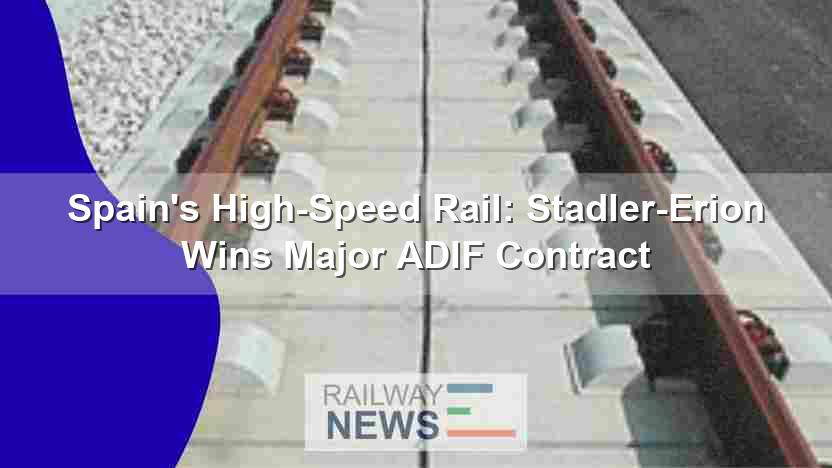
The procurement contract awarded by ADIF to the Stadler-Erion consortium for 22 rescue locomotives represents a significant investment in enhancing Spain’s high-speed rail network, driven by a strategic partnership between leading manufacturers and local expertise.
Introduction
This article examines the significant contract awarded by ADIF (Administrador de Infraestructuras Ferroviarias), the Spanish state-owned railway infrastructure manager, to a consortium formed by Stadler and Erion for the supply and maintenance of 22 rescue locomotives. This procurement represents a substantial investment in enhancing the safety and operational efficiency of Spain’s high-speed rail network. The selection process, the technical specifications of the locomotives, and the implications for both ADIF and the Stadler-Erion consortium will be analyzed in detail. The strategic partnership between Stadler, a leading rolling stock manufacturer, and Erion, a joint venture with Renfe (Red Nacional de Ferrocarriles Españoles – Spanish National Railways), highlights the increasing trend of collaborative ventures in the railway industry to leverage expertise and resources for large-scale infrastructure projects. We will explore the implications of this contract within the broader context of the Spanish railway modernization efforts and its potential influence on future procurement strategies within the European rail sector.
ADIF’s Procurement Strategy and the Stadler-Erion Consortium
ADIF’s decision to award the contract to the Stadler-Erion consortium followed a rigorous competitive tendering process. This competitive bidding ensures value for money and promotes innovation within the rail industry. The consortium’s bid stood out due to a combination of factors, likely including a compelling technical proposal, cost-effectiveness, and a robust maintenance plan. Stadler’s extensive experience in manufacturing high-performance locomotives and Erion’s intimate understanding of the Spanish railway network and its operational requirements likely proved instrumental in winning the bid. The 80/20 ownership structure, with Stadler holding the majority stake, reflects Stadler’s significant contribution in design, manufacturing, and project management. Erion’s 20% share leverages the local knowledge and relationships of Renfe, crucial for integration and ongoing maintenance. This collaborative approach exemplifies a successful strategy for securing major rail infrastructure contracts.
Technical Specifications and Operational Capabilities
The 22 bi-mode locomotives (capable of operating on both electrified and non-electrified lines) are designed to meet stringent operational requirements. The specified speed of 160 km/h (approximately 99 mph) is crucial for rapid response in rescue situations on Spain’s high-speed lines. Compliance with all relevant safety standards of the Spanish railway network is paramount, underscoring ADIF’s commitment to passenger and operational safety. Beyond rescue operations, the locomotives are multifunctional, supporting high-speed line inspection, snow clearance, and hauling maintenance trains. This versatility maximizes the return on investment for ADIF, optimizing resource allocation and enhancing overall network maintenance efficiency.
Delivery Timeline and Maintenance Agreement
The contract includes an eight-year maintenance agreement, a critical component of ensuring the long-term operational readiness of the locomotives. The phased delivery schedule—the first two locomotives within 36 months, and the remaining 20 within 40 months of contract signing—allows ADIF to gradually integrate the new fleet into its operations. This approach minimizes disruption and allows for a controlled rollout of training and operational procedures. This staggered delivery also allows for potential adjustments to the maintenance plan based on operational experience with the initial units. This measured approach prioritizes operational efficiency and risk mitigation, demonstrating ADIF’s careful planning in implementing new rolling stock.
Implications and Future Outlook
The ADIF contract marks a significant achievement for the Stadler-Erion consortium, solidifying Stadler’s position in the European rail market and demonstrating the growing importance of strategic partnerships in large-scale infrastructure projects. For ADIF, the acquisition of these advanced rescue locomotives represents a substantial upgrade to its operational capabilities, ensuring a swift and effective response to emergencies on the high-speed network. The successful completion of this project will serve as a valuable case study, potentially influencing future procurement decisions within ADIF and potentially shaping strategies for other European railway infrastructure managers. The contract’s emphasis on both cutting-edge technology and detailed maintenance demonstrates a forward-thinking approach to railway infrastructure management, focusing on long-term operational efficiency, safety, and cost-effectiveness. The integration of a bi-mode capability within the locomotive design underscores a growing trend towards flexible and versatile rolling stock, accommodating the specific needs of diverse rail networks. The success of this project will not only enhance the resilience and safety of the Spanish high-speed rail system but will also contribute to the advancement of railway technology and operational best practices across Europe.

Railway infrastructure, rolling stock and transport technologies specialist focused on global rail industry developments, high-speed rail systems, signaling technologies and freight transportation. Covering railway investments, public transport modernization, rail operations and international mobility projects across Europe, Asia and North America.
RELATED POSTS

September 5, 2026 4:19 pm
CPK launched formal tender talks with four consortia to design...

September 5, 2026 7:14 pm
HS2 Ltd signed renegotiated civils contracts with EKFB and Align...

September 6, 2026 4:12 am
Alstom delivered the first of 100 new G Class trams...
September 5, 2026 6:17 pm
Universal Signalling won a deal to install its U-Cross system...
September 6, 2026 8:17 am
DB InfraGO reopened the Nuremberg-Regensburg line in Bavaria on 31...
September 6, 2026 12:20 pm
Indian Railways ordered a probe after a fire destroyed 2...