
Wuppertal Schwebebahn: ETCS Modernization Case Study
The successful upgrade of the Wuppertal Schwebebahn to a modern ETCS signaling system represents a significant milestone in urban rail modernization, showcasing Alstom’s ability to adapt its technology for unique historical systems while improving safety, efficiency, and future expansion capabilities.
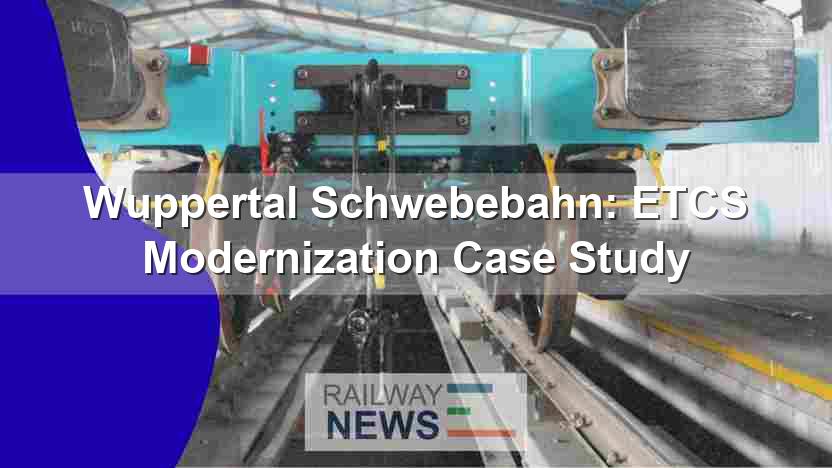
This article examines the significant upgrade undertaken by the Wuppertal Suspension Railway (Schwebebahn) in Germany, focusing on the implementation of Alstom’s Atlas European Train Control System (ETCS). The project represents a landmark achievement in urban rail modernization, showcasing the transition from legacy signaling systems to a cutting-edge, digital solution. We will delve into the specifics of the ETCS installation, highlighting its benefits for safety, efficiency, and future expansion capabilities. The successful integration of ETCS onto the unique Schwebebahn system, with its historic rolling stock and challenging infrastructure, provides valuable lessons for other urban rail networks considering similar upgrades. The discussion will also touch upon the broader implications of this project, considering the role of international collaboration and the challenges faced during implementation.
The Significance of ETCS Implementation on the Wuppertal Schwebebahn
The Wuppertal Schwebebahn, a monorail system suspended above the Wupper River, presented a unique challenge for ETCS implementation. The system’s age, the variety of rolling stock (including the historic Kaiserwagen), and the complex infrastructure required a highly tailored solution. Alstom’s contract encompassed the complete ETCS fitment, including the supply and installation of Radio Block Centres (RBCs), trackside equipment, and the integration with 31 new trains and the existing Kaiserwagen. This marked Alstom’s first full train contract in Germany, establishing a benchmark for future urban rail projects. The successful integration demonstrates ETCS’s adaptability to various rail environments, proving its viability even for systems with unique operational characteristics. This project signifies a leap forward for German urban transport, marking Wuppertal as the first German city to utilize ETCS in its urban transport network.
Technological Advancements and System Integration
The project involved replacing the Schwebebahn’s existing trackside train detection systems with a digital signaling system based on ETCS. This transition from traditional signaling methods to ETCS offered numerous advantages. The new system leverages continuous train position reporting via radio communication between the trains and the RBCs. This enables precise train control, enhancing safety and operational efficiency. The implementation involved significant integration work, including the adaptation of the ETCS system to the Schwebebahn’s specific infrastructure and the diverse rolling stock. The successful collaboration between Alstom and WSW mobil underscores the importance of effective partnerships in large-scale rail modernization projects. The international aspect of the project, with components manufactured in Belgium, France, and Italy, highlights the global reach of the rail technology industry and the collaborative nature of modern rail system development.
Safety Enhancements and Operational Efficiencies
The primary benefit of the ETCS implementation is a substantial improvement in safety. The continuous monitoring of train position and speed by the RBCs significantly reduces the risk of collisions and other accidents. ETCS’s sophisticated algorithms and fail-safe mechanisms provide a higher level of operational security compared to legacy systems. Besides safety enhancements, ETCS facilitates improved operational efficiency. Precise train control allows for shorter headways (the minimum time interval between trains), leading to increased capacity and improved service frequency. The digital nature of the system also enables better integration with other railway management systems, streamlining operations and optimizing resource allocation. This enhanced efficiency translates into cost savings and improved passenger experience.
Conclusions and Future Implications
The successful implementation of Alstom’s Atlas ETCS on the Wuppertal Schwebebahn marks a significant milestone in urban rail modernization in Germany. The project demonstrated the adaptability and effectiveness of ETCS in a unique and challenging environment. The integration of ETCS has drastically improved safety and operational efficiency, creating a more robust and reliable transportation system for Wuppertal. The project’s success underscores the importance of investing in modern signaling technologies to enhance safety, capacity, and overall efficiency of urban rail networks. This case study serves as a compelling example for other cities considering ETCS upgrades, showcasing the potential for transforming existing infrastructure and enhancing public transportation services. The seamless integration of the historic Kaiserwagen demonstrates the flexibility of ETCS and its ability to accommodate a variety of rolling stock. Additionally, the project’s international collaboration highlights the global nature of the rail industry and the potential for international partnerships to drive innovation and technological advancement in urban rail systems. Looking ahead, the ETCS infrastructure laid down for the Schwebebahn provides a solid foundation for future expansion and integration with other transportation systems, paving the way for a more interconnected and efficient urban transportation network in Wuppertal and beyond.

Railway infrastructure, rolling stock and transport technologies specialist focused on global rail industry developments, high-speed rail systems, signaling technologies and freight transportation. Covering railway investments, public transport modernization, rail operations and international mobility projects across Europe, Asia and North America.
RELATED POSTS

September 5, 2026 4:19 pm
CPK launched formal tender talks with four consortia to design...

September 5, 2026 7:14 pm
HS2 Ltd signed renegotiated civils contracts with EKFB and Align...

September 6, 2026 4:12 am
Alstom delivered the first of 100 new G Class trams...
September 5, 2026 6:17 pm
Universal Signalling won a deal to install its U-Cross system...
September 6, 2026 8:17 am
DB InfraGO reopened the Nuremberg-Regensburg line in Bavaria on 31...
September 6, 2026 12:20 pm
Indian Railways ordered a probe after a fire destroyed 2...