
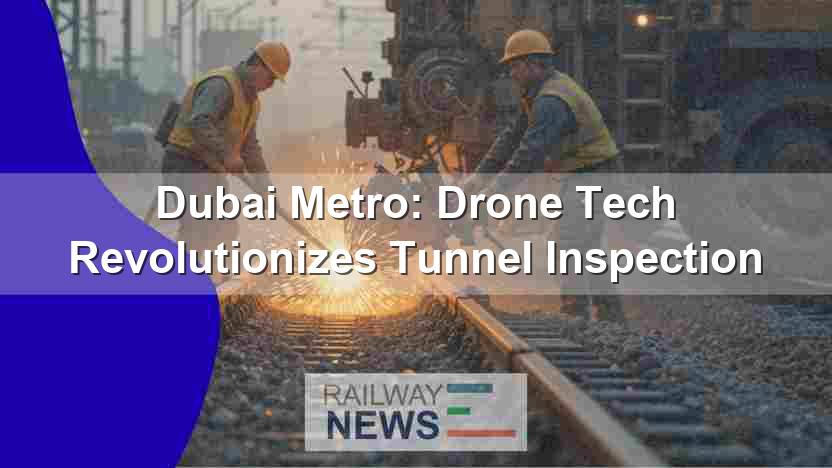
Dubai Metro: Drone Tech Revolutionizes Tunnel Inspection
The use of drone technology for tunnel inspection within the Dubai Metro system enhances operational efficiency and safety by reducing inspection time, minimizing risks, and providing detailed, comprehensive data that facilitates rapid decision-making.
Introduction
The efficient and safe operation of urban rail transit systems, such as the Dubai Metro, is paramount. Regular and thorough inspection of critical infrastructure, particularly tunnels, is essential for preventative maintenance, early fault detection, and ensuring the long-term reliability and safety of the system. Traditional inspection methods, often involving manual visual inspections and potentially hazardous entry into confined spaces, can be time-consuming, costly, and inherently limited in their scope. This article explores the innovative application of drone technology for tunnel inspection within the context of the Dubai Metro, focusing on the advantages offered by this technology and its integration into a broader strategy for enhancing operational efficiency and safety. The Roads and Transport Authority (RTA) of Dubai’s initiative to trial drone-based inspection systems represents a significant step towards the modernization and optimization of rail infrastructure maintenance. We will examine the technical capabilities of these drones, the logistical benefits, and the potential for wider application across the rail industry.
Drone Technology for Tunnel Inspection
The RTA’s pilot program utilizes custom-designed drones equipped with high-definition cameras and infrared sensors. This combination allows for detailed visual inspection of tunnel walls, ceilings, and tracks, as well as thermal imaging to detect potential issues such as overheating or water leaks. The infrared capability is particularly beneficial in identifying problems that may not be readily visible to the naked eye. The drones’ maneuverability allows for access to areas that might be challenging or impossible to reach using traditional methods. Additionally, the digital data collected provides a detailed and readily accessible record of the tunnel’s condition, facilitating efficient assessment and facilitating rapid decision-making regarding maintenance needs. The use of multiple cameras offers enhanced data capture and redundancy, minimizing the risk of missed issues. The high-definition imaging provides a level of detail unmatched by traditional methods, allowing for more precise assessment of damage and wear.
Enhanced Efficiency and Safety
The implementation of drone technology offers several key advantages in terms of efficiency and safety. Inspection time is significantly reduced compared to traditional methods, translating to cost savings and reduced operational downtime. The ability to inspect difficult-to-reach areas mitigates the risks associated with manual inspections in confined and potentially hazardous environments, improving the safety of maintenance personnel. Moreover, the digital reporting capabilities streamline the documentation process, eliminating the potential for human error associated with manual record-keeping. The system provides a paperless, digital record which enables rapid assessment of tunnel conditions and facilitates more informed decision-making. This also leads to more effective scheduling of preventative maintenance, minimizing the likelihood of major failures.
Integration with Smart Dubai Strategy
The RTA’s initiative aligns with the broader Smart Dubai 2021 strategy, which focuses on leveraging technological innovation to enhance various aspects of city life. The integration of drone technology into the Dubai Metro’s maintenance program demonstrates a commitment to embracing technological advancements that improve efficiency, safety, and overall operational effectiveness. The use of drones is not an isolated project, but rather part of a larger strategy that includes other advancements such as nanotechnology applications for station cleaning and the implementation of smart storage systems. The smart storage system alone resulted in a 700% increase in storage capacity and a 50% increase in operational efficiency, highlighting the RTA’s dedication to continuous improvement through technological innovation. The adoption of smart screens and automated fare gates further exemplify this forward-thinking approach to modernizing public transit.
Conclusions
The RTA’s trial of drone technology for inspecting Dubai Metro tunnels represents a significant advancement in rail infrastructure maintenance. The integration of high-definition cameras and infrared sensors within a maneuverable drone platform offers substantial improvements in inspection efficiency, safety, and the quality of data collected. This technology significantly reduces inspection time, minimizes the risks associated with manual inspections in confined spaces, and streamlines the documentation process through digital reporting. The project’s success aligns perfectly with the Smart Dubai 2021 strategy, emphasizing the city’s commitment to technological innovation for optimizing urban infrastructure. The economic benefits, including cost savings and reduced downtime, are complemented by significant improvements in safety and operational efficiency. The lessons learned from this pilot program will undoubtedly have widespread implications for the rail industry, potentially transforming how infrastructure inspections are conducted globally. The integration of drone technology, alongside other innovations such as nanotechnology applications and smart storage systems, demonstrates the RTA’s proactive approach to optimizing its operations and ensuring the long-term sustainability and efficiency of the Dubai Metro system. This initiative paves the way for other transit authorities to adopt similar technologies, enhancing safety, reducing costs and paving the way for a more efficient and sustainable future for urban rail systems worldwide.

Railway infrastructure, rolling stock and transport technologies specialist focused on global rail industry developments, high-speed rail systems, signaling technologies and freight transportation. Covering railway investments, public transport modernization, rail operations and international mobility projects across Europe, Asia and North America.
RELATED POSTS

September 5, 2026 4:19 pm
CPK launched formal tender talks with four consortia to design...

September 6, 2026 4:12 am
Alstom delivered the first of 100 new G Class trams...

September 5, 2026 7:14 pm
HS2 Ltd signed renegotiated civils contracts with EKFB and Align...
September 5, 2026 6:17 pm
Universal Signalling won a deal to install its U-Cross system...
September 6, 2026 8:17 am
DB InfraGO reopened the Nuremberg-Regensburg line in Bavaria on 31...
September 7, 2026 11:16 pm
China Railway Tunnel Group completed the 11.3-km underwater Yangtze tunnel...