
Amtrak’s High-Speed Rail: Colorado Testing Begins
The Federal Railroad Administration’s approval of Amtrak for transporting its new high-speed trains to Colorado marks a pivotal step towards modernizing the Northeast Corridor rail service, enhancing passenger capacity, and positioning the U.S. as a leader in high-speed rail technology.
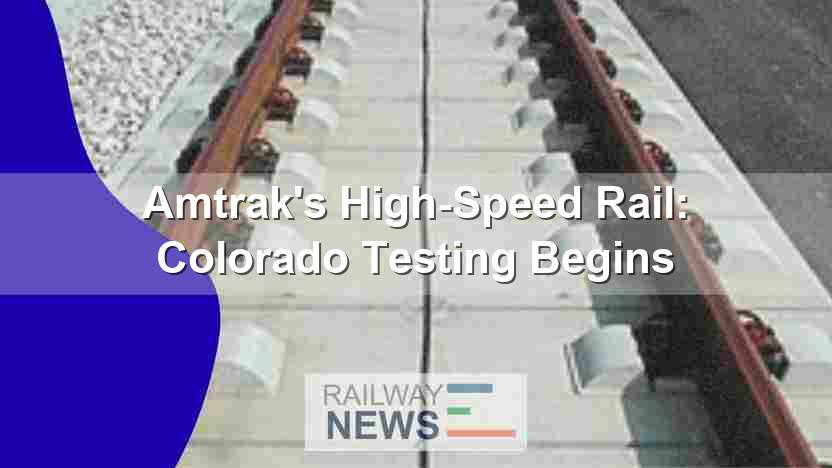
This article explores the significant milestone achieved by Amtrak with the Federal Railroad Administration (FRA)’s approval for the transport of its next-generation high-speed trains to Colorado for detailed testing. This decision marks a crucial step in the modernization of the Northeast Corridor (NEC) rail service between Boston and Washington, D.C. The approval process, the rationale behind the choice of Colorado’s test track, the technological advancements incorporated into these new trains, and the anticipated improvements to passenger capacity and overall service reliability will all be explored in detail. The implications of this project extend far beyond simply acquiring new rolling stock; it represents a strategic investment in the future of high-speed rail in the United States, impacting economic growth, infrastructure development, and the overall passenger experience. The project’s significance lies not only in its immediate benefits but also in its long-term contribution to establishing the U.S. as a leader in high-speed rail technology and sustainable transportation solutions. The successful completion of this project will influence future investments and technological advancements within the high-speed rail sector in the United States and potentially globally.
High-Speed Rail Modernization: The Amtrak Initiative
Amtrak’s initiative to replace its aging Acela fleet with a new generation of high-speed trains is a landmark project aimed at enhancing passenger rail service along the heavily trafficked Northeast Corridor (NEC). The existing Acela trains, introduced in 2000, have served over 52.5 million passengers. However, increasing ridership and technological advancements necessitate the upgrade. The new trains, procured through a $2 billion contract with Alstom, boast a 33% increase in passenger capacity compared to their predecessors. This expansion addresses the growing demand for rail travel on the NEC, one of the busiest passenger rail corridors globally.
The Role of Testing and the Colorado Test Track
Rigorous testing is paramount before deploying new rolling stock onto a high-traffic operational line like the NEC. The FRA’s approval allows Amtrak to transport the new high-speed trains from the Alstom production facility in Hornell, New York, to a test track in Colorado. This relocation is vital because the Colorado facility offers a longer track, enabling more extensive testing at higher speeds and under diverse conditions than the upgraded but comparatively shorter Hornell facility could provide. The rigorous testing program in Colorado will validate the train’s performance, ensuring safety and reliability prior to passenger service.
Technological Advancements and Enhanced Passenger Experience
The new high-speed trains represent a substantial technological leap. Beyond the increased passenger capacity, they are expected to incorporate significant improvements in comfort, safety, and sustainability. These advancements may include enhanced onboard amenities, improved accessibility features, advanced safety systems, and potentially more energy-efficient propulsion systems. These improvements, combined with increased capacity, aim to elevate the overall passenger experience and promote the competitiveness of rail travel against other modes of transportation.
Political and Economic Implications
The project has significant political and economic implications. The involvement of Senator Charles Schumer highlights the political support for this modernization effort. The USDOT’s support, including waivers and funding through the Railroad Rehabilitation and Improvement Financing (RRIF) program, underscores the project’s importance to national infrastructure development. This investment promises economic benefits through job creation in manufacturing and infrastructure, enhanced tourism and regional connectivity, and the long-term benefits of a more efficient and reliable transportation system. The project’s success may also incentivize further investment in high-speed rail infrastructure across the United States, setting a precedent for future modernization projects.
Conclusion
The FRA’s approval for the movement of Amtrak’s next-generation high-speed trains to Colorado signifies a pivotal moment in the modernization of the Northeast Corridor rail system. This decision, driven by the need to enhance capacity, improve passenger experience, and increase operational efficiency, underscores a significant investment in national infrastructure and technological advancement. The rigorous testing in Colorado will ensure the safety and reliability of these new trains before their deployment on the busy NEC route. The substantial increase in passenger capacity (33% compared to the Acela trains) will address the growing demand for rail travel. The project’s success reflects not only a commitment to improving passenger rail service but also a strategic investment in economic growth, job creation, and technological leadership within the United States high-speed rail sector. The potential for future expansion and replication of this successful model across other rail corridors across the nation, and perhaps globally, is a powerful testament to the significance of this project. The long-term benefits extend beyond mere infrastructure improvement; they represent a commitment to sustainable transportation, enhanced connectivity, and a significant boost to the national economy. The successful implementation of this project serves as a beacon for future investments in high-speed rail technology and infrastructure, potentially influencing global trends in sustainable transportation.

Railway infrastructure, rolling stock and transport technologies specialist focused on global rail industry developments, high-speed rail systems, signaling technologies and freight transportation. Covering railway investments, public transport modernization, rail operations and international mobility projects across Europe, Asia and North America.
RELATED POSTS

September 5, 2026 4:19 pm
CPK launched formal tender talks with four consortia to design...

September 6, 2026 4:12 am
Alstom delivered the first of 100 new G Class trams...

September 5, 2026 7:14 pm
HS2 Ltd signed renegotiated civils contracts with EKFB and Align...
September 5, 2026 6:17 pm
Universal Signalling won a deal to install its U-Cross system...
September 6, 2026 8:17 am
DB InfraGO reopened the Nuremberg-Regensburg line in Bavaria on 31...
September 7, 2026 11:16 pm
China Railway Tunnel Group completed the 11.3-km underwater Yangtze tunnel...