
Rail Depot Safety: Ardwick’s DPPS Success Story
Enhancing Rail Depot Safety: Zonegreen’s DPPS at Ardwick showcases the integration of advanced safety systems in modern depots, highlighting the critical need for robust protection mechanisms to safeguard workers amidst increasing operational complexities and new infrastructure demands.
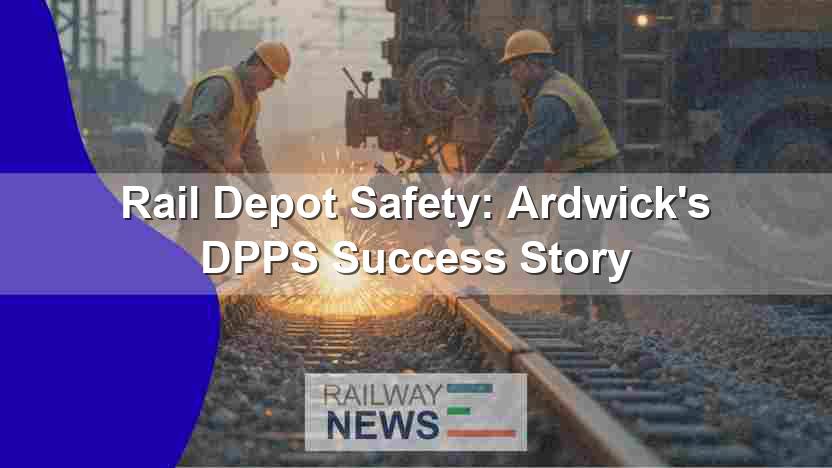
This article examines the critical role of advanced safety systems in modern rail depots, focusing on the successful implementation of Zonegreen’s Depot Personnel Protection System (DPPS) at the Ardwick depot in Manchester, UK. The integration of this technology highlights the evolving needs of rail infrastructure to accommodate increased train numbers, new rolling stock, and the paramount importance of worker safety. The Ardwick depot’s expansion, driven by the £500 million investment in new trains to replace the older Pacer fleet, underscores the urgent need for robust safety measures to protect personnel working within increasingly complex operational environments. This case study will explore the functionality of the DPPS, its seamless integration with existing infrastructure, and its overall contribution to a safer and more efficient rail depot. We will also analyze the adaptability and scalability of the system to meet the evolving needs of the rail industry.
Depot Personnel Protection Systems (DPPS) and Enhanced Safety
The core function of a DPPS is to prevent accidents by ensuring that train movements are impossible while maintenance personnel are working on the tracks. Zonegreen’s DPPS achieves this through a sophisticated system of interlocks. Personnel log onto the system, indicating their location on a specific track (road). This information is relayed to the signaling system, which prevents the setting of any route that would potentially endanger those workers. Only when no personnel are logged on to a particular track can trains be moved on that route. This eliminates the human error component often associated with traditional safety procedures. The system’s reliability is crucial, minimizing risks and protecting staff from potentially fatal accidents.
Seamless Integration and Adaptability
The Ardwick depot’s installation exemplifies the adaptability of Zonegreen’s DPPS. The system’s integration with the existing infrastructure—including Siemens’ new four-road stabling facility—highlights its flexibility. The Spencer Group’s modifications to the depot ensured a smooth transition, integrating the new DPPS with the current signaling system. The system’s ability to seamlessly integrate with pre-existing infrastructure, rather than requiring a complete overhaul, represents a significant cost and efficiency benefit for rail operators. This adaptability is crucial for modernizing rail infrastructure, allowing upgrades to be implemented incrementally and with minimal disruption.
The Ardwick Depot Implementation and Operational Efficiency
The installation at Ardwick showcases the system’s practical application. The inclusion of a new Depot Manager PC in the control room provides real-time oversight of DPPS status, including a visualization of the signaling system and a list of all logged-on personnel. This centralized monitoring enhances situational awareness and allows for proactive management of personnel safety. The system’s impact on operational efficiency is also notable; it allows for safer and faster train movements when staff are not present, maximizing the depot’s throughput without compromising worker safety. The system’s effectiveness in a busy depot like Ardwick validates its design and underlines its suitability for high-density operational environments.
Conclusion
The successful implementation of Zonegreen’s DPPS at the Ardwick depot represents a significant advancement in rail safety. This system demonstrably reduces risks associated with human error in a busy rail environment. The system’s adaptability, as shown by its integration into the newly constructed Siemens facility, highlights its importance for modernizing rail infrastructure without extensive, disruptive overhauls. The addition of a central monitoring system for depot managers significantly improves situational awareness and allows for proactive safety management. The Ardwick case study demonstrates the tangible benefits of investing in advanced safety technology, including enhanced worker safety, improved operational efficiency, and a more streamlined and adaptable rail depot. The clear benefits of DPPS systems, as demonstrated in this real-world example, suggest a widespread adoption of such technology across the rail industry is not just beneficial but vital for ensuring the safety of railway workers and maintaining efficient operational throughput. The future of rail safety hinges upon a continuous investment in and adaptation of such technologies to meet the ever-evolving needs of a rapidly developing industry. Further research and implementation of similar systems across various rail networks could contribute to a significant decrease in rail-related accidents and ensure a safer working environment for rail personnel globally.

Railway infrastructure, rolling stock and transport technologies specialist focused on global rail industry developments, high-speed rail systems, signaling technologies and freight transportation. Covering railway investments, public transport modernization, rail operations and international mobility projects across Europe, Asia and North America.
RELATED POSTS

September 5, 2026 4:19 pm
CPK launched formal tender talks with four consortia to design...

September 5, 2026 7:14 pm
HS2 Ltd signed renegotiated civils contracts with EKFB and Align...

September 6, 2026 4:12 am
Alstom delivered the first of 100 new G Class trams...
September 5, 2026 6:17 pm
Universal Signalling won a deal to install its U-Cross system...
September 6, 2026 8:17 am
DB InfraGO reopened the Nuremberg-Regensburg line in Bavaria on 31...
September 7, 2026 11:16 pm
China Railway Tunnel Group completed the 11.3-km underwater Yangtze tunnel...