
Harbin Metro Project: Cold-Climate Rapid Transit Case Study, China
Harbin Metro’s cold-climate railway system opens, showcasing innovative cold-resistant trains and boosting urban transport.
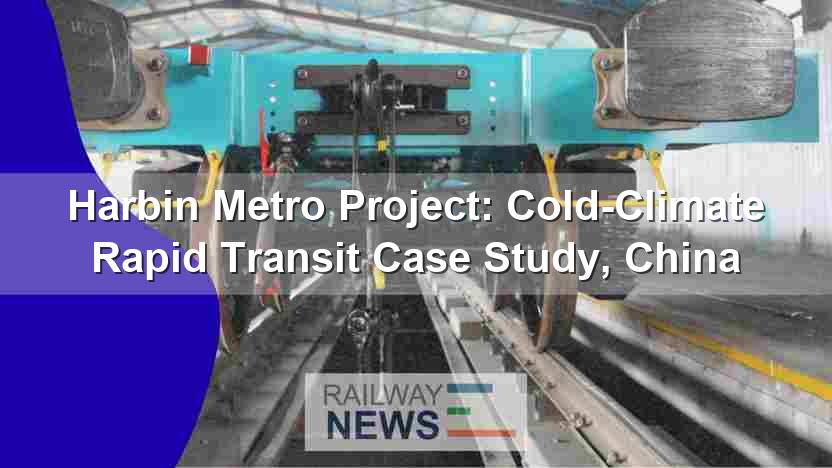
This article examines the Harbin Metro project, a significant undertaking in developing a rapid transit system within a challenging cold-climate environment. The project’s goals extended beyond simply providing transportation; it aimed to address the mobility needs of Harbin’s ten million residents, improve overall urban infrastructure, and stimulate economic growth. This involved navigating complex logistical challenges, technological innovation, and financial considerations. We will explore the project’s phases, technological specifications, operational aspects, and the overall impact on the city’s transportation landscape. The analysis will also consider the wider context of rapid transit development in China, highlighting Harbin’s unique contribution to the field of cold-climate metro design and operation. Ultimately, this study aims to provide insights into the planning, execution, and long-term implications of large-scale urban transportation projects in demanding geographical conditions.
Project Overview and Phased Development
The Harbin Metro, a crucial component of Harbin’s public transportation infrastructure, is a multi-phased project. Initially approved by the Harbin State Council in 2005, with initial investment of $643 million USD by the Harbin Municipal People’s Government, construction began in September 2009, experiencing a temporary halt due to economic factors before resuming in March 2010. The project is designed to be implemented in stages, ensuring manageable timelines and resource allocation. Phase one included three lines, with Line 1 (Red Line) becoming operational in September 2013. Lines 2 (Violet Line) and 3 (Orange Line) are pending approval from the National Development and Reform Commission (NDRC). Phase two encompasses four additional lines, projected for completion by 2027, and Phase three will introduce another three lines, bringing the total to ten. This phased approach allowed for a measured expansion of the network, minimizing disruption and adapting to changing urban needs.
Technological Innovations and Rolling Stock
A defining feature of the Harbin Metro is its adaptation to the extreme cold of the region. The trains, supplied by CNR Changchun Railway Vehicles (a contract worth CNY 621m or $101.93m USD) in March 2011, are notable for being the first cold-resistant and lightest aluminum subway trains produced in China. These six-car trains (four motorized cars and two trailers), boasting a 30-year design life and constructed of B2 type aluminum, can operate autonomously even at temperatures as low as -38°C. Bombardier contributed the traction-auxiliary systems and train control equipment. Features such as double-door designs, semi-closed full-height security gates, high-powered air conditioning systems, and electrically heated seats contribute to passenger comfort and safety during harsh winter conditions. The trains accommodate up to 1,888 passengers and have a maximum speed of 80km/h and an average speed of 35km/h.
Line 1: A Case Study in Urban Integration
Line 1, the first operational line of the Harbin Metro, provides a valuable case study for urban integration within a large-scale infrastructure project. This 17.48km line, stretching from Harbin East Railway Station to the Second Hospital of Harbin Station, incorporates 18 stations and cleverly repurposed a 10.1km air defense tunnel from the 1970s. This innovative reuse minimized construction costs and environmental impact. The route strategically connects key areas of the city, including educational institutions (Heilongjiang University, Polytechnic University), commercial centers, and transportation hubs. This careful planning ensures efficient connectivity and maximum accessibility for residents. The integration of the metro with existing infrastructure, particularly the Harbin East Railway Station, demonstrates a holistic approach to urban transportation planning.
Conclusion and Future Prospects
The Harbin Metro represents a significant achievement in rapid transit development, particularly in the context of a cold-climate city. Its phased approach, technological innovations in cold-weather train design, and strategic urban integration provide valuable lessons for future projects in similar environments. The project’s success hinges on effective project management, seamless collaboration between governmental bodies, private contractors, and the ability to adapt to unforeseen challenges. The successful operation of Line 1, demonstrating an average daily ridership of 150,000, points towards a positive impact on the city’s overall transport efficiency and quality of life. The ongoing phases of the project, aiming for a network of ten lines spanning 143 km by 2020, indicate a continuous commitment to enhancing Harbin’s infrastructure and mobility. The project has successfully addressed both the technical challenges of operating a metro system in extremely cold conditions and the strategic needs of integrating this system into a growing city’s transportation framework. This serves as a model for future similar projects globally, particularly in areas with extreme weather conditions. The ultimate success of the Harbin Metro will depend on the continued investment in infrastructure, the efficient operation of the system, and the ongoing adaptation to the evolving needs of the city.
| Project Details | Line 1 (Red Line) | Lines 2 & 3 (Violet & Orange Lines) | Projected Network (2020) |
|---|---|---|---|
| Length (km) | 17.48 | To be determined (projected 89.58km combined by 2018) | 143 |
| Number of Stations | 18 | 17 (Line 2), 32 (Line 3) | To be determined |
| Project Budget (initial) | $643 million USD | To be determined | To be determined |
| Rolling Stock Supplier | CNR Changchun Railway Vehicles, Bombardier | To be determined | To be determined |
| Type | Underground Rapid Transit | Underground Rapid Transit | Underground and Elevated Rapid Transit |
Company Information:
- CNR Changchun Railway Vehicles: A major Chinese rolling stock manufacturer.
- Bombardier: A global transportation company providing railway technology and services.

Railway infrastructure, rolling stock and transport technologies specialist focused on global rail industry developments, high-speed rail systems, signaling technologies and freight transportation. Covering railway investments, public transport modernization, rail operations and international mobility projects across Europe, Asia and North America.