
YNSE Subway Extension: GTA Transit Transformation
The Yonge North Subway Extension (YNSE) project is a significant urban transit expansion in Toronto’s Greater Toronto Area, showcasing the complexities of large-scale public works projects involving provincial, municipal, and federal collaboration.
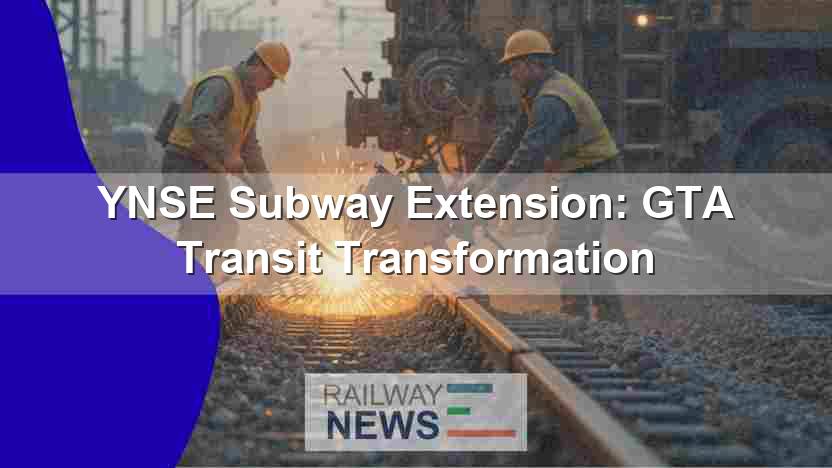
This article explores the Yonge North Subway Extension (YNSE) project, a crucial component of the Greater Toronto Area (GTA)’s New Subway Plan. The project represents a significant undertaking in Canadian transit infrastructure development, highlighting the complexities of intergovernmental collaboration and funding mechanisms for large-scale public works. We will explore the project’s scope, the collaborative efforts between the provincial and municipal governments, the financial considerations including the crucial role of federal funding, and the potential socio-economic impact of this expansion on the GTA. Understanding the YNSE is vital for appreciating the challenges and opportunities presented by ambitious transit expansion projects in densely populated urban areas, and serves as a case study for similar initiatives worldwide. The article will analyze the political, financial, and engineering aspects of this substantial undertaking.
The Yonge North Subway Extension: Project Overview
The YNSE is designed to extend Toronto’s existing Line 1 Yonge subway north from Finch Station, traversing the municipalities of Vaughan and Markham before terminating in Richmond Hill. This significant expansion aims to alleviate overcrowding on the existing Line 1, improve transit access for residents in rapidly growing northern communities, and enhance overall regional connectivity within the GTA. The project’s underground nature presents significant engineering challenges, demanding meticulous planning and execution to minimize disruption and ensure public safety. The scale of the excavation, tunneling, station construction, and integration with existing infrastructure necessitates a sophisticated project management approach and robust risk mitigation strategies.
Intergovernmental Collaboration and Partnerships
The YNSE is a prime example of a cross-jurisdictional project, requiring close collaboration between the Province of Ontario, the City of Toronto, and the Regional Municipality of York. The Ontario-York Region Transit Partnership Preliminary Agreement signifies a critical step in aligning the various stakeholders’ interests and responsibilities. This collaborative framework outlines the roles and contributions of each partner, addressing issues such as land acquisition, environmental impact assessment, construction management, and operational planning. The success of the YNSE hinges on the effectiveness of this intergovernmental partnership and the ability to resolve potential disputes or conflicts efficiently and transparently.
Funding and Financial Sustainability
Securing adequate funding is paramount for the successful completion of the YNSE. The project’s substantial cost necessitates a multi-layered funding approach, involving provincial, municipal, and ideally, federal contributions. The project proponents are actively advocating for at least 40% federal funding, emphasizing the project’s national significance and economic benefits. The financial strategy needs to consider not only the initial capital expenditure but also the long-term operational costs, including maintenance, repairs, and potential expansion in the future. A transparent and robust financial model will be essential to ensure the project’s long-term fiscal sustainability.
Socio-Economic Impact and Future Implications
The YNSE is expected to have a transformative impact on the GTA. Improved transit access will stimulate economic growth in the northern communities, creating employment opportunities and attracting investment. Reduced traffic congestion will enhance the quality of life for residents, benefiting both commuters and businesses. However, the project’s impact should be assessed detailedly, considering potential displacement effects, environmental consequences, and the overall integration with the existing public transportation network. Careful planning and mitigation strategies are necessary to maximize the positive impacts while addressing potential negative consequences.
Conclusions
The Yonge North Subway Extension represents a significant investment in the future of the Greater Toronto Area. Its successful execution depends on several crucial factors. Firstly, the strong intergovernmental collaboration between the Province of Ontario, the City of Toronto, and the Regional Municipality of York is vital for efficient project management and resource allocation. The partnership agreement lays the groundwork for a unified approach to overcome potential challenges and ensure timely completion. Secondly, the secured funding is pivotal. The pursuit of substantial federal funding is not merely a financial imperative but also a recognition of the project’s national significance and its potential to stimulate broader economic growth. The long-term fiscal sustainability of the project is crucial and requires careful financial planning and management. Thirdly, the socio-economic impacts of the project demand careful consideration. While the YNSE promises significant benefits in terms of improved connectivity, economic growth, and quality of life, potential negative consequences must be proactively mitigated through careful planning and engagement with affected communities. The YNSE project serves as a significant case study for future large-scale transit projects, highlighting the importance of strategic planning, robust funding mechanisms, and effective intergovernmental collaboration to ensure successful implementation and long-term positive outcomes.

Railway infrastructure, rolling stock and transport technologies specialist focused on global rail industry developments, high-speed rail systems, signaling technologies and freight transportation. Covering railway investments, public transport modernization, rail operations and international mobility projects across Europe, Asia and North America.
RELATED POSTS

September 5, 2026 4:19 pm
CPK launched formal tender talks with four consortia to design...

September 5, 2026 7:14 pm
HS2 Ltd signed renegotiated civils contracts with EKFB and Align...

September 6, 2026 4:12 am
Alstom delivered the first of 100 new G Class trams...
September 5, 2026 6:17 pm
Universal Signalling won a deal to install its U-Cross system...
September 6, 2026 8:17 am
DB InfraGO reopened the Nuremberg-Regensburg line in Bavaria on 31...
September 6, 2026 12:20 pm
Indian Railways ordered a probe after a fire destroyed 2...