
Hungary’s Rail Upgrade: More CITYLINK Tram-Trains
The acquisition of additional bi-mode CITYLINK tram-trains by MÁV-START from Stadler Rail enhances Hungary’s railway network, significantly increasing passenger capacity and frequency on the Szeged-Hódmezővásárhely route through its versatile operation capabilities.
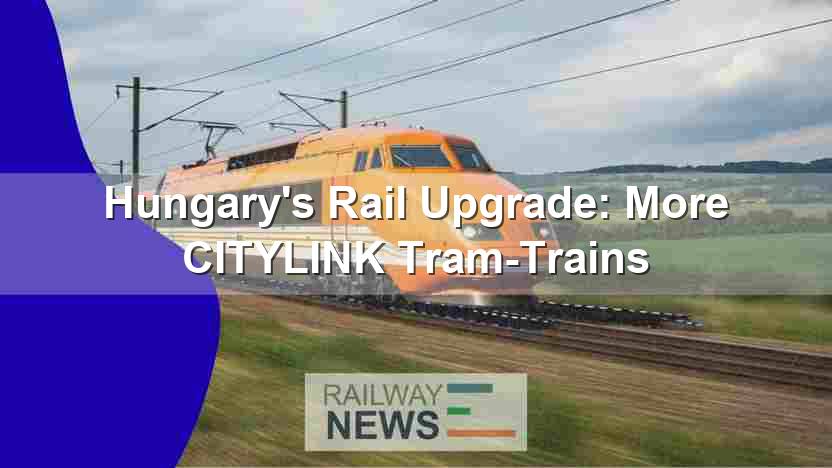
This article explores the expansion of Hungary’s railway modernization efforts, specifically focusing on the acquisition of additional tram-trains by MÁV-START (Hungarian State Railways) from Stadler Rail. The initial order of eight bi-mode CITYLINK tram-trains, placed in 2017, has been supplemented by a further four units, significantly enhancing passenger capacity and service frequency on the Szeged-Hódmezővásárhely route. This expansion highlights a broader trend in integrating modern, versatile rolling stock to improve regional rail connectivity and enhance the overall passenger experience. The analysis will explore the technical specifications of the CITYLINK vehicles, their operational benefits, and the strategic implications of this investment for Hungary’s public transport network. Additionally, it will contextualize this order within MÁV-START’s wider fleet modernization program, encompassing the substantial acquisition of KISS (Közép-Európai InterCity Siemens) electric multiple unit trains from Stadler. This examination seeks to provide a detailed understanding of the technological and logistical factors driving this significant investment in Hungary’s railway infrastructure.
The CITYLINK Tram-Train: A Technological Overview
The Stadler CITYLINK tram-train represents a significant advancement in bi-modal rolling stock. Its ability to seamlessly transition between mainline railway operation and city tram networks offers unparalleled flexibility. The 37.2-meter-long, 2.65-meter-wide vehicles are designed to navigate tight urban curves while providing ample passenger capacity (220 passengers, 92 seated). This adaptability is crucial in connecting urban centers with surrounding areas, offering a unified public transport system. The bi-modal capability leverages 600V DC overhead lines for electric operation within city limits and a diesel engine for mainline service, eliminating the need for separate rolling stock for different sections of the route. The inclusion of features such as Heating, Ventilation, and Air Conditioning (HVAC), Closed-Circuit Television (CCTV), and Passenger Information Systems (PIS) further enhances the passenger experience, creating a comfortable and informed journey.
Operational Efficiency and Service Improvements
The increased fleet size from eight to twelve CITYLINK units directly impacts the operational efficiency of the Szeged-Hódmezővásárhely service. The initial eight units allowed for a 20-minute service frequency. The addition of four more units will reduce this frequency to 15 minutes, significantly increasing the capacity and convenience for commuters. This enhanced frequency directly reflects improved service reliability and accessibility, contributing to a more attractive and efficient public transportation option compared to alternative modes of transport. This reduction in headway also contributes to a more sustainable transportation system by encouraging a shift from individual car use to public transport.
Strategic Implications for MÁV-START and Hungarian Rail
The continued investment in Stadler rolling stock by MÁV-START underscores a wider strategic commitment to modernizing Hungary’s railway network. This acquisition of CITYLINK tram-trains, alongside the substantial order of KISS electric multiple units, demonstrates a focus on enhancing both regional and intercity passenger services. The framework agreement between MÁV-START and Stadler for a total of 40 double-decker KISS trains highlights a long-term commitment to fleet renewal and upgrading the overall quality of rail travel in Hungary. This strategic approach signifies a move towards more efficient, modern, and passenger-centric railway operations.
Wider Context: Hungary’s Rail Modernization
The CITYLINK tram-train procurement is not an isolated incident but rather a key component of a broader modernization strategy for Hungary’s railway infrastructure. The acquisition of the KISS EMUs (Electric Multiple Units) demonstrates a commitment to upgrading long-distance passenger services. These investments collectively aim to enhance the attractiveness of rail transport, boost ridership, and contribute to sustainable transportation solutions within the country. The success of this modernization program is likely to hinge on effective integration of the new rolling stock with existing infrastructure, coupled with efficient operational management and proactive maintenance strategies.
Conclusions
The acquisition of four additional CITYLINK tram-trains by MÁV-START from Stadler represents a significant step in modernizing Hungary’s regional rail network. This expansion builds upon the initial order of eight units, creating a more robust and efficient service between Szeged and Hódmezővásárhely. The bi-modal capabilities of the CITYLINK vehicles, their passenger-centric design, and the resulting increase in service frequency contribute to a significant enhancement of public transportation in the region. The project underscores a broader trend in the adoption of innovative rolling stock solutions to improve connectivity and accessibility. The investment is not only about procuring new vehicles but also about establishing a more integrated and sustainable transportation system. The success of the project will depend on effective integration into the existing infrastructure, coupled with strong operational management and maintenance strategies. Viewed within the larger context of MÁV-START’s wider fleet modernization program, including the acquisition of KISS EMUs, this investment reflects a clear strategic commitment to modernizing Hungary’s railway network and enhancing the overall passenger experience. The overall aim is to foster a more efficient, comfortable, and attractive rail system capable of competing with other modes of transport and contributing to a greener transportation future for Hungary.

Railway infrastructure, rolling stock and transport technologies specialist focused on global rail industry developments, high-speed rail systems, signaling technologies and freight transportation. Covering railway investments, public transport modernization, rail operations and international mobility projects across Europe, Asia and North America.
RELATED POSTS

September 5, 2026 4:19 pm
CPK launched formal tender talks with four consortia to design...

September 6, 2026 4:12 am
Alstom delivered the first of 100 new G Class trams...

September 5, 2026 7:14 pm
HS2 Ltd signed renegotiated civils contracts with EKFB and Align...
September 6, 2026 8:17 am
DB InfraGO reopened the Nuremberg-Regensburg line in Bavaria on 31...
September 5, 2026 6:17 pm
Universal Signalling won a deal to install its U-Cross system...
September 6, 2026 12:20 pm
Indian Railways ordered a probe after a fire destroyed 2...