
LA’s Purple Line Extension: A Transformative Subway Project
The Purple Line Extension project in Los Angeles is a transformative infrastructure initiative aimed at enhancing public transportation by extending the existing Purple Line subway from its current terminus to Westwood, significantly impacting commuters and the broader metropolitan area.
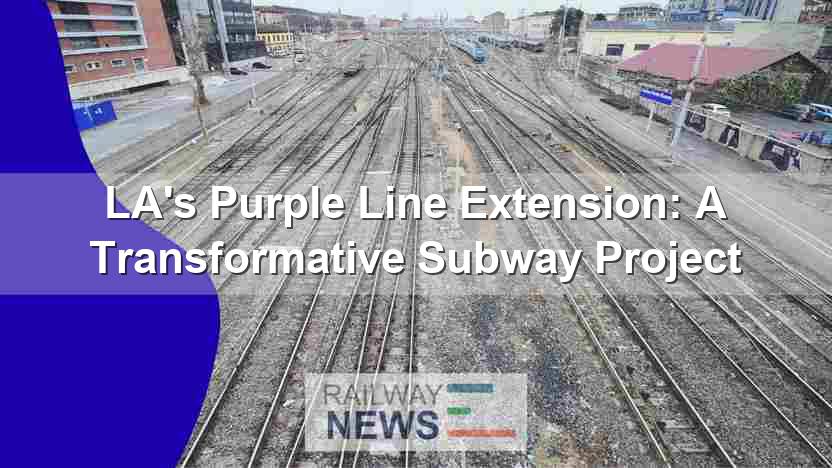
The Purple Line Extension: A Transformative Infrastructure Project for Los Angeles
This article explores the intricacies of the Purple Line Extension (PLE) project in Los Angeles, a significant undertaking aimed at enhancing the city’s public transportation infrastructure. The PLE, officially the Purple (D Line) Extension, is a multi-billion dollar project designed to extend the existing Purple Line subway from its current terminus to Westwood, significantly impacting commuters and the broader Los Angeles metropolitan area. The project’s scope encompasses not just the physical extension of the rail line but also the construction of new stations, integration with existing transportation networks, and considerations for community impact and accessibility. We will explore the project’s phases, technological considerations, financial aspects, and the overarching societal benefits it promises to deliver. The analysis will provide insights into the challenges faced during construction, the innovative solutions employed, and the anticipated effects on the region’s transportation landscape.
Phased Construction and Project Timeline
The PLE is being constructed in three distinct sections, allowing for a phased approach to manage complexity and minimize disruption. Section I, extending the line from Wilshire/Western station to Beverly Hills, is nearing completion with an expected opening in 2024. Section II, progressing towards Century City and Koreatown, is approximately 45% complete, slated for opening in 2025. Section III, the final phase extending to Westwood, is currently undergoing major construction and is projected to open in 2027. This staggered approach minimizes overall disruption and allows for lessons learned in earlier phases to be applied to subsequent sections. The meticulous planning and phased execution underscore the scale and complexity of the undertaking.
Engineering and Technological Considerations
Constructing a subway line beneath a densely populated urban area like Los Angeles presents unique engineering challenges. The project necessitates advanced tunneling techniques to minimize disruption to existing infrastructure and daily life. The utilization of Tunnel Boring Machines (TBMs) allows for efficient and precise excavation, while meticulous ground stabilization techniques are employed to prevent ground settlement and damage to nearby buildings. Integration with existing subway lines requires careful consideration of track alignment, signaling systems, and power distribution. The design incorporates modern signaling and communication systems to ensure efficient train operation and passenger safety.
Funding and Financial Management
The PLE project represents a significant financial investment, with a total cost exceeding $3.6 billion for Section III alone. Securing funding is a critical component, with a substantial contribution from the US Department of Transportation (USDOT) in the form of a federal grant of almost $1.3 billion. Local funding sources, including Measure M, a Los Angeles County sales tax initiative dedicated to transportation improvements, also play a crucial role. Effective financial management and adherence to budget are essential for the project’s successful completion. Transparency in expenditure and meticulous cost control are paramount to ensuring public trust and accountability.
Community Impact and Socioeconomic Benefits
The PLE is designed not only to improve transportation efficiency but also to create positive community impact. The new stations are strategically located to enhance accessibility to vital services like the West Los Angeles Veterans Affairs Medical Center and UCLA. The improved connectivity is expected to stimulate economic growth in underserved areas, boost property values, and reduce traffic congestion along the Wilshire Corridor, one of Los Angeles’s most congested areas. This positive impact is augmented by the environmental benefits of providing a more sustainable transportation option, reducing reliance on private vehicles and lowering carbon emissions.
Conclusion
The Purple Line Extension represents a monumental undertaking, transforming Los Angeles’s transportation landscape. Its phased construction, leveraging advanced engineering techniques and meticulous financial planning, showcases a commitment to modern, efficient, and sustainable public transit. The project’s completion will significantly improve commutes, enhance accessibility to key institutions, and stimulate economic growth throughout the region. The integration of various funding sources, including federal grants and local initiatives, highlights a collaborative effort to address the city’s transportation needs. While challenges undoubtedly remain, the project’s progress signifies a positive step towards creating a more accessible, sustainable, and inclusive Los Angeles. The successful completion of the PLE will serve as a model for future large-scale infrastructure projects, emphasizing the importance of long-term planning, community engagement, and innovative engineering solutions to address the challenges of urban mobility in major metropolitan areas worldwide. The anticipated opening dates for each section indicate a commitment to delivering this transformative project within the projected timeline, marking a significant milestone for the city and setting a precedent for future public transit investments.

Railway infrastructure, rolling stock and transport technologies specialist focused on global rail industry developments, high-speed rail systems, signaling technologies and freight transportation. Covering railway investments, public transport modernization, rail operations and international mobility projects across Europe, Asia and North America.
RELATED POSTS

September 5, 2026 4:19 pm
CPK launched formal tender talks with four consortia to design...

September 6, 2026 4:12 am
Alstom delivered the first of 100 new G Class trams...

September 5, 2026 7:14 pm
HS2 Ltd signed renegotiated civils contracts with EKFB and Align...
September 6, 2026 8:17 am
DB InfraGO reopened the Nuremberg-Regensburg line in Bavaria on 31...
September 5, 2026 6:17 pm
Universal Signalling won a deal to install its U-Cross system...
September 6, 2026 12:20 pm
Indian Railways ordered a probe after a fire destroyed 2...