
COVID-19: Rail Investment’s Uneven Recovery
The COVID-19 pandemic has exacerbated global economic disparities, leading to varied levels of recovery and influencing railway investment through fluctuations in business optimism and purchasing managers’ indices (PMI), impacting long-term infrastructure planning.
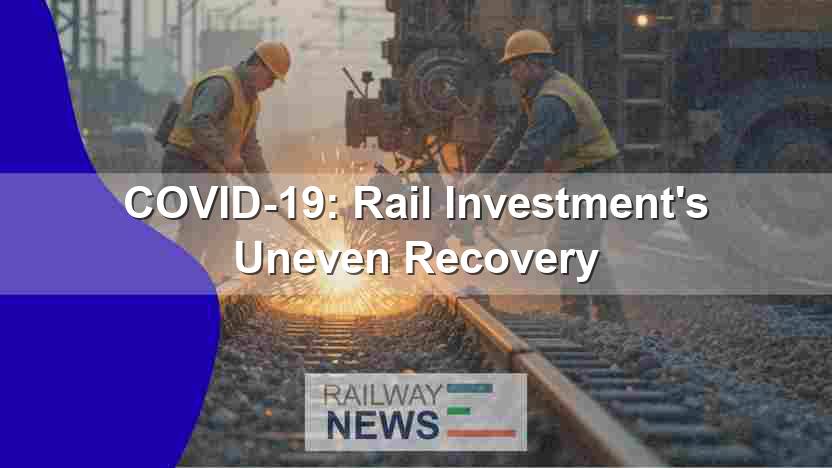
This article examines the uneven global economic recovery following the COVID-19 pandemic and its significant implications for railway investment. The pandemic’s impact has been far-reaching, creating both challenges and opportunities for the railway sector. While some regions experienced robust growth, others faced setbacks due to renewed waves of infections and subsequent lockdowns. This uneven recovery has led to a complex interplay of factors influencing investment decisions in the railway industry. The analysis explores the fluctuations in business optimism, the role of Purchasing Managers’ Indices (PMI) in assessing economic health, and the impact of government policies on railway development. We will delve into specific case studies of countries experiencing varied levels of economic recovery and their consequent approaches to railway infrastructure projects. The interplay between public health measures, economic conditions, and long-term infrastructure planning forms the core of this discussion. We will consider how these factors influence the attractiveness of railway investment and how stakeholders in the industry are adapting to this dynamic environment. The ultimate goal is to illuminate the pathways to a more resilient and sustainable railway sector in the face of future global uncertainties.
Business Sentiment and Economic Indicators
The COVID-19 pandemic significantly impacted global business sentiment. While some regions, such as the US, China, and Europe, saw improvements in business optimism, others, including parts of Asia, experienced declines. This disparity is reflected in key economic indicators such as the Purchasing Managers’ Index (PMI), which measures the health of the manufacturing and services sectors. For instance, Japan’s PMI for services declined due to renewed lockdowns, impacting demand. Similarly, India’s business confidence index plummeted following a surge in COVID-19 infections, leading to a downward revision in the country’s GDP growth forecast by the Organisation for Economic Co-operation and Development (OECD). This illustrates the direct correlation between public health crises and the immediate economic repercussions that subsequently influence long-term infrastructure projects. Fluctuations in PMI provide crucial insights for decision-makers within the railway sector, highlighting the risk-averse nature of investment decisions in periods of uncertainty.
Regional Disparities and Economic Forecasts
The economic recovery following the pandemic has been highly uneven across different regions. While countries like the US, UK, and those in the Euro area experienced upward revisions in their growth forecasts due to vaccination efforts and government support, other regions like Southeast Asia faced downgraded projections. This disparity stems from the varying levels of success in managing the pandemic’s impact and from the differing levels of available financial resources. Countries experiencing renewed waves of COVID-19 infections and implementing stringent lockdowns naturally faced greater economic challenges. This uneven recovery presents major challenges for global railway development as financing for large-scale projects depends greatly on the overall economic climate. International investment organizations are sensitive to regional economic instability, making it difficult to secure funding for projects in regions with unpredictable growth forecasts. The disparities in economic performance also mean that the demand for railway services—passenger and freight—varies significantly across regions, influencing the viability of proposed rail projects.
Government Policy and Railway Investment
Government policies play a crucial role in shaping the railway sector’s response to the pandemic and its aftermath. Fiscal and monetary support measures, particularly in countries with strong growth projections, have helped stimulate economic activity and facilitate railway investments. Conversely, countries grappling with economic downturns may need to prioritize essential infrastructure projects, potentially delaying or scaling back on less urgent rail developments. Governments’ approach to vaccination programs also significantly impacts the pace of economic recovery and, in turn, railway investment. Rapid and effective vaccination campaigns have often led to quicker economic bounce-backs, creating an environment conducive to investment in infrastructure. A government’s capacity to efficiently manage the pandemic’s effect on its economy is directly linked to the country’s ability to attract private and public investment in its railway sector.
Conclusion
The COVID-19 pandemic has profoundly impacted the global economy and significantly influenced the trajectory of railway investment. The uneven nature of the recovery, highlighted by contrasting experiences in different regions, underscores the importance of considering various factors beyond purely economic indicators when assessing the viability of railway projects. While business optimism and economic indicators like the PMI (Purchasing Managers’ Index) provide valuable insights, the success of vaccination campaigns, government policy responses, and the management of future potential outbreaks greatly influence the long-term outlook for railway investment. The interplay between public health measures, economic stability, and strategic infrastructure planning is crucial for a resilient and sustainable railway sector. To move forward, a detailed risk assessment, including the probability of future pandemics or similar disruptive events, is crucial for informed decision-making. This requires a flexible and adaptive approach to infrastructure development, leveraging technology and innovative financing mechanisms. Successful navigation of this complex environment hinges on collaboration between governments, private investors, and railway operators, with a long-term perspective focused on creating resilient and sustainable railway systems capable of withstanding future uncertainties.

Railway infrastructure, rolling stock and transport technologies specialist focused on global rail industry developments, high-speed rail systems, signaling technologies and freight transportation. Covering railway investments, public transport modernization, rail operations and international mobility projects across Europe, Asia and North America.
RELATED POSTS

September 5, 2026 4:19 pm
CPK launched formal tender talks with four consortia to design...
September 5, 2026 7:14 pm
HS2 Ltd signed renegotiated civils contracts with EKFB and Align...

September 6, 2026 4:12 am
Alstom delivered the first of 100 new G Class trams...
September 6, 2026 8:17 am
DB InfraGO reopened the Nuremberg-Regensburg line in Bavaria on 31...
September 5, 2026 6:17 pm
Universal Signalling won a deal to install its U-Cross system...
September 6, 2026 12:20 pm
Indian Railways ordered a probe after a fire destroyed 2...