
CA High-Speed Rail: Bakersfield to Palmdale Approved
The California High-Speed Rail project has made significant progress with final approval for the Bakersfield to Palmdale segment, marking a substantial step forward in meeting environmental regulations and securing funding, highlighting best practices for managing large-scale infrastructure projects while ensuring public trust.
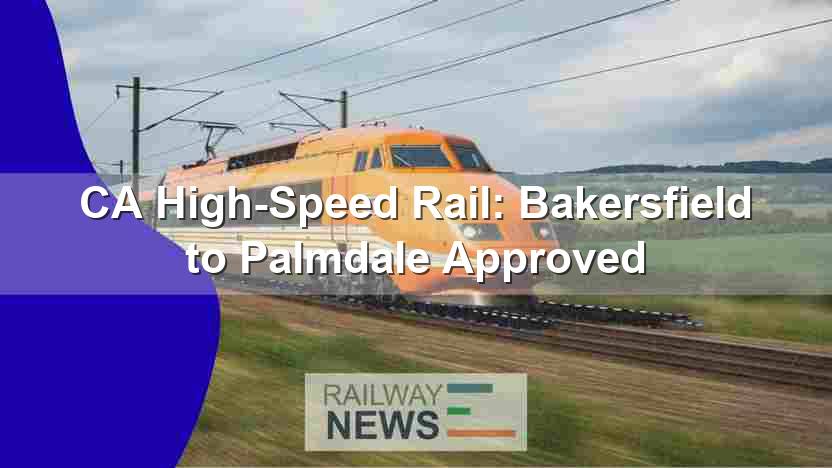
This article explores the significant progress made on the California High-Speed Rail project, specifically focusing on the approval of the Bakersfield to Palmdale segment. The California High-Speed Rail Authority (CHSRA) has granted final approval for the Environmental Impact Report/Environmental Impact Statement (EIR/EIS) for this crucial 128.74-kilometer (km) section. This milestone marks a substantial step forward, not only advancing the overall project but also highlighting the intricate interplay between environmental regulations, federal funding, and the logistical challenges inherent in such a large-scale infrastructure undertaking. The implications extend beyond California, showcasing best practices for managing high-speed rail development and offering valuable insights into the complexities of securing funding, navigating environmental reviews (like the California Environmental Quality Act (CEQA) and the National Environmental Policy Act (NEPA)), and coordinating with various stakeholders involved in mega-projects. The analysis will cover the environmental approvals, funding secured, project scope, and future integration with other rail systems, offering a detailed overview of this significant achievement.
Environmental Approvals and Regulatory Compliance
The approval of the Final EIR/EIS for the Bakersfield to Palmdale segment represents a crucial step in meeting the regulatory requirements set forth by both California and federal legislation. The rigorous environmental review process, conducted under the California Environmental Quality Act (CEQA) and the National Environmental Policy Act (NEPA), ensured a thorough assessment of the project’s potential environmental impacts. The completion of this process demonstrates the CHSRA’s commitment to environmental stewardship and sustainable infrastructure development. This achievement also unlocks further progress, paving the way for pre-construction activities to commence. Securing CEQA clearance for this section contributes to the overall goal of achieving full CEQA clearance for nearly 482.8 km of the Phase I alignment by 2023. The meticulous documentation and public consultation inherent in the EIR/EIS process are essential for building public trust and ensuring responsible environmental management.
Funding and Financial Sustainability
The Bakersfield to Palmdale segment’s advancement is intrinsically linked to the reinstatement of crucial federal funding. After months of negotiations, a settlement was reached between the U.S. Department of Transportation (USDOT) and the State of California, securing approximately $929 million in federal grant funding. This resolution marked the reversal of a previous decision to withdraw funding in 2019, ensuring the financial viability of this section and the overall project. The securing of this funding underscores the importance of effective negotiation and collaboration between state and federal agencies in successfully delivering large-scale infrastructure projects. The consistent funding stream is crucial not only for the ongoing construction but also provides confidence for attracting additional investors and ensuring the project’s long-term financial sustainability.
Project Scope and Integration with Existing Networks
The 128.74-km Bakersfield to Palmdale section addresses a significant gap in the existing passenger rail network, connecting the Central Valley with the Antelope Valley in northern Los Angeles County. This strategic location enhances connectivity and provides a vital link in the broader high-speed rail system envisioned for California. Moreover, this segment is designed for integration with the Brightline West high-speed rail project, extending service to Las Vegas, further expanding the reach and regional impact of the Californian system. This integration strategy demonstrates a forward-thinking approach to transportation planning, maximizing efficiency and economic benefits by seamlessly connecting different rail lines. This highlights the importance of holistic planning and the strategic development of interoperable high-speed rail networks.
Alstom’s Role in Electrification
The electrification of the railway system is a critical aspect of ensuring the environmental sustainability and operational efficiency of high-speed rail. Alstom, a leading player in the rail industry, has been contracted to oversee the railway electrification systems for the next three years. This collaboration underscores the importance of securing experienced and qualified contractors for complex aspects of the project, such as electrical infrastructure implementation. Alstom’s expertise will be crucial in developing and implementing a sustainable, safe, and high-performing electrification system for the entire Bakersfield to Palmdale segment. This commitment to sustainable technology enhances the overall green credentials of the project.
Conclusions
The approval of the Bakersfield to Palmdale segment marks a pivotal moment in the development of California’s High-Speed Rail project. The successful navigation of environmental regulations, the securing of crucial federal funding, and the strategic integration with existing and planned rail networks highlight the significance of meticulous planning, robust regulatory compliance, and effective stakeholder engagement. The project’s success underscores the importance of collaboration between governmental agencies at both the state and federal levels. The reinstatement of the USDOT funding signifies the federal government’s renewed commitment to large-scale infrastructure development. The involvement of industry leaders like Alstom in the electrification process further assures the project’s technical and sustainable implementation. The successful completion of the Bakersfield to Palmdale section will not only improve transportation infrastructure within California, but also serve as a model for future high-speed rail development projects worldwide. The successful completion of this phase demonstrates a commitment to modernizing transportation, reducing congestion, and creating a more environmentally friendly transportation system for generations to come. The lessons learned from this project will undoubtedly be invaluable for future large-scale infrastructure initiatives.

Railway infrastructure, rolling stock and transport technologies specialist focused on global rail industry developments, high-speed rail systems, signaling technologies and freight transportation. Covering railway investments, public transport modernization, rail operations and international mobility projects across Europe, Asia and North America.
RELATED POSTS

September 5, 2026 4:19 pm
CPK launched formal tender talks with four consortia to design...

September 5, 2026 7:14 pm
HS2 Ltd signed renegotiated civils contracts with EKFB and Align...

September 6, 2026 4:12 am
Alstom delivered the first of 100 new G Class trams...

September 5, 2026 6:17 pm
Universal Signalling won a deal to install its U-Cross system...

September 6, 2026 8:17 am
DB InfraGO reopened the Nuremberg-Regensburg line in Bavaria on 31...
September 6, 2026 12:20 pm
Indian Railways ordered a probe after a fire destroyed 2...