
Green Rail Revolution: Battery & Hydrogen Trains
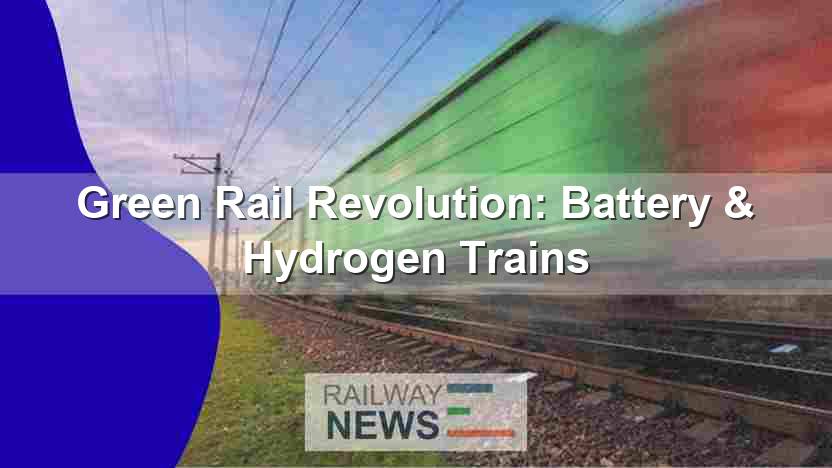
The global railway industry is undergoing a transformative shift with the introduction of battery and hydrogen-powered trains, exemplified by Vivarail’s demonstration at COP26, as part of Network Rail’s efforts to reduce carbon emissions and combat climate change through greener traction systems.
The Rise of Battery and Hydrogen Trains: A Paradigm Shift in Railway Sustainability
The global railway industry is undergoing a significant transformation driven by the urgent need to reduce carbon emissions and mitigate the impact of climate change. This article explores the pivotal role of battery and hydrogen-powered trains in achieving this goal, focusing on a specific example: the unveiling of Vivarail’s battery train at COP26 (the 2021 United Nations Climate Change Conference) in partnership with Network Rail. The development and deployment of these innovative technologies represent a crucial step toward a greener and more sustainable railway system. This will be examined through the lens of technological advancements, infrastructure requirements, economic viability, and broader societal implications. The increasing pressure to decarbonize the transport sector, coupled with advancements in battery and fuel cell technology, is creating a compelling case for the widespread adoption of these alternative traction systems. The transition won’t be seamless, however; challenges related to infrastructure investment, operational considerations, and public perception will need to be addressed.
Vivarail’s Battery Train: A Technological Leap
Vivarail’s battery-powered train, showcased at COP26, represents a significant advancement in railway technology. Its key features include a newly developed battery system with a “fast charge” capability, allowing for a full recharge in approximately ten minutes. This system boasts a range of up to 128.74 kilometers (80 miles) on a single charge, making it suitable for numerous non-electrified lines and short- to medium-distance journeys. The train’s ability to convert existing diesel rolling stock into battery-electric units highlights its potential for cost-effective decarbonization of existing fleets. Financial backing from Innovate UK (a UK government agency) underscores the importance of this technology and its alignment with national sustainability targets. The collaboration with other industry players, such as SLC Operations, Alstom, and VTG, in providing driver training, charging infrastructure, and transport logistics, further demonstrates the collaborative nature of this innovative project and its commitment to successful deployment.
Network Rail’s Commitment to Decarbonization
Network Rail’s (NR) participation in the unveiling of Vivarail’s battery train reflects its broader commitment to decarbonizing the UK’s railway network. NR’s ambitious targets align with the Paris Agreement’s goal of limiting global warming to 1.5°C. Their strategy includes a multifaceted approach incorporating overhead line electrification (OLE) for mainline routes, and the adoption of alternative fuels like hydrogen and battery power for non-electrified lines. This commitment is reflected in their aim to reduce absolute scope 1 and 2 greenhouse gas emissions by 46% and absolute scope 3 indirect emissions by 28% by 2029. This demonstrates a clear commitment to both immediate and long-term environmental responsibility, acknowledging the complexities of reducing its overall carbon footprint.
Hydrogen Technology in Rail: Complementing Battery Solutions
Alongside the battery train, Network Rail, in collaboration with Porterbrook, also presented HydroFLEX, a hydrogen-powered train, at COP26. Hydrogen fuel cell technology offers another pathway to decarbonizing rail transport, particularly for longer distances where battery technology may face range limitations. The simultaneous showcasing of both battery and hydrogen trains underscores a strategic approach to exploring multiple solutions tailored to different operational needs and line characteristics. Each technology has its unique strengths and weaknesses, and a mixed approach may provide the most effective path towards detailed decarbonization.
Conclusion: Paving the Way for a Sustainable Rail Future
The development and deployment of battery and hydrogen-powered trains signify a pivotal moment in the railway industry’s journey towards sustainability. Vivarail’s innovative battery technology, coupled with Network Rail’s ambitious decarbonization targets, showcases the industry’s commitment to a greener future. The success of these initiatives hinges on several factors, including continued technological advancements, strategic infrastructure investments to support charging and refueling infrastructure, robust regulatory frameworks to incentivize adoption, and a collaborative approach involving industry stakeholders, government agencies, and research institutions. Addressing cost-effectiveness and public acceptance remains crucial for widespread adoption. While challenges remain, the momentum generated by initiatives like the unveiling of Vivarail’s train at COP26, and NR’s broad decarbonization strategy, signals a promising shift toward a more sustainable and environmentally responsible rail sector. The combined approach of using both battery and hydrogen technology will likely be essential to achieving a fully decarbonized rail network across various operational contexts, ensuring a more efficient, environmentally friendly, and resilient transport future. The long-term success of this transition will depend on overcoming technological hurdles, securing adequate funding, and fostering broad collaboration among all key players in the railway ecosystem.

Railway infrastructure, rolling stock and transport technologies specialist focused on global rail industry developments, high-speed rail systems, signaling technologies and freight transportation. Covering railway investments, public transport modernization, rail operations and international mobility projects across Europe, Asia and North America.
RELATED POSTS

September 5, 2026 4:19 pm
CPK launched formal tender talks with four consortia to design...

September 5, 2026 7:14 pm
HS2 Ltd signed renegotiated civils contracts with EKFB and Align...

September 6, 2026 4:12 am
Alstom delivered the first of 100 new G Class trams...
September 6, 2026 8:17 am
DB InfraGO reopened the Nuremberg-Regensburg line in Bavaria on 31...
September 5, 2026 6:17 pm
Universal Signalling won a deal to install its U-Cross system...
September 6, 2026 12:20 pm
Indian Railways ordered a probe after a fire destroyed 2...