
Melbourne’s New Trams: Alstom’s Flexity Success
The successful delivery of 100 Flexity light rail vehicles (LRVs) marks a milestone in Australia’s rail infrastructure development, showcasing Alstom and the Victorian government’s collaboration that leverages local manufacturing to enhance Melbourne’s tram network efficiency.
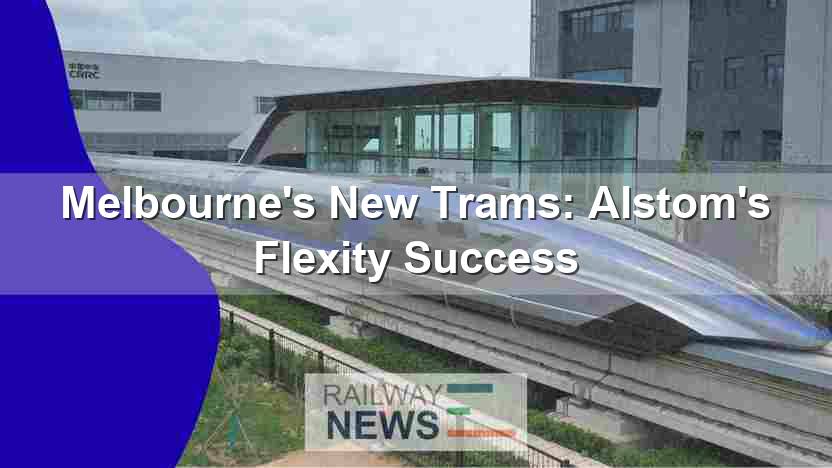
The successful delivery of 100 Flexity light rail vehicles (LRVs) to the Victorian Department of Transport marks a significant achievement in Australian rail infrastructure development. This article will delve into the intricacies of this project, exploring the collaboration between Alstom and the Victorian government, the economic impact of local manufacturing, the technical specifications of the Flexity LRVs, and the broader implications for Melbourne’s tram network and Australia’s rail industry. The project showcases the successful implementation of a large-scale rolling stock procurement, highlighting the challenges and successes in meeting stringent specifications, managing a complex supply chain, and fostering local economic growth through domestic manufacturing. We will examine the strategic importance of this project for both Alstom and the Victorian government, considering its contribution to sustainable public transport, job creation, and the advancement of Australian manufacturing capabilities in the rail sector. This case study provides valuable insights into the complexities and rewards of major rail infrastructure projects, offering a lens through which to analyze best practices and future directions for similar endeavors across the globe.
The Alstom-Victoria Partnership: A Decade of Collaboration
The delivery of 100 Flexity LRVs to Melbourne’s tram network represents the culmination of a decade-long partnership between Alstom and the Victorian government. Initially contracted in 2010 for 50 trams, subsequent orders between 2015 and 2019 doubled the commitment, resulting in the delivery of a fleet of 100 modern, low-floor vehicles. This phased approach allowed for iterative improvements based on operational experience and evolving network requirements. The ongoing collaboration demonstrates a long-term commitment to enhancing Melbourne’s public transport infrastructure with state-of-the-art rolling stock. The success of this partnership rests on clear communication, effective project management, and a shared vision for improving the efficiency and reliability of the city’s tram system.
Local Manufacturing and Economic Impact
A key feature of this project is the significant contribution to the Victorian economy through local manufacturing. Alstom’s Dandenong facility played a pivotal role, employing over 75 individuals directly. Additionally, the commitment to over 50% local content ensured a substantial multiplier effect, boosting employment and economic activity within the broader supply chain. This approach demonstrates the potential for large-scale infrastructure projects to stimulate local economies and create skilled employment opportunities in the manufacturing sector. The “Made in Melbourne, for Melbourne” aspect enhanced local pride and underscored the benefits of investing in domestic manufacturing capabilities.
Technical Specifications and Design of the Flexity LRVs
The Flexity LRVs are based on Alstom’s proven low-floor platform, adapted to meet the specific operational requirements of the Melbourne tram network. This design prioritizes accessibility, with features like low-floor access for ease of passenger boarding and alighting, particularly beneficial for passengers with mobility impairments. Other critical design elements would include considerations such as turning radius capabilities for effective navigation on the network’s intricate routes, and braking systems optimized for the density of the urban environment. The trams are also designed for comfort and efficiency, incorporating modern passenger information systems, air conditioning, and energy-efficient drive technology. These considerations aim to provide a high-quality passenger experience and minimize environmental impact.
Expanding Alstom’s Presence in the Australian Rail Sector
The successful completion of the Flexity LRV project further solidifies Alstom’s position as a major player in the Australian rail industry. With nearly 1600 employees across 25 sites, including engineering centers, manufacturing facilities, and maintenance depots, Alstom is deeply integrated into the Australian rail landscape. The recent contract for 25 X’Trapolis 2.0 vehicles for the Victorian Government underscores their ongoing commitment to the country’s rail infrastructure development. This expansion showcases Alstom’s capacity to provide a detailed range of services, from design and manufacturing to maintenance and support, contributing significantly to the long-term sustainability of Australia’s rail networks. The company’s commitment to local manufacturing and employment further strengthens its position within the Australian market.
Conclusions
The delivery of the 100 Flexity LRVs to Melbourne’s tram network represents a significant milestone, not only for Alstom but also for the Victorian Government and the broader Australian rail industry. This project exemplifies a successful public-private partnership, demonstrating the feasibility of large-scale rolling stock procurement with a strong emphasis on local manufacturing and economic benefits. The meticulous design and engineering of the Flexity LRVs, tailored to the specific requirements of the Melbourne network, ensure enhanced accessibility, comfort, and efficiency for passengers. The project’s success highlights the importance of collaboration, meticulous planning, and the commitment to investing in domestic manufacturing capabilities. The significant economic impact, including the creation of over 75 jobs directly and a substantial multiplier effect through local content, reinforces the value of infrastructure projects as drivers of economic growth. Alstom’s continued expansion in the Australian rail sector, as evidenced by the additional contract for X’Trapolis 2.0 trains, underscores its long-term commitment to the country’s rail infrastructure. Looking forward, this project serves as a model for future rail projects, emphasizing the critical need to prioritize local content, foster economic development, and deliver high-quality, sustainable public transport solutions.

Railway infrastructure, rolling stock and transport technologies specialist focused on global rail industry developments, high-speed rail systems, signaling technologies and freight transportation. Covering railway investments, public transport modernization, rail operations and international mobility projects across Europe, Asia and North America.
RELATED POSTS

September 5, 2026 4:19 pm
CPK launched formal tender talks with four consortia to design...

September 5, 2026 7:14 pm
HS2 Ltd signed renegotiated civils contracts with EKFB and Align...

September 6, 2026 4:12 am
Alstom delivered the first of 100 new G Class trams...
September 5, 2026 6:17 pm
Universal Signalling won a deal to install its U-Cross system...
September 6, 2026 8:17 am
DB InfraGO reopened the Nuremberg-Regensburg line in Bavaria on 31...
September 7, 2026 11:16 pm
China Railway Tunnel Group completed the 11.3-km underwater Yangtze tunnel...