
Japan’s Driverless Shinkansen: A Revolution on Track
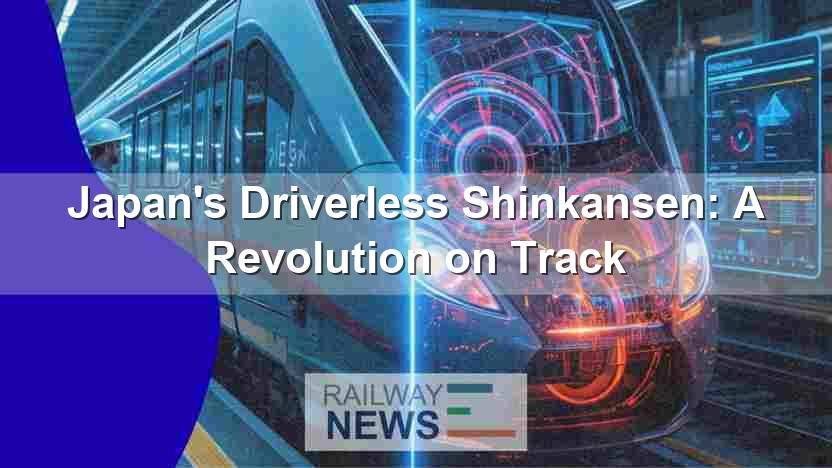
The recent automated trial run of an E7-series Shinkansen bullet train by JR East on its Joetsu Shinkansen line near Niigata Station demonstrated the feasibility of autonomous operation for commercially active HSR trains in Japan, marking a significant milestone in railway engineering and management.
Introduction
The railway industry is undergoing a significant transformation driven by technological advancements and evolving operational needs. Automation, particularly in high-speed rail (HSR) systems, is emerging as a crucial element in addressing challenges such as labor shortages, increased operational efficiency, and improved safety. This article will delve into the recent automated trial run conducted by East Japan Railway Company (JR East) on its E7-series Shinkansen bullet train, examining the technological aspects, operational implications, and broader industry trends toward autonomous train operation. We will explore the specific challenges involved in automating such a complex system, analyzing the JR East trial in detail and contextualizing it within the wider efforts of Japanese railway companies to integrate advanced technologies into their operations. The advancements and challenges involved in achieving fully autonomous high-speed rail operations represent a significant milestone in railway engineering and management, with implications that extend far beyond Japan’s borders.
JR East’s Automated Shinkansen Trial
East Japan Railway (JR East) recently completed a successful trial run of an automated E7-series Shinkansen bullet train on the Joetsu Shinkansen line. This trial, conducted near Niigata Station, marked a significant step towards autonomous operation of commercially active HSR trains in Japan. The 12-car train, remotely controlled from a centralized operations center, operated autonomously for approximately 5 kilometers, achieving speeds nearing its designed maximum of 110 km/h. While human operators were present onboard for safety reasons, the test demonstrated the feasibility of automated control systems for high-speed rail.
Technological Aspects of Autonomous Shinkansen Operation
The successful automation of the E7-series train rests on several key technological pillars. Precise positioning and control systems are essential for maintaining safe and efficient operation at high speeds. This relies on advanced sensor technologies, including GPS (Global Positioning System), inertial navigation systems, and trackside signaling systems, providing real-time data to the control system. High-bandwidth, low-latency communication networks, such as 5G, are also vital for seamless data transmission between the train and the remote control center, enabling real-time monitoring and control. The ability to reliably transmit high-quality video data is crucial for remote supervision and problem diagnosis. Additionally, sophisticated algorithms are required to manage train speed, braking, and other critical operational parameters, ensuring precise and safe operation under varying conditions.
Addressing Operational Challenges and Safety Considerations
While the trial demonstrated significant progress, several challenges remain before fully autonomous Shinkansen operation can be implemented. Ensuring absolute safety is paramount, demanding robust fail-safe mechanisms and redundancy in all systems. The precise stopping accuracy demonstrated in the trial, with an 8cm deviation from the planned stopping point, showcases the sophistication of the control system; however, further refinement is needed to meet the stringent requirements of passenger transport. The development of detailed emergency response protocols for unforeseen events is crucial, balancing human intervention with the automated system’s capacity to react quickly to potential issues. The integration of automated systems with existing railway infrastructure and signaling systems requires careful planning and coordination to avoid compatibility issues and maintain the overall operational integrity of the network.
Industry-Wide Adoption and Future Prospects
JR East’s trial is not an isolated event; other major Japanese railway companies, including West Japan Railway and Kyushu Railway, are also actively pursuing autonomous train operations. These companies are conducting similar tests on various lines, from local commuter services to other Shinkansen lines, highlighting a concerted industry-wide effort to embrace automation. The widespread adoption of autonomous train technology has the potential to revolutionize railway operations, addressing labor shortages, improving efficiency, and enhancing safety. Further research and development will be required to overcome remaining technological and operational hurdles, refining automated control systems, and establishing detailed safety protocols. The future of railway operation likely involves a combination of autonomous and human-controlled systems, optimizing the strengths of each approach to create a safe, efficient, and reliable railway network.
Conclusions
The successful automated trial run of the E7-series Shinkansen by JR East represents a significant advancement in the field of high-speed rail technology. The trial highlighted the feasibility of applying autonomous control systems to commercially operational bullet trains, demonstrating the potential for increased efficiency and a response to labor shortages. The technological aspects of the trial, including the advanced sensor technologies, high-bandwidth communication networks, and sophisticated algorithms, are crucial for successful autonomous operation. However, numerous challenges remain, particularly in ensuring absolute safety, refining operational procedures, and integrating automated systems with existing railway infrastructure. The precise stopping demonstrated in the trial, though impressive, underscores the continuous need for improvement to achieve the precision demanded by passenger transportation. The future of autonomous rail operation will require continued investment in research and development, addressing the safety concerns through robust redundancy and fail-safe systems, and establishing seamless integration with existing railway networks. The wider adoption of autonomous technology across the Japanese railway industry, as evidenced by the concurrent trials conducted by other major companies, signifies a transformative shift towards more efficient and potentially safer rail operations, setting a precedent for global railway systems.

Railway infrastructure, rolling stock and transport technologies specialist focused on global rail industry developments, high-speed rail systems, signaling technologies and freight transportation. Covering railway investments, public transport modernization, rail operations and international mobility projects across Europe, Asia and North America.
RELATED POSTS

September 5, 2026 4:19 pm
CPK launched formal tender talks with four consortia to design...
September 5, 2026 7:14 pm
HS2 Ltd signed renegotiated civils contracts with EKFB and Align...

September 6, 2026 4:12 am
Alstom delivered the first of 100 new G Class trams...
September 6, 2026 8:17 am
DB InfraGO reopened the Nuremberg-Regensburg line in Bavaria on 31...
September 5, 2026 6:17 pm
Universal Signalling won a deal to install its U-Cross system...
September 6, 2026 12:20 pm
Indian Railways ordered a probe after a fire destroyed 2...