
EU Green Deal: €133M Boost for Swedish Rail
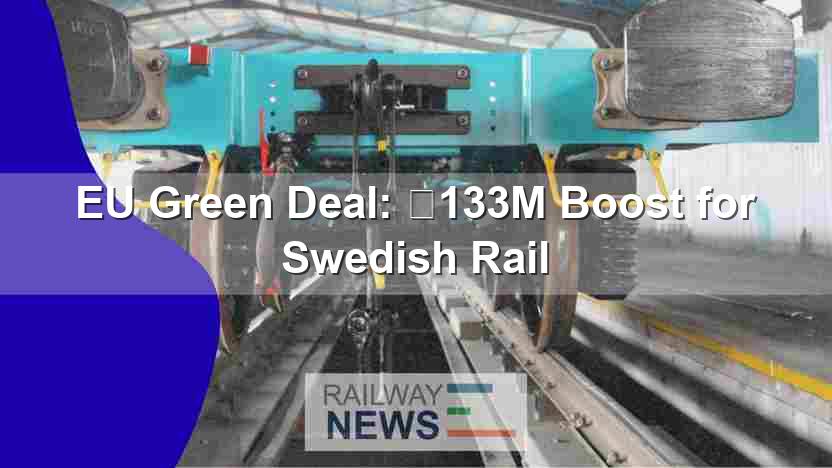
The European Commission approved a €133 million Swedish rail freight and passenger aid package due to the financial strain caused by the COVID-19 pandemic on Sweden’s railways, justified under EU state aid rules for exceptional circumstances.
Introduction
This article examines the European Commission’s (EC) approval of a €133 million ($150.2 million) Swedish aid package designed to bolster the nation’s rail freight and passenger sectors following the economic disruption caused by the COVID-19 pandemic. The package focuses on mitigating the financial strain on railway operators through a reduction in infrastructure access charges. This intervention is not only crucial for the short-term survival of these operators but also strategically significant for the long-term goals of the European Union (EU) regarding sustainable transportation and its commitment to the European Green Deal. The analysis will explore the justification for this state aid, its compliance with EU regulations, and its broader implications for the future of rail transport within the EU. We will examine the economic rationale behind the decision, the environmental benefits anticipated, and the precedent it sets for similar support measures across other member states. Additionally, the discussion will touch upon the interplay between national recovery initiatives and the overarching EU policies promoting sustainable transportation and reduced reliance on road-based transport.
Economic Justification for State Aid
The COVID-19 pandemic severely impacted various economic sectors, and the rail industry was no exception. Reduced passenger numbers and disrupted supply chains led to significant financial losses for both passenger and freight rail operators in Sweden. The EC’s approval of the Swedish scheme is based on the recognition that without intervention, these operators faced a substantial risk of insolvency, leading to potential job losses and a collapse of vital transportation services. The reduction in infrastructure charges—access fees paid by rail operators to utilize the national rail network—directly addresses the operators’ immediate liquidity challenges, enabling them to maintain operations and prevent market share loss to competing road transport. This direct financial assistance can be justified under EU state aid rules, particularly those addressing exceptional circumstances such as pandemics, as outlined in Regulation (EU) 2020/1429.
Compliance with EU State Aid Rules
The Swedish scheme aligns with the EU’s State aid rules, specifically the 2008 Commission Guidelines on state aid for railway undertakings. These guidelines permit member states to provide support to railway companies under certain conditions, particularly when addressing systemic market failures or exceptional circumstances. The EC’s rigorous assessment ensures the aid is proportionate, avoids undue distortion of competition, and is limited to what is strictly necessary to address the pandemic’s impact. The approval demonstrates the EC’s commitment to balancing the need for national support measures with the overarching objective of maintaining a level playing field within the EU’s internal market. The transparency of the process and adherence to existing regulations underscores the importance placed on the proper application of state aid rules.
Environmental and Societal Benefits
Beyond the immediate economic benefits, the Swedish scheme contributes significantly to the EU’s broader environmental goals. By supporting the rail sector, the EC indirectly promotes a shift from road to rail transport. Rail transport is demonstrably more environmentally sustainable than road transport, producing lower greenhouse gas emissions and reducing congestion. Minimizing the negative economic impact of the pandemic on the rail sector prevents a potential resurgence of road freight, thus safeguarding the environmental gains achieved in recent years. The reduction in infrastructure charges directly encourages the continued use and competitiveness of rail, fostering long-term environmental sustainability.
Conclusion
The European Commission’s approval of the €133 million Swedish aid package represents a crucial intervention designed to stabilize and strengthen the country’s rail sector following the economic shocks of the COVID-19 pandemic. This financial support, channeled through a reduction in infrastructure access charges, directly addresses the acute financial challenges faced by rail operators while adhering strictly to EU state aid rules. The EC’s decision acknowledges the strategic importance of a robust and competitive rail network, not only for economic recovery but also for achieving the EU’s ambitious climate goals. By bolstering rail transport, the initiative fosters a shift away from road transport, contributing to reduced pollution, decreased road congestion, and a more sustainable transportation system. The approach aligns with the European Green Deal’s broader objectives, offering a model for other EU member states facing similar challenges. The thorough evaluation and transparent approval process set a strong precedent, ensuring that future support measures for the rail sector are guided by responsible governance and the need to balance national interests with EU-wide regulatory frameworks. The success of this intervention will be measured not only by the immediate stabilization of the Swedish rail industry but also by its longer-term contribution to the sustainable development and decarbonization of the EU’s transportation network. The strategic alignment of this economic intervention with environmental and social goals underscores the EC’s commitment to a holistic approach to policymaking. The transparency and adherence to established guidelines ensure this initiative serves as a constructive model for supporting critical infrastructure sectors during times of exceptional economic crisis.

Railway infrastructure, rolling stock and transport technologies specialist focused on global rail industry developments, high-speed rail systems, signaling technologies and freight transportation. Covering railway investments, public transport modernization, rail operations and international mobility projects across Europe, Asia and North America.
RELATED POSTS

September 5, 2026 4:19 pm
CPK launched formal tender talks with four consortia to design...

September 5, 2026 7:14 pm
HS2 Ltd signed renegotiated civils contracts with EKFB and Align...

September 6, 2026 4:12 am
Alstom delivered the first of 100 new G Class trams...
September 6, 2026 8:17 am
DB InfraGO reopened the Nuremberg-Regensburg line in Bavaria on 31...
September 5, 2026 6:17 pm
Universal Signalling won a deal to install its U-Cross system...
September 6, 2026 12:20 pm
Indian Railways ordered a probe after a fire destroyed 2...