
Calgary to Banff Rail: A Sustainable Revolution
The Calgary Airport – Banff Rail (CABR) Project, a Public-Private Partnership aiming to create a sustainable high-speed passenger rail line connecting Calgary International Airport with Banff, has advanced from the Development phase into the crucial Design phase, highlighting its innovative approach and commitment to environmental responsibility.
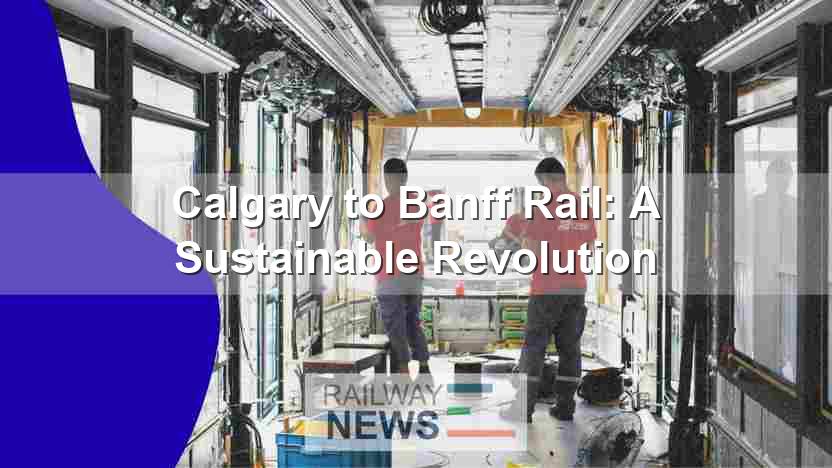
The Calgary Airport – Banff Rail (CABR) Project: A Deep Dive into Design and Implementation
This article explores the Calgary Airport – Banff Rail (CABR) project, a significant undertaking in Canada aiming to create a sustainable, high-speed passenger rail line connecting Calgary International Airport with the mountain resort town of Banff. The project, structured as a Public-Private Partnership (P3), has recently progressed to the design phase, a crucial step towards its ultimate completion. We will explore the project’s history, its innovative approach to sustainability, the intricacies of its design and construction phases, and the potential socio-economic impacts. The CABR project represents a case study in modern rail infrastructure development, highlighting the complexities of financing, stakeholder engagement, and environmental considerations in such ambitious endeavors. Additionally, the utilization of low-carbon technologies, such as hydrogen-powered rolling stock, positions the CABR project as a leader in sustainable transportation solutions, a crucial aspect for its long-term viability and environmental responsibility. Understanding the details of this project is critical for assessing its potential success and its implications for future rail initiatives in Canada and beyond.
Project History and Development Phases
The CABR project’s journey began with preliminary studies conducted by Alberta Transportation in 2018, focusing on ridership projections and initial capital cost estimations. Subsequent feasibility studies by the Canada Infrastructure Bank (CIB) in 2019-2020 further solidified the project’s potential. The current development stage, however, marks a significant shift. Liricon Capital and Plenary Americas, through an Enhanced Unsolicited Proposal, have propelled the project from the Development phase (Phase 3) into the critical Design phase (Phase 4). This advancement, coupled with securing significant financial backing, positions the CABR project for the final phase: Construction and Implementation. The involvement of both public and private entities highlights the complex financial engineering required for such large-scale infrastructure initiatives. The total project cost is estimated at $1.18 billion (C$1.5 billion), to be entirely funded through the P3 arrangement and the CIB.
Sustainable Design and Technological Innovations
A defining characteristic of the CABR project is its commitment to sustainability. The utilization of hydrogen-driven rolling stock is a key element, aiming to minimize the project’s carbon footprint and align with the Banff National Park Net Zero 2035 Initiative. This ambitious environmental goal demands careful consideration of energy efficiency throughout the entire system, from train operation to station infrastructure. The choice of hydrogen technology represents a forward-thinking approach, positioning the CABR project as a showcase for environmentally conscious rail transportation. Additionally, the integration of the rail line within the existing CP Rail freight corridor demonstrates a pragmatic approach to minimizing land usage and environmental impact. Careful planning and engagement with Indigenous communities and local municipalities will be vital during the design stage and beyond to ensure the project aligns with community needs and sustainability goals. Such a multi-faceted approach to sustainability ensures that the project’s environmental footprint is minimized throughout its lifecycle.
Route and Infrastructure Considerations
The proposed CABR line will feature seven strategically located stations: Calgary Airport, Calgary Keith, Calgary Downtown, Cochrane, Morley (Stoney Nakoda), Canmore, and Banff. This detailed network aims to serve a diverse range of passengers, from airport travelers to tourists and commuters. The alignment of the passenger rail line within the existing CP Rail freight corridor presents both opportunities and challenges. While it offers cost-effectiveness in terms of infrastructure development, it necessitates careful coordination to ensure the seamless operation of both freight and passenger services. This requires sophisticated signaling systems, optimized scheduling, and potentially the upgrading of existing track infrastructure to accommodate higher speeds and increased traffic volume. The design phase will critically address these aspects, ensuring safe and efficient operation for all users of the corridor. Careful consideration must also be given to the unique challenges of traversing varied terrain and integrating the railway with existing urban and natural environments.
Stakeholder Engagement and Project Conclusion
The success of the CABR project hinges significantly on effective stakeholder engagement. Liricon/Plenary plans to actively engage with Indigenous communities in the Bow Valley, ensuring their concerns are addressed and their perspectives are integrated into the project’s design and implementation. Similarly, consultations with municipalities along the route are crucial to securing local support and mitigating potential negative impacts. Transparent communication and proactive engagement with all stakeholders will be instrumental in fostering trust and building a consensus around the project. The design phase will serve as a critical platform for this engagement, allowing for feedback and adjustments before the project enters construction. A collaborative approach that prioritizes inclusivity is vital for ensuring the project’s acceptance and its contribution to the economic and social well-being of the region. Successful navigation of these stakeholder engagements will be pivotal to the long-term success and acceptance of the project.
Conclusions
The Calgary Airport – Banff Rail (CABR) project represents a bold step forward in Canadian rail infrastructure development. Its progression to the design phase marks a significant milestone, showcasing the successful collaboration between public and private sectors in securing the necessary funding and approvals. The project’s commitment to sustainability, evidenced by the planned use of hydrogen-powered rolling stock, positions it as a leader in environmentally conscious transportation. The detailed design phase will be crucial in resolving the complexities of integrating the passenger line within the existing freight corridor, ensuring efficient and safe operations. The project’s success will heavily rely on continued and robust engagement with Indigenous communities and local municipalities along the proposed route. Addressing these concerns effectively and transparently will be paramount in securing the broad acceptance and support necessary to realize this ambitious project. The CABR project holds the potential to not only improve transportation connectivity in the region but also to serve as a model for sustainable rail development in Canada and beyond, demonstrating the feasibility and advantages of integrating environmentally friendly technologies in large-scale infrastructure projects. Its careful execution and commitment to broad community engagement will be key to its ultimate success and positive impact on the region.

Railway infrastructure, rolling stock and transport technologies specialist focused on global rail industry developments, high-speed rail systems, signaling technologies and freight transportation. Covering railway investments, public transport modernization, rail operations and international mobility projects across Europe, Asia and North America.
RELATED POSTS

September 5, 2026 4:19 pm
CPK launched formal tender talks with four consortia to design...

September 5, 2026 7:14 pm
HS2 Ltd signed renegotiated civils contracts with EKFB and Align...

September 6, 2026 4:12 am
Alstom delivered the first of 100 new G Class trams...

September 6, 2026 8:17 am
DB InfraGO reopened the Nuremberg-Regensburg line in Bavaria on 31...
September 5, 2026 6:17 pm
Universal Signalling won a deal to install its U-Cross system...
September 6, 2026 12:20 pm
Indian Railways ordered a probe after a fire destroyed 2...